 listicle
Benefits of Professional Flood Damage Cleanup
Table of Contents
- Why Professional Flood Damage Cleanup Protects Your Home and Health
- The Water Damage Restoration Process: What Certified Technicians Do Differently
- Signs of Mold After Flooding and Why Fast Action Matters
- What Affects the Cost of Professional Water Damage Repair
- Insurance Claim Documentation: How Professionals Protect Your Payout
- Post-Cleanup Indoor Air Quality Testing: The Step DIY Cleanup Skips
- Conclusion
- Frequently Asked Questions
Last Updated: September 30, 2026
Why Professional Flood Damage Cleanup Protects Your Home and Health
Water that sits inside a home does not stay neutral for long. Within hours, it soaks into drywall, subfloor, and insulation, and contamination begins to spread. Professional flood damage cleanup is the process of extracting standing water, drying structural materials, and sanitizing affected areas with commercial equipment and trained oversight. AFC Cleaning & Restoration has handled emergency water intrusion in the greater Kansas City area since 2003, and the pattern is consistent: the homes that recover fastest are the ones where cleanup started before the water worked its way into the structure.
The Water Damage Restoration Process: What Certified Technicians Do Differently
The professional water damage restoration process follows a defined sequence: assess, extract, dry, sanitize, and verify. Each step depends on the one before it, and skipping or rushing a step is where DIY efforts fail. What separates a certified crew from a homeowner with a wet-vac is instrumentation, drying science, and the discipline to document every reading.
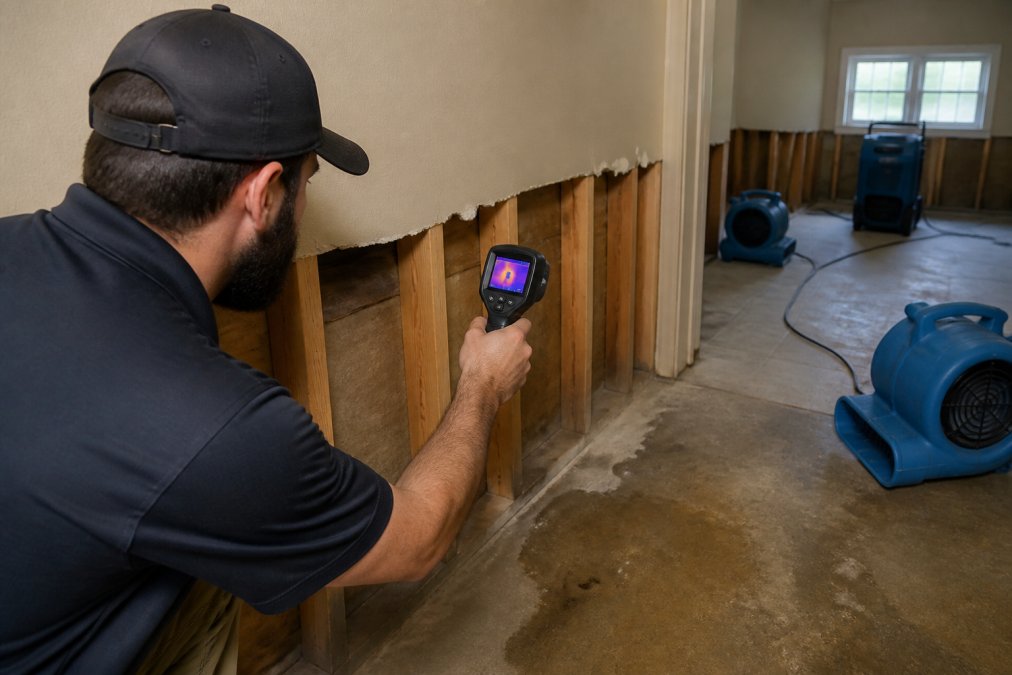
Step 1: Assessment and Moisture Mapping
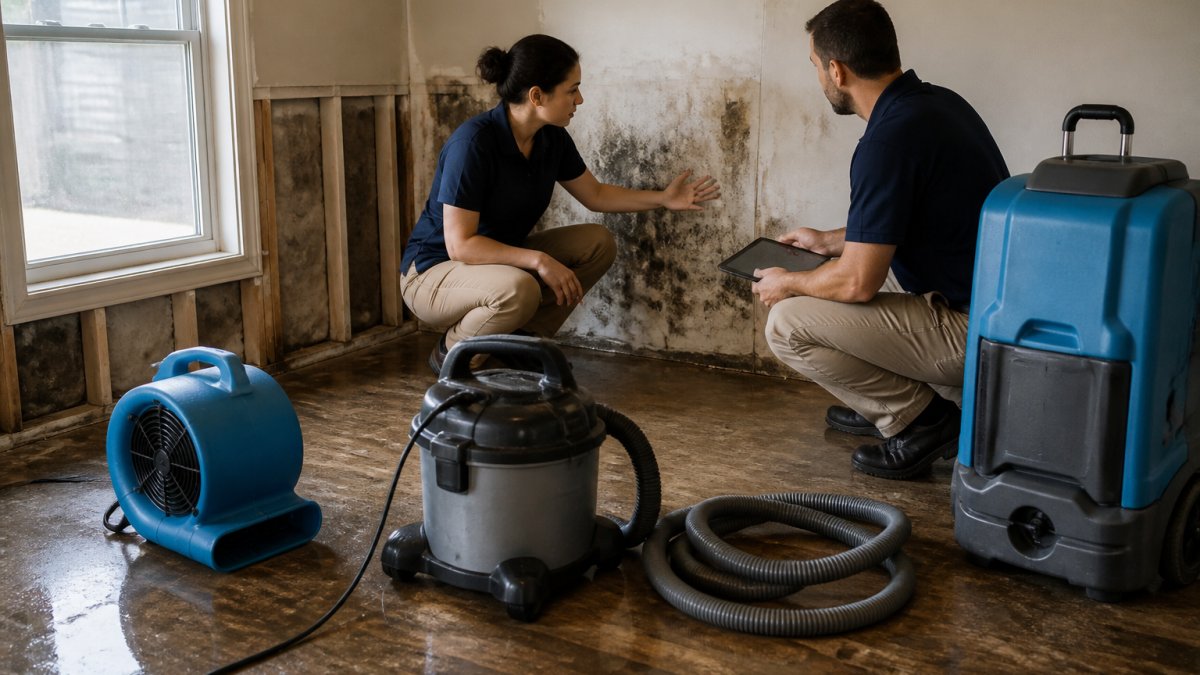
It starts with a water damage assessment. Technicians use moisture meters, thermal imaging cameras, and hygrometers to find water you cannot see, including inside wall cavities, under flooring, and behind baseboards. Moisture mapping charts exactly where water has traveled. Water migrates along joists, wicks up drywall, and pools under subflooring, so a small wet patch on the surface is often a much larger problem underneath.
Step 2: Water Extraction
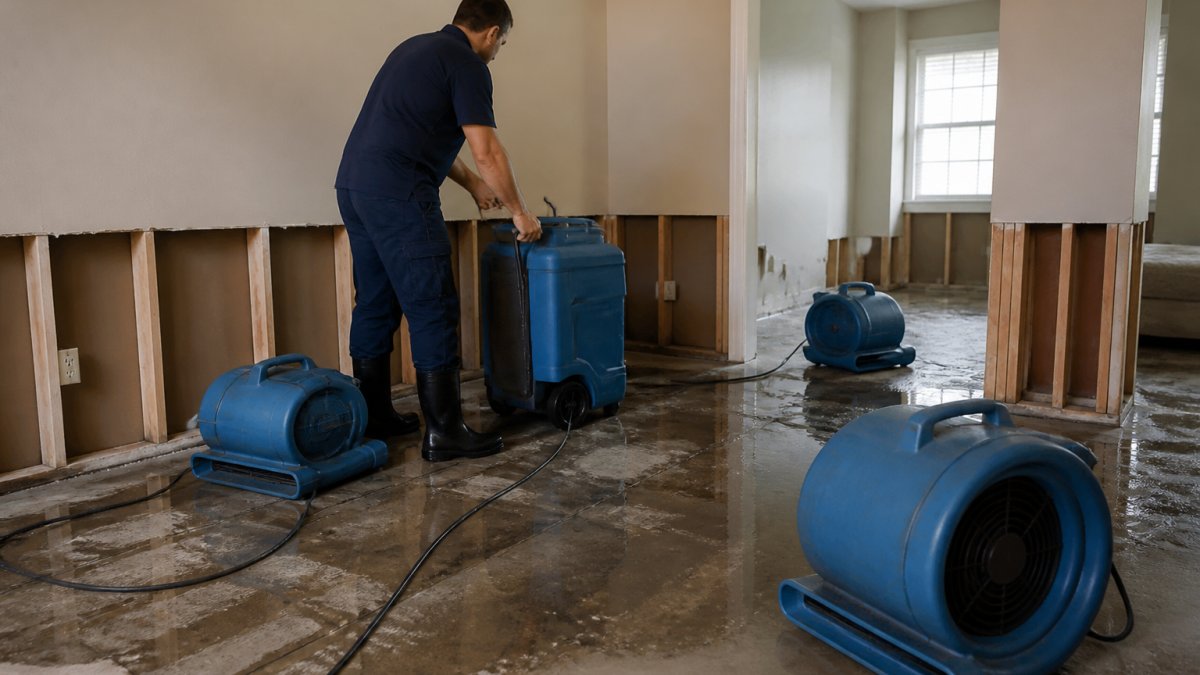
Standing water is removed first, because air movers and dehumidifiers cannot dry a structure that is still holding water. Truck-mounted extraction units pull water out of carpet, pad, and hard flooring far faster than portable shop vacuums, generating enough lift to pull water from carpet backing and subfloor seams. Weighted tools press water out of carpet fibers while the wand pulls it away.
Step 3: Structural Drying and Dehumidification
This is the step most DIY efforts get wrong. Industrial-grade air movers create a boundary layer of moving air across wet surfaces, accelerating evaporation, while dehumidifiers remove that moisture from the air so it does not re-condense on cooler surfaces. The two work as a system: air movers without dehumidification just move moisture around, and dehumidifiers without air movement cannot reach trapped moisture.
Step 4: Cleaning and Sanitizing
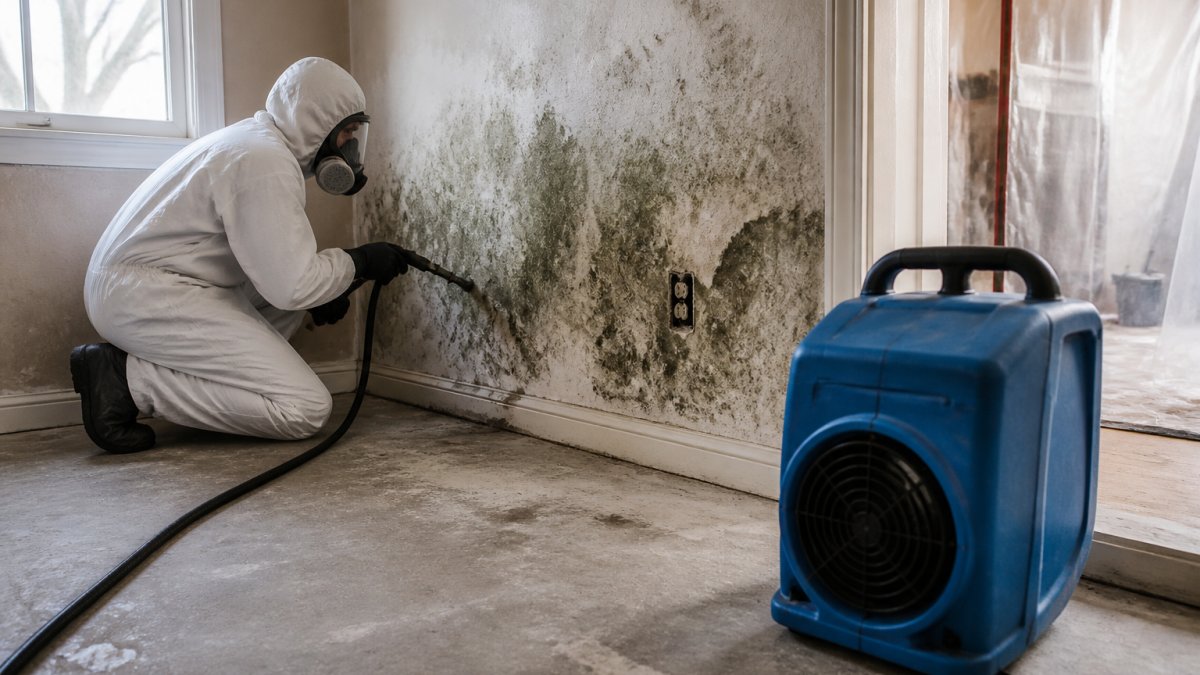
Once the structure is dry, affected surfaces are cleaned and sanitized. Category 1 water may require only cleaning; Category 2 and 3 water require antimicrobial treatment and, in some cases, fogging or HVAC decontamination. Porous materials that absorbed contaminated water are removed rather than cleaned, because pathogens and mold spores penetrate where surface treatment cannot reach.
Step 5: Verification
Verification closes the loop. Final moisture readings are taken, drying logs reviewed, and, for contaminated water or HVAC involvement, air quality testing confirms the environment is safe before the job is closed. Without it, you are trusting a visual inspection to catch what you cannot see.
Water Categories: Cat 1, Cat 2, and Cat 3
Not all floodwater is equally dangerous, and the category determines how cleanup is handled. It is the most important technical distinction in restoration, and the reason professional PPE and containment are non-negotiable on certain jobs.
- Category 1 is clean water from a supply line, a broken pipe, or rain intrusion. It poses little immediate health risk but degrades quickly, within 48 hours, and faster in warm conditions, Category 1 water can become Category 2 as bacteria multiply.
- Category 2 is "gray" water from appliances, toilet bowls (without feces), or washing machines. It carries microorganisms and can cause illness on contact or inhalation. Category 2 water that sits for 48 hours or more is reclassified as Category 3.
- Category 3 is "black" water from sewage backups, ground surface flooding, river overflow, or any water that has entered a toilet trap. It contains pathogens, viruses, and hazardous materials. Category 3 cleanup requires full PPE, containment, removal of permeable materials like carpet and drywall, and full sanitization.
Signs of Mold After Flooding and Why Fast Action Matters
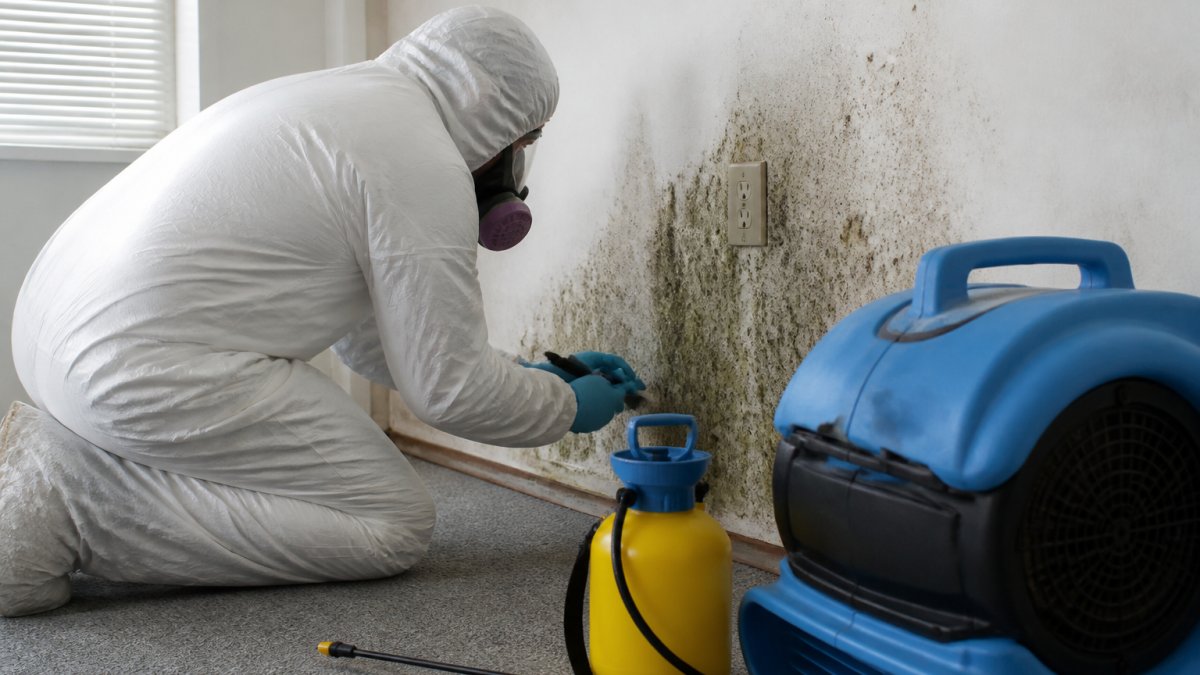
The signs of mold after flooding usually appear as musty odors, discolored patches on walls or ceilings, bubbling paint, and warped baseboards. By the time those signs are visible, mold has often been growing behind the surface for days or weeks. Mold can begin within 24 to 48 hours of water intrusion in a warm, humid environment, which is why rapid response is the single biggest factor in whether a flood becomes a mold remediation project.
What Actually Drives Mold Growth
Mold needs three things: moisture, organic material to feed on, and a tolerable temperature range. In a flooded home, all three are usually present. Drywall paper, wood framing, carpet backing, and even dust are food sources, and indoor temperatures between roughly 68°F and 86°F suit most common indoor molds. The variable you can control is moisture, and it matters most.
Secondary Damage: What Happens After the Water Recedes
Secondary damage is everything that happens after the initial flood: swelling wood, delaminating flooring, warping cabinet boxes, and mold colonizing damp drywall. The longer moisture stays in permeable materials, the more of the structure must be replaced rather than dried. That is the real cost of waiting.
A few common patterns:
- Hardwood flooring can cup and crown within days of water exposure, and once the boards warp, sanding and refinishing may not fully correct the damage.
- Laminate and engineered flooring can delaminate permanently once water reaches the core layer.
- Drywall wicks water upward through the paper facing, so moisture can travel well above the visible water line. Drywall that stays wet for more than 48 hours is usually removed rather than dried.
- Cabinets and trim are often made of particleboard or MDF, which swell irreversibly once saturated.
- Structural framing can support mold growth in wall cavities that are not opened and dried, even when the interior surface looks fine.
Why Hidden Mold Is the Real Risk
Mold often grows where you cannot see it: inside wall cavities, under subflooring, behind baseboards, and inside HVAC ductwork. A musty smell with no visible growth signals a concealed colony. Because mold releases spores into the air, hidden growth can affect indoor air quality throughout the home long before it is visible.
The Rapid Response Window
The first 24 to 48 hours after water intrusion determine whether a flood stays a drying job or becomes a mold remediation job. Professional extraction and drying started in that window can often save materials that would otherwise be removed. Started a week later, the same materials are usually a loss, and indoor air quality may already be compromised.
What Affects the Cost of Professional Water Damage Repair
The cost of professional water damage repair depends on how much water entered, how contaminated it is, how far it spread, and what materials were affected. There is no flat rate, and any company quoting one over the phone without seeing the property is guessing.
The main cost drivers:
- Water category, Category 3 cleanup requires removal of permeable materials and full sanitization, which adds labor and disposal.
- Square footage affected, A single room costs far less than a finished basement.
- Materials involved, Hardwood, carpet, and drywall absorb differently and dry on different timelines.
- How fast cleanup started, Faster extraction means less secondary damage and less replacement.
- Access and complexity, Crawl spaces, multi-story properties, and commercial HVAC systems take more equipment and crew.
| Situation | Typical Response | Why It Matters |
|---|---|---|
| Clean supply line leak, caught same day | Extraction and targeted drying | Materials usually saved |
| Appliance leak, 2-3 days unnoticed | Extraction, drying, sanitization | Some flooring may need removal |
| Sewage backup or surface flooding | Full Category 3 protocol | Permeable materials removed |
| Water sitting a week or more | Drying plus mold remediation | Higher replacement cost |
Insurance Claim Documentation: How Professionals Protect Your Payout
Insurance claim documentation is where professional restoration earns its keep, and the step most homeowners never think about until the adjuster asks a question they cannot answer. A properly documented claim includes moisture readings, thermal images, before-and-after photos of affected materials, a written scope of work, and daily drying logs.
Post-Cleanup Indoor Air Quality Testing: The Step DIY Cleanup Skips
Post-cleanup indoor air quality testing verifies that the air inside your home is safe to breathe again. It is the reason mold problems sometimes resurface months after a flood was "handled."
Conclusion
A flood is stressful enough without wondering whether the cleanup worked. The right crew shows up fast, dries to measured standards, documents everything your insurer needs, and verifies the air before calling it done. AFC Cleaning & Restoration has served the greater Kansas City area since 2003 with IICRC-certified technicians, 24/7 emergency availability, and experience across residential and commercial properties, including large facilities with complex HVAC systems.
Frequently Asked Questions
How much does it cost to clean up a flooded basement?
The cost of professional water damage repair depends on water category, square footage affected, and how long the water sat. Category 1 clean water costs less than Category 3 contaminated water, which requires hazardous materials handling. Most homeowner insurance policies cover sudden water damage, so out-of-pocket costs often come down to your deductible. AFC Cleaning & Restoration provides free assessments and works directly with your insurance adjuster to document every line item.
Why is professional equipment necessary for flood cleanup?
Household fans and shop vacuums cannot reach subfloor saturation or moisture trapped inside wall cavities. Professionals use industrial-grade air movers, refrigerant or desiccant dehumidifiers, and hygrometers to pull moisture out of permeable materials before mold remediation becomes necessary. Without moisture mapping and thermal imaging, hidden pockets of water stay behind walls and cause secondary damage weeks later. That is why certified structural drying matters more than surface-level cleanup.
How quickly does mold start growing after flooding?
Mold can begin colonizing wet surfaces within 24 to 48 hours of water intrusion. The risk climbs sharply after 72 hours, especially in humid conditions or when Category 2 or Category 3 water is involved. Signs of mold after flooding include musty odors, dark spotting near baseboards, and peeling paint. Rapid response is the single biggest factor in preventing microbial growth, which is why professional flood damage cleanup teams prioritize emergency dispatch around the clock.
What is the difference between water damage remediation and restoration?
Remediation covers the emergency phase: water extraction, structural drying, dehumidification, sanitization, and mold prevention. Restoration is the rebuild phase that returns your property to pre-disaster condition, including drywall, flooring, and painting.