 ultimate-guide
Commercial Building Mold Inspection Guide
Table of Contents
- How Commercial Mold Inspections Differ From Residential
- Commercial Mold Testing Procedures: Air, Surface, and Bulk Sampling
- Visual Examination: Finding Moisture Intrusion Before Mold Spreads
- The Commercial Mold Remediation Process, Step by Step
- OSHA Mold Workplace Standards and Occupant Health Obligations
- Mold Prevention Checklist for Property Managers
- HVAC Systems, Insurance Claims, and Liability: What Inspectors Miss
- Conclusion
- Frequently Asked Questions
Last Updated: September 24, 2026
How Commercial Mold Inspections Differ From Residential
A commercial building mold inspection guide starts with one hard truth: a strip mall, office tower, or warehouse is not a bigger house. Commercial properties have complex HVAC systems, multiple tenants, and building envelopes that hide moisture where a residential inspection never looks.
- Scale: Thousands of square feet versus hundreds
- Systems: Central HVAC, cooling towers, and ductwork versus a single furnace
- Occupancy: Multiple tenants with separate air handling
- Documentation: Reports that may support insurance claims or legal disputes
Commercial Mold Testing Procedures: Air, Surface, and Bulk Sampling
No single test proves a mold problem. Commercial mold testing procedures combine air, surface, and bulk sampling to confirm both the presence and the source of contamination. According to EPA guidance on mold sampling, sampling should follow a visual inspection, never replace it.
Air Sampling and Bioaerosol Counts
Air sampling captures mold spores and other bioaerosols in the breathing zone. An inspector draws a known volume of air across a spore trap or culture plate, then compares indoor counts against an outdoor control sample. Elevated counts or a shift in species mix point to an active source, but air sampling cannot tell you where the growth hides.
Surface and Bulk Sampling for Source Confirmation
Surface sampling uses swabs or tape lifts on visible growth or suspected residues. Bulk sampling removes a small piece of material, such as drywall or insulation, for lab analysis. Both confirm what the growth is and which material feeds it, and both feed directly into the remediation plan.
| Method | What It Finds | Best For |
|---|---|---|
| Air sampling | Airborne mold spores, bioaerosols | Indoor air quality assessment |
| Surface sampling | Visible growth, residues | Confirming suspected contamination |
| Bulk sampling | Material-specific fungal growth | Source confirmation, remediation planning |
Visual Examination: Finding Moisture Intrusion Before Mold Spreads
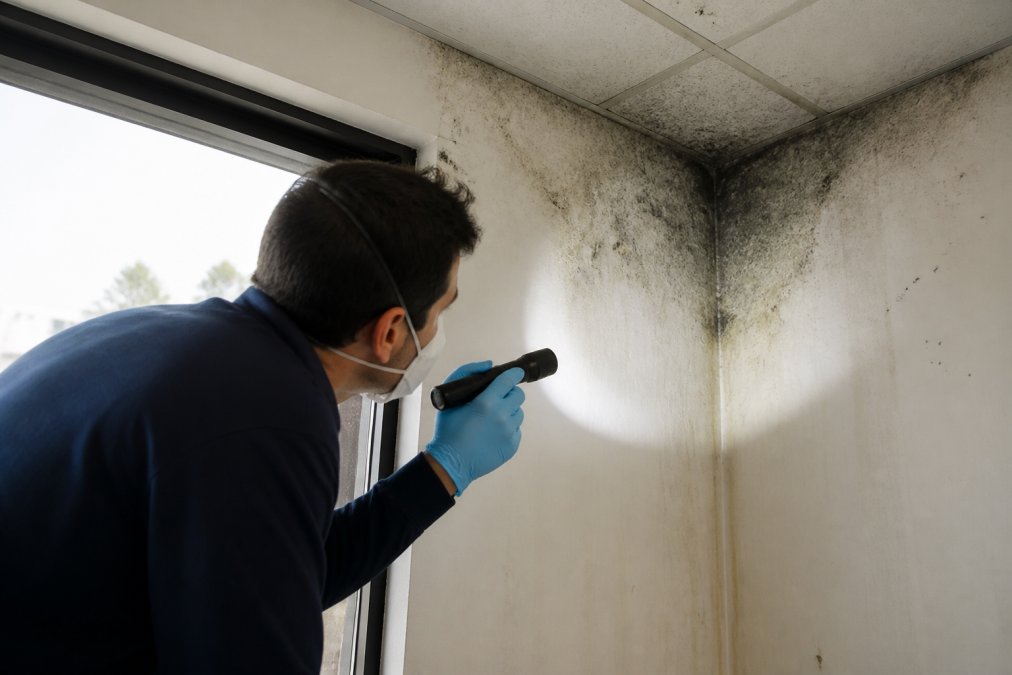
A visual examination is the most important step in any commercial building mold inspection guide. It locates moisture intrusion and the conditions that feed microbial growth before mold spreads into hidden cavities.
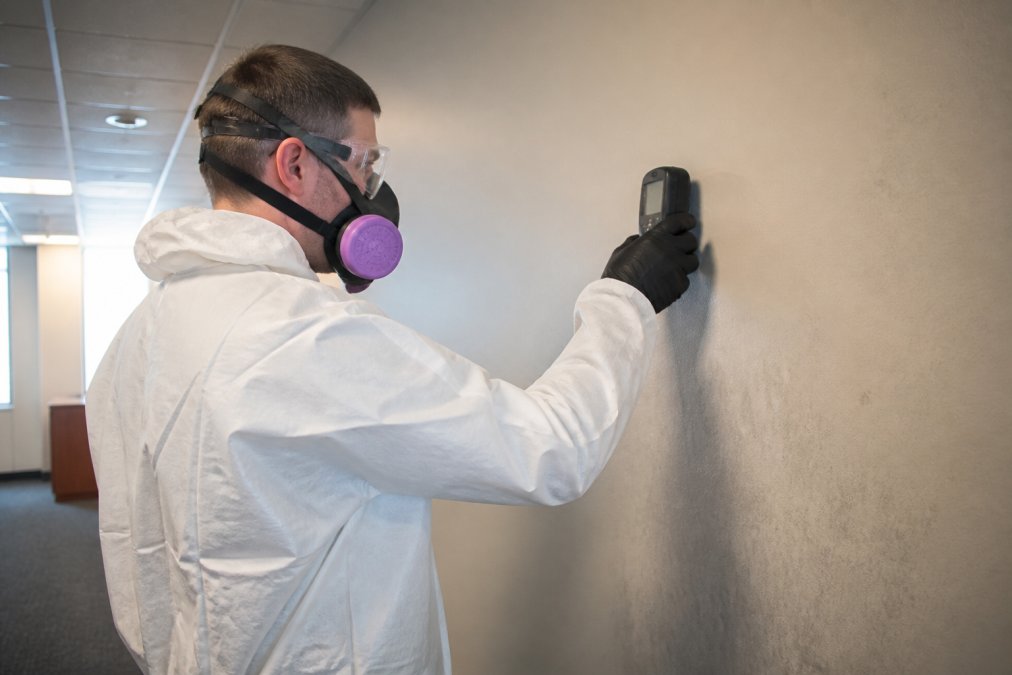
Non-invasive tools speed this up:
- Thermal imaging reveals temperature differences that signal trapped moisture
- Moisture meters confirm relative humidity levels inside walls and ceilings
- Moisture mapping documents the full extent of water damage for the report
The Commercial Mold Remediation Process, Step by Step
The commercial mold remediation process follows a defined sequence: assess, contain, remove, clean, dry, and verify. Each step protects occupants, preserves building materials, and builds the paper trail a commercial owner needs if a claim or dispute follows. IICRC remediation standards set the industry benchmark most insurers, adjusters, and inspectors reference, and the EPA's mold remediation guidance aligns with the same sequence.
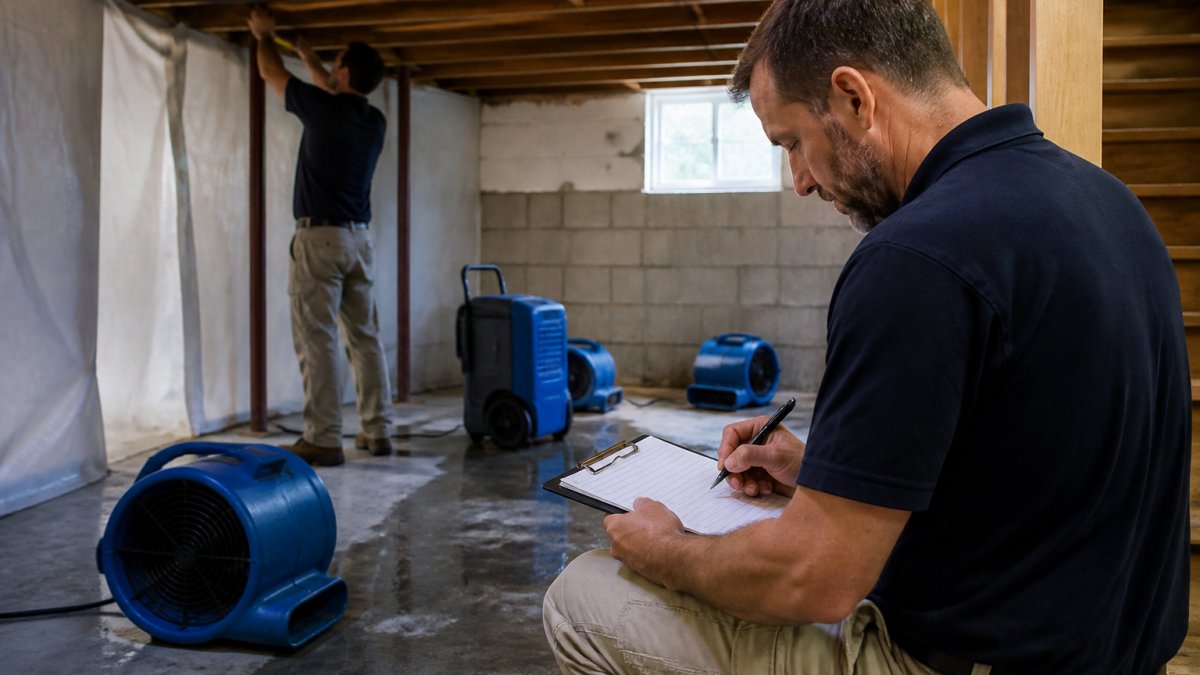
- Assess and plan. Document contamination with moisture mapping, photos, and lab results before disturbing any material. Write a remediation plan naming affected areas, materials to be removed, and clearance criteria. On a commercial job, the owner, insurer, and sometimes the tenant review it before work starts.
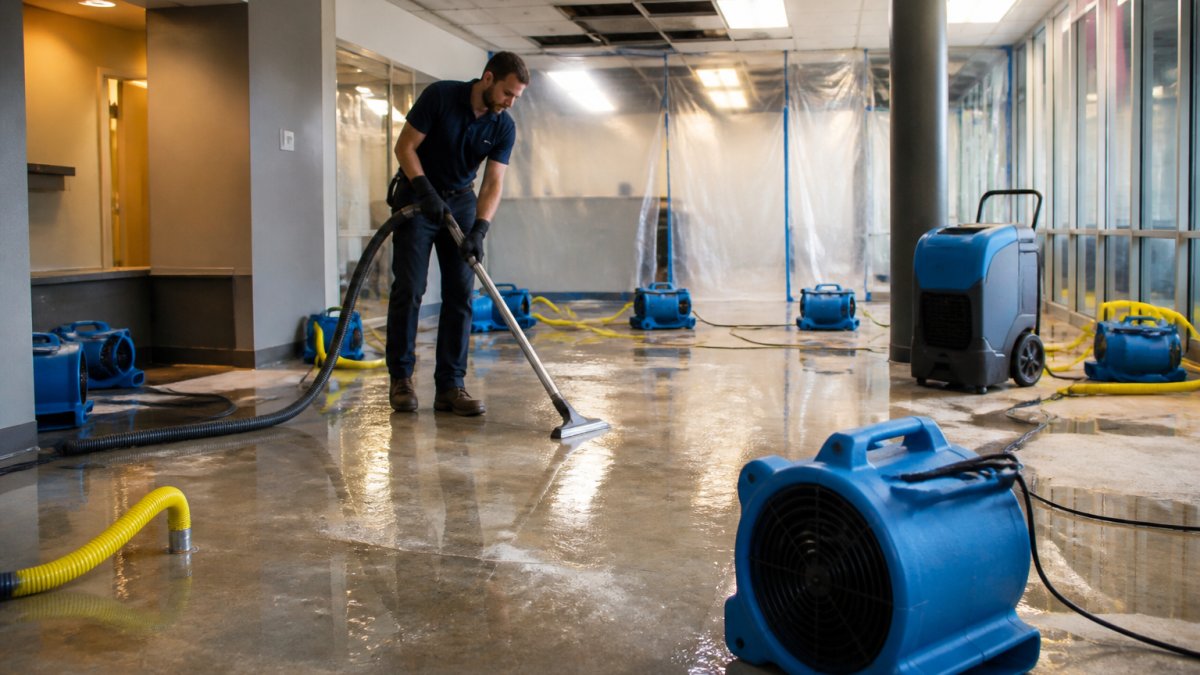
- Isolate the area. Seal the workspace with 6-mil poly containment barriers and run negative air pressure using HEPA-filtered air scrubbers, keeping spores out of clean tenant spaces and shared corridors. On multi-tenant floors, seal supply and return vents in the work zone too.
- Remove the contaminant source. Tear out porous materials that cannot be cleaned, drywall, ceiling tiles, insulation, carpet, then HEPA-vacuum and wipe hard surfaces. Repair the moisture source itself (roof leak, failed condensate line, slab leak) before reconstruction, or the growth returns.
- Clean and HEPA-vacuum. Treat remaining structural surfaces, then HEPA-vacuum everything in the containment. Rushed jobs fail clearance here: settled spores re-aerosolize if not removed.
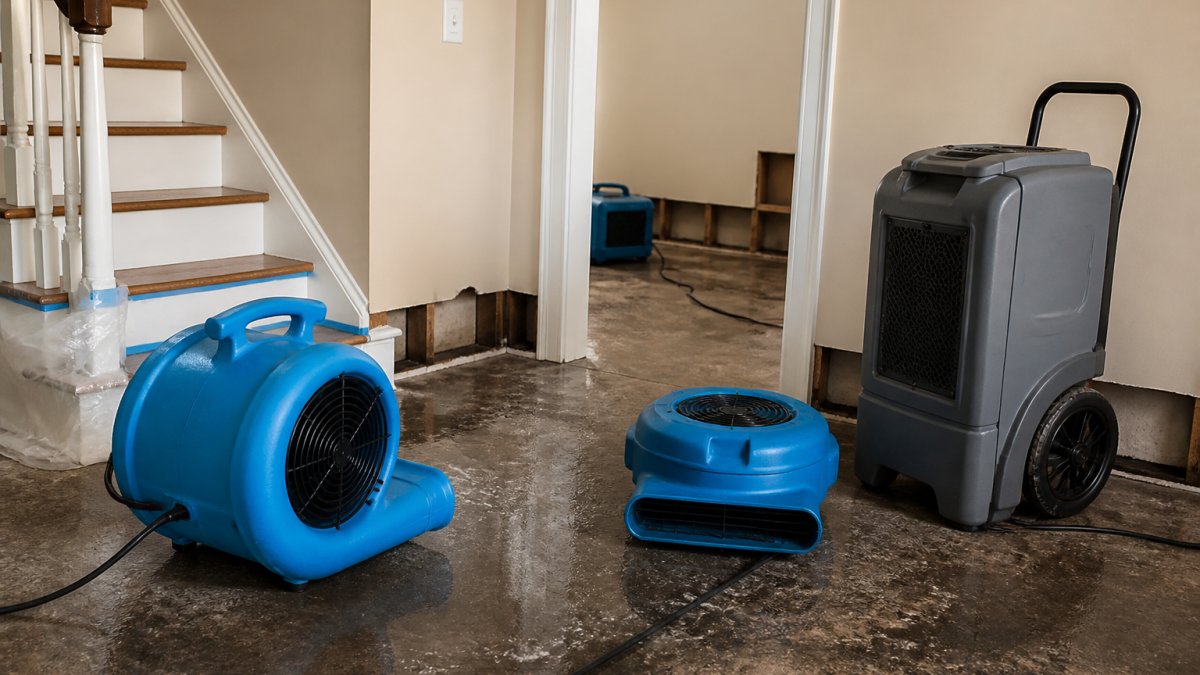
- Dry and dehumidify. Bring relative humidity down to stop further microbial growth. Drying is not optional after removal, residual moisture in framing or slab will feed a new colony.
- Verify. Confirm the work with post-remediation verification before containment comes down.
Containment, Removal, and Post-Remediation Verification
Containment keeps spores out of clean areas; removal eliminates the contaminated material and the moisture feeding it. Post-remediation verification, or PRV, is the step most owners skip and later regret, and the single most important document in a commercial mold file.
- Visual inspection of the work area after containment is cleaned but before it is removed, confirming no visible dust, debris, or suspected growth remains.
- Air sampling inside the containment and in adjacent occupied spaces, compared against an outdoor control sample collected the same day.
- Surface sampling on representative horizontal surfaces to confirm settled spores have been removed.
- Moisture verification confirming the repaired assembly is dry, not just mold-free.
OSHA Mold Workplace Standards and Occupant Health Obligations
There is no single federal mold exposure limit, but that does not leave building owners unprotected. OSHA mold workplace standards fall under the General Duty Clause, which requires employers to provide a workplace free of recognized hazards. The OSHA General Duty Clause guidance makes occupant health a legal obligation, not a courtesy.
Mold exposure can trigger allergic reactions, asthma flare-ups, and respiratory irritation in sensitive occupants. For property managers, the obligation is practical:
- Respond to moisture complaints quickly
- Document every inspection and repair
- Communicate remediation plans to tenants
- Keep HVAC systems clean and ventilated
Mold Prevention Checklist for Property Managers
Prevention costs less than remediation. A mold prevention checklist for property managers turns reactive repairs into a scheduled routine. Print it, assign owners, and track completion dates.
- Inspect roofs, flashing, and drainage after every major storm
- Check relative humidity in tenant spaces monthly, targeting below 60%
- Service HVAC systems and replace filters on schedule
- Inspect under sinks, around water heaters, and near ice machines
- Watch for musty odor complaints and log every one
- Dry any water damage within 24 to 48 hours
- Document all inspections with dates and photos
HVAC Systems, Insurance Claims, and Liability: What Inspectors Miss
Three areas separate a thorough commercial inspection from a superficial one: HVAC systems, insurance documentation, and legal liability. Most guides treat these as afterthoughts, yet they are where the real cost hides, and where a property manager's decisions determine whether the owner is protected.
HVAC-Specific Mold Protocols
HVAC systems are the circulatory system of a commercial building. Contaminated ductwork, cooling coils, and drip pans spread spores to every connected space, so a problem starting in one mechanical room can surface as complaints three floors away. A residential-style inspection that stops at the visible wall will miss it.
A commercial HVAC mold inspection should cover:
- Air handling units (AHUs), inspect the interior of the cabinet, the mixed-air plenum, and the insulation lining. Lined ductwork that has been wet is a common reservoir.
- Cooling coils and condensate pans, standing water in a pan, biofilm on coil fins, or a clogged condensate drain line are primary growth sites. Confirm the trap is primed and the drain discharges to an approved location.
- Ductwork, flex duct, fibrous duct board, and internally lined metal duct can all hold moisture and spores. Duct cleaning alone does not fix a mold problem if the moisture source is still active.
- Rooftop units (RTUs), curb flashing, economizer dampers, and unit pans are frequent leak points on low-slope commercial roofs.
- Ventilation and pressurization, a building under negative pressure pulls humid outdoor air into wall cavities. Verify outdoor air intakes and exhaust balance.
Insurance Claim Documentation Requirements
Insurance claims live or die on documentation. Adjusters want evidence the loss occurred, the cause is covered, and remediation met a recognized standard. Once contaminated material hits the dumpster, the evidence is gone, so build the inspection file before cleanup begins.
A commercial mold claim file should typically include:
- Moisture mapping showing the full extent of elevated readings, with a floor plan or sketch.
- Dated photos and video of visible growth, water staining, and the moisture source before any demolition.
- Lab results from air, surface, or bulk sampling, including the outdoor control sample.
- A written remediation plan naming the scope, containment approach, and clearance criteria.
- Daily logs from the remediation contractor showing containment, negative pressure readings, and demolition progress.
- The post-remediation verification report with air and surface clearance results.
- Repair records for the moisture source, the roof, pipe, or HVAC component that caused the loss.
Legal and Liability Implications for Building Owners
Liability follows the paper trail. Owners who can show prompt inspection, documented remediation, and clearance testing are far better protected. When a tenant or insurer asks what was done, the report answers for you.
- Tenant habitability and lease obligations. Many commercial leases place HVAC maintenance and moisture response on the landlord. Ignored moisture complaints can become lease disputes, rent withholding, or constructive eviction claims.
- Negligence claims. A documented history of complaints without action is far worse in litigation than a single incident handled promptly.
- Insurance coverage disputes. Failure to mitigate, letting a known leak continue, is one of the most common reasons a commercial mold claim is reduced or denied.
- Regulatory and OSHA exposure. Under the OSHA General Duty Clause, employers must provide a workplace free of recognized hazards. Mold complaints that go unaddressed can draw scrutiny from OSHA or a local health department.
- Disclosure in sale or refinance. Unresolved mold issues and missing clearance reports surface in due diligence and can stall a transaction or reduce value.
Conclusion
Mold in a commercial building rarely announces itself. It hides behind walls, inside ductwork, and under the quiet moisture of a slow leak. Catching it early takes disciplined inspection, proper testing, and remediation you can prove was done right.
Frequently Asked Questions
What are the OSHA requirements for mold in the workplace?
OSHA has no single mold-specific standard, but employers must protect workers under the General Duty Clause and several hazard standards. Inspectors and remediators typically follow OSHA respiratory protection rules (29 CFR 1910.134) when airborne mold spores or bioaerosols are present. Employers must assess exposure, provide appropriate PPE, and train workers. If you manage a commercial property with suspected fungal contamination, document your hazard assessment and worker protections before anyone enters the affected area.
How often should a commercial building be inspected for mold?
Most property managers schedule a baseline mold inspection annually, then after any water damage, roof leak, or HVAC malfunction. High-risk spaces like basements, mechanical rooms, and areas with hygroscopic materials need quarterly visual checks. If occupants report a musty odor or allergy symptoms, inspect immediately rather than waiting for the next cycle. A documented inspection schedule also strengthens your position if an insurance claim or liability dispute arises later.
What is the difference between mold inspection and mold testing?
An inspection is the visual and non-invasive examination of a building for moisture intrusion, water damage, and visible microbial growth. Testing involves collecting air, surface, or bulk samples and sending them to a lab to identify mold spores and contamination levels. Inspection comes first and tells you where to sample. Testing confirms what is present and helps establish a baseline for clearance testing after remediation. Both are part of a complete commercial mold testing procedure.
Who is qualified to perform a commercial mold inspection?
Look for inspectors with IICRC certifications, such as the Water Restoration Technician (WRT) or Applied Structural Drying (ASD) credentials, plus experience with commercial building envelopes and HVAC systems. Some states license mold assessors separately. Ask for proof of certification, insurance, and references from comparable commercial properties. A qualified inspector documents findings with photos, moisture mapping readings, and thermal imaging so your remediation plan and insurance claim stand on solid evidence.
What are the EPA guidelines for mold remediation in commercial buildings?
The EPA does not certify mold remediation contractors, but its Mold Remediation in Schools and Commercial Buildings guide sets the benchmark most inspectors follow. It recommends fixing the moisture source first, using containment to stop spore spread, and verifying cleanup with post-remediation verification. Porous materials with extensive fungal contamination usually need removal rather than cleaning. Following these guidelines helps you demonstrate due diligence and supports clearance testing before occupants return.
How do I document a mold problem for an insurance claim?
Photograph all visible microbial growth, water staining, and damaged materials before anything is moved. Log moisture readings, relative humidity levels, and thermal imaging results with timestamps. Keep the inspection report, lab results from air and surface sampling, and the written remediation plan together. Notify your carrier early and confirm whether the loss is covered, since most commercial policies exclude long-term moisture intrusion but cover sudden water damage. Thorough documentation is the difference between a paid claim and a denial.