 ultimate-guide
Cost of Professional Basement Restoration: 2026 Guide
Table of Contents
- What Drives the Cost of Professional Basement Restoration
- Basement Water Damage Repair Cost: What Changes the Total
- Mold Remediation Cost per Square Foot: How to Estimate Your Job
- Hidden Costs: Demolition, Debris Removal, and Surprise Repairs
- Waterproofing, Moisture Control, and Permits: Budget Lines Owners Forget
- Does Homeowners Insurance Cover Professional Basement Restoration?
- How to Budget and Vet a Contractor for Basement Restoration
- Conclusion: Getting a Real Number for Your Basement
- Frequently Asked Questions
Last Updated: October 3, 2026
What Drives the Cost of Professional Basement Restoration
The cost of professional basement restoration depends on how much water entered, how long it sat, and what it damaged. At AFC Cleaning & Restoration, we have handled flooded basements across the Kansas City area since 2003, and the biggest cost variable is time, not square footage.
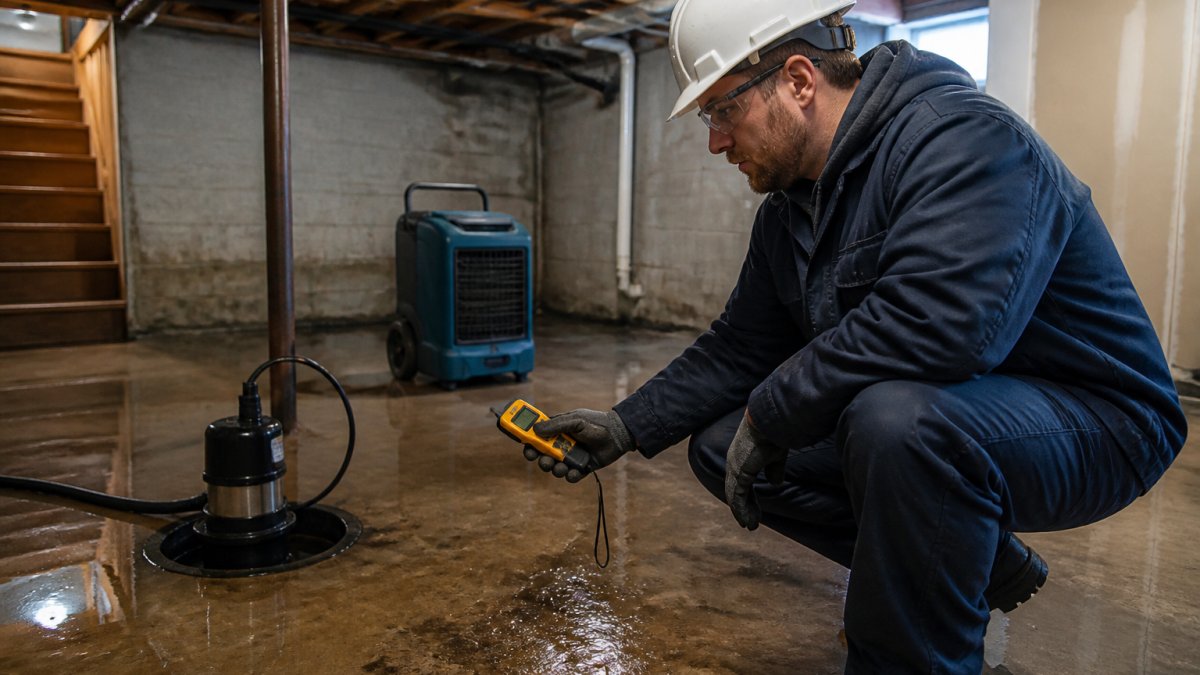
Restoration differs from finishing: finishing a dry, empty basement is optional construction, while restoration responds to an active problem, standing water, a failed sump pump, a burst supply line, or a sewer backup already soaked into drywall and subfloor.
Restoration vs. Finishing: Why the Numbers Differ
A finishing project follows a predictable sequence with a scope you control. Restoration inverts that: the scope is unknown until a structural assessment and site inspection are complete, because water travels behind finished walls and under flooring.
That hidden damage is why two basements of identical size can produce wildly different estimates: one has a wet carpet, the other saturated insulation, a warped subfloor, and mold behind the drywall, a drying job versus a demolition and rebuild.
Basement Water Damage Repair Cost: What Changes the Total
Basement water damage repair cost is driven by water category, affected area, and how quickly drying begins. Category 1 comes from a clean supply line, Category 2 is gray water from a washer or dishwasher, and Category 3 is black water from sewage or ground flooding.
Category 3 material cannot be dried and saved. Contaminated drywall, insulation, and carpet get demoed and hauled away, then the structure is disinfected before rebuild, adding labor, disposal, and materials.
The other lever is response time. Water that sits for days feeds mold and softens structural wood. This is why AFC Cleaning & Restoration runs 24/7, 365 days a year with IICRC-certified technicians: a call at 2 AM gets a crew moving, not a voicemail.
| Water Category | Typical Source | Restoration Approach |
|---|---|---|
| Category 1 (clean) | Supply line, rain intrusion | Extract, dry, monitor |
| Category 2 (gray) | Washer, dishwasher, toilet | Extract, disinfect, dry |
| Category 3 (black) | Sewage, ground flood | Remove, disinfect, rebuild |
Mold Remediation Cost per Square Foot: How to Estimate Your Job
Mold remediation cost per square foot is the wrong way to quote a basement. Mold is priced by containment and air volume, not floor area, because spores travel through the cavity behind a wall, a 200-square-foot corner can require sealing off an entire room.
A proper estimate starts with mold remediation scope: how many rooms need containment, whether HVAC ductwork is contaminated, and whether the moisture source is fixed. If the water problem is not corrected first, the mold returns.
- Containment and negative air pressure setup
- Removal of affected drywall, insulation, and porous material
- HEPA vacuuming and antimicrobial treatment
- Air scrubbing and clearance verification
- Moisture source correction, including waterproofing or a sump pump
Hidden Costs: Demolition, Debris Removal, and Surprise Repairs
The line items that blow up a budget are almost never on the first page. Demo and haul away, unexpected foundation repair, and code-driven upgrades appear once walls open.
Common surprise costs include:
- Demolition and debris removal: Tearing out wet drywall, flooring, and insulation, then hauling it off site.
- Structural assessment findings: Rotted framing, a cracked foundation, or a compromised subfloor discovered mid-job.
- Electrical panel upgrade: A panel sitting in a damp area often needs replacement to meet code compliance.
- HVAC ductwork: Contaminated ducts may need cleaning or partial replacement.
- Egress windows: If the basement is a sleeping area, code may require a compliant egress window during rebuild.
A contingency fund sized to the project scope is standard practice on restoration work, because the unknowns are the point.
Waterproofing, Moisture Control, and Permits: Budget Lines Owners Forget
Waterproofing and moisture control are not optional add-ons after a flood; they are the reason the restoration holds. Skip them and you pay for the same job twice.
The core measures are a vapor barrier, a sump pump with a backup, proper grading away from the foundation, and insulation with an appropriate R-value, together they keep the basement dry after the crew leaves.
Building permits and inspections are the other forgotten line. Structural repairs, electrical work, and new egress windows typically require permits, and unpermitted work creates problems at resale.
| Budget Line | Why It Matters | Often Forgotten? |
|---|---|---|
| Waterproofing / vapor barrier | Prevents repeat moisture | Yes |
| Sump pump + backup | Handles future water | Yes |
| Permits and inspections | Code compliance, resale | Yes |
| Contingency fund | Covers hidden damage | Yes |
Does Homeowners Insurance Cover Professional Basement Restoration?
This question decides whether a five-figure restoration is a claim or an out-of-pocket expense. A standard homeowners policy (HO-3 or HO-5) usually pays for sudden and accidental water damage and excludes gradual seepage, poor maintenance, and rising surface flood. The cause of the water, not the water itself, triggers or kills coverage.
What Is Typically Covered vs. Excluded
| Cause of Water | Typical HO-3 / HO-5 Treatment |
|---|---|
| Burst supply line or pipe | Covered (sudden, accidental) |
| Failed water heater or appliance | Covered (sudden, accidental) |
| Sump pump overflow (with endorsement) | Often covered only if a sump pump endorsement or rider was added |
| Sewer or drain backup | Excluded unless a backup endorsement was purchased |
| Gradual seepage, chronic damp, poor grading | Excluded (maintenance) |
| Rising ground water / surface flood | Excluded, requires a separate flood policy |
| Mold | Usually capped at a sublimit (commonly $10,000) unless the mold resulted from a covered peril |
Two endorsements change the math more than anything else: a water backup and sump overflow endorsement and a flood policy (through the National Flood Insurance Program or a private carrier). If your basement has a sump pump and no backup endorsement, that is the highest-value coverage gap to close.
The Claim Mechanics That Decide Your Payout
Coverage is only half the story; how the claim is structured determines what you collect:
- Mitigation duty. Most policies require reasonable steps to prevent further damage, so call for emergency extraction and drying immediately rather than waiting for the adjuster. Documented mitigation is reimbursable; neglect can reduce or void the claim.
- Replacement cost vs. actual cash value. RCV pays to rebuild with new materials; ACV pays depreciated value. Many policies pay ACV up front and release the RCV holdback only after the work is completed and invoiced.
- Loss of use / additional living expenses (ALE). If the basement was a living space and the home is temporarily uninhabitable, ALE can cover hotel and meals. It does not apply to a finished basement nobody lived in.
- Separate mitigation from rebuild. Adjusters often write two scopes: emergency mitigation (extraction, drying, demo, antimicrobial) and rebuild (drywall, flooring, paint, trim). Keeping those line items separate makes the claim easier to approve and audit.
- Depreciation and recoverable depreciation. On an RCV policy, the gap between ACV and RCV is "recoverable depreciation", you get it back after the rebuild is complete. Miss the documentation and you leave money on the table.
Documentation That Drives Approval
- Photograph and video the damage before anything is moved or discarded.
- Keep every receipt, including hotel and meals if ALE applies.
- Get a written, line-item estimate that separates mitigation from rebuild.
- Save all damaged material samples (a square of wet drywall, a piece of carpet) until the adjuster has seen them.
- Log every phone call with the carrier: date, time, representative name, and what was said.
When It Is Not Covered
If the loss is rising ground water, the claim belongs to a flood policy, not the homeowners policy. Gradual seepage or deferred maintenance is usually denied outright, and mold over the policy sublimit is out of pocket. The restoration still has to happen, just on your dime.
FEMA guidance on flood insurance and disaster assistance explains why flood-related losses are handled separately from standard homeowners coverage, which matters when you are deciding how to file.
How to Budget and Vet a Contractor for Basement Restoration
Restoration bids are hard to compare because they are not apples to apples. One contractor quotes drying only, another drying plus rebuild, a third a lump sum that hides the rebuild. Control cost by forcing every bid into the same structure, then compare scope, not totals.
Split Every Bid Into Two Phases
Ask each contractor to price the job in two clearly separated phases:
- Emergency mitigation, water extraction, demolition of unsalvageable material, antimicrobial treatment, structural drying, and moisture monitoring. This phase is driven by equipment days and labor hours.
- Rebuild, framing, drywall, insulation, flooring, trim, paint, electrical, plumbing, and HVAC work needed to return the space to pre-loss condition.
Splitting the bid makes the insurance claim easier (carriers often write mitigation and rebuild as separate scopes), exposes contractors who padded one phase to hide a lowball in the other, and lets you pause after mitigation if the rebuild estimate comes in high.
Size the Contingency to the Damage, Not to a Rule of Thumb
A flat "10% contingency" is a remodeling habit, not a restoration one. In restoration, contingency should scale with how much damage is hidden:
- Visible, contained damage (one room, clean water, fast response): a smaller contingency is reasonable.
- Category 2 or 3 water, or damage behind finished walls: a larger contingency is warranted, because demo reveals what metering cannot.
- Pre-1980 home, or a basement with prior repairs: budget for the possibility of asbestos-containing materials, lead paint, or a previous repair that has to be undone.
The contingency is not padding; it keeps a mid-job discovery from turning into a change-order fight.
What a Line-Item Estimate Should Actually Contain
A trustworthy restoration estimate itemizes, at minimum:
- Equipment (air movers, dehumidifiers, HEPA scrubbers) priced by unit and by day
- Labor by trade and by hour, not a blended rate
- Demolition and debris removal, including dumpster or haul-away fees
- Antimicrobial and disinfectant products, listed by product
- Materials by category (drywall, insulation, flooring, trim) with quantities
- Permits and inspection fees, with a clear statement of who pulls them
- A named contingency line and the policy for using it
- A change-order process in writing: who approves, how it is priced, how it is documented
A single number with no breakdown cannot be compared or audited later.
Compare Scope, Not Totals
When two bids differ by thousands of dollars, the difference is almost always scope, not price. Check these common gaps:
- Is waterproofing or a vapor barrier included, or is it an add-on?
- Is the sump pump and backup included, or assumed to be working?
- Is mold remediation inside the bid, or excluded pending testing?
- Is permit pulling included, or is the homeowner expected to file?
- Is debris removal included, or billed separately by weight?
- Is the rebuild priced to pre-loss condition, or to a lower "builder grade" standard?
A low bid that excludes three of those items is not a low bid. It is a partial bid.
Vet the Contractor, Not Just the Price
- Confirm IICRC certification and ask for the specific technician credentials assigned to your job.
- Verify licensing and insurance in writing; ask for a certificate of insurance naming you as an additional insured.
- Ask how moisture and mold clearance is verified at completion, the answer should involve meter readings and, on larger jobs, third-party clearance testing.
- Confirm the contractor will document the loss for the carrier and communicate with the adjuster directly.
- Get the project timeline and contingency policy in writing before signing.
- Ask for two or three recent restoration references, not remodeling references.
Ask each contractor the same five questions in the same order, and write down the answers. The contractor who answers with specifics, equipment counts, drying days, clearance criteria, is the one whose bid you can trust.
A Common Mistake
Choosing on price alone. The lowest bid often excludes waterproofing, permits, or debris removal, then adds them back mid-job through change orders. By the time the rebuild starts, you are committed and the "cheap" bid is the most expensive on the table. Compare scope line by line, then totals.
Conclusion: Getting a Real Number for Your Basement
Basements rarely flood at a convenient hour, and the cost of professional basement restoration is never a fixed figure until the damage is inspected. Your total depends on water category, affected area, mold presence, and whether waterproofing and permits are handled correctly the first time.
AFC Cleaning & Restoration brings IICRC-certified technicians, 24/7 emergency response, and more than two decades of Kansas City restoration experience to every job, residential or commercial. We handle insurance documentation, moisture mitigation, and full rebuild so the work holds. Contact us for an inspection and a written estimate before the next storm.
Frequently Asked Questions
What is the average cost to restore a basement after water damage?
There is no single average because the cost of professional basement restoration depends on how much water entered, how long it sat, and what materials it touched. A small clean-water leak that only wets carpet and baseboard sits at the low end, while a category 3 flood that soaks drywall, insulation, and subfloor pushes the total much higher. Square footage, labor rates, and whether mold remediation is needed all move the number. Get a written estimate after a site inspection rather than relying on a national average.
How do I calculate the cost of mold remediation in a basement?
Mold remediation cost depends on factors like containment, HEPA filtration, removal of porous materials, and antimicrobial treatment. Add separate line items for any structural assessment, HVAC ductwork cleaning, and rebuild work after remediation. Because mold often spreads behind walls, a site inspection matters more than a rough measurement, since visible mold is usually a fraction of the total affected area.
Does homeowners insurance cover professional basement restoration?
It depends on the cause. Most policies cover sudden and accidental water damage, such as a burst pipe or failed water heater, but exclude gradual seepage, poor maintenance, and surface flooding unless you carry separate flood coverage. Mold coverage is often capped or excluded unless it stems from a covered peril. Document everything with photos before cleanup begins, keep receipts, and ask your adjuster for the specific policy language. A restoration contractor experienced with claims can help you present the scope clearly.
What factors increase the cost of professional basement repairs?
The biggest cost drivers are the water category, how long the moisture sat, and how far it spread. Contaminated water, mold growth, and saturated subfloor or framing add labor and disposal fees. Other factors include limited access for equipment, the need for an electrical panel upgrade or egress window work during rebuild, permit and inspection requirements, and whether the space was finished. A contingency fund of 10 to 20 percent of the estimate covers repairs discovered once walls are opened.