 ultimate-guide
Commercial HVAC Mold Removal in Kansas City: 2026 Guide
Table of Contents
- Why Commercial HVAC Mold Removal in Kansas City Is Different
- Signs of Mold in Commercial HVAC Systems
- The Commercial HVAC Mold Removal Process, Step by Step
- IICRC Mold Remediation Standards and What They Require
- What Drives Commercial Air Duct Cleaning Cost
- Post-Remediation Verification and Ongoing Prevention
- Frequently Asked Questions
Last Updated: September 20, 2026
Why Commercial HVAC Mold Removal in Kansas City Is Different
Commercial HVAC mold removal in Kansas City is a specialized job because the region's humid summers and tight, well-sealed commercial buildings create ideal conditions for microbial growth inside ductwork and air handling units. At AFC Cleaning & Restoration, we've handled these systems, and the pattern is consistent: moisture gets in, and mold follows.
EPA guidance on mold cleanup in commercial buildings
Signs of Mold in Commercial HVAC Systems
The clearest sign of mold in commercial HVAC is a musty, earthy odor that appears when the system runs and fades when it stops. That pattern points to contamination inside the air path, not a spill in one room.
Visual and Smell Cues in Ductwork and Air Handlers
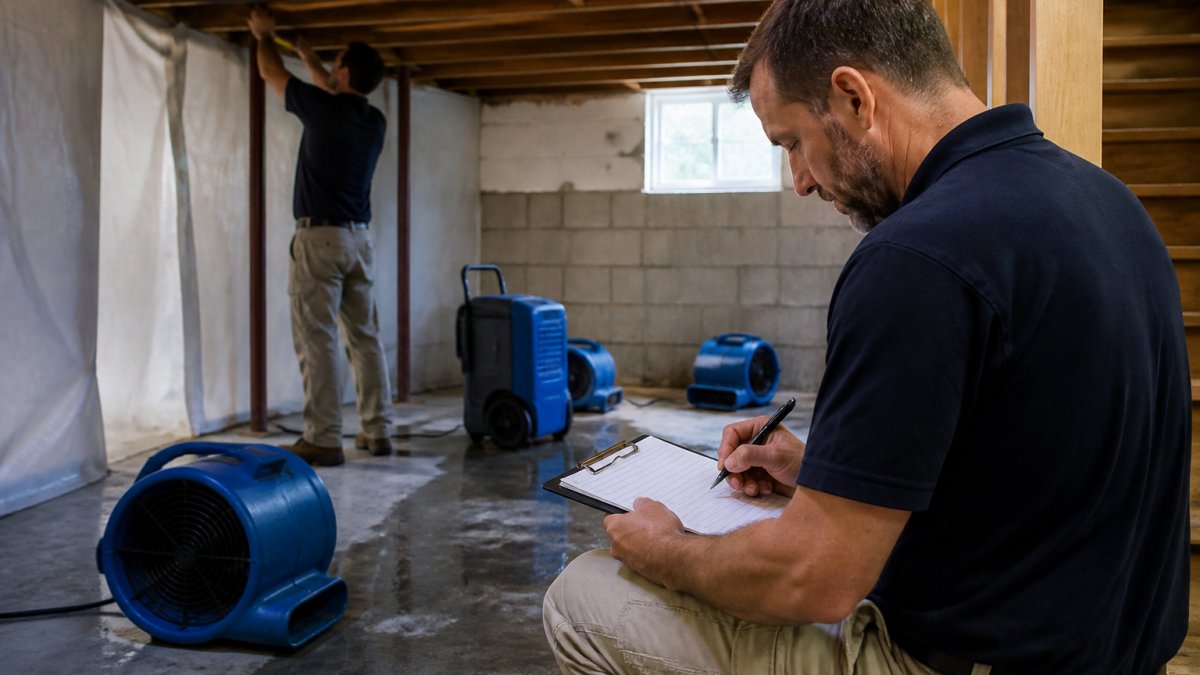
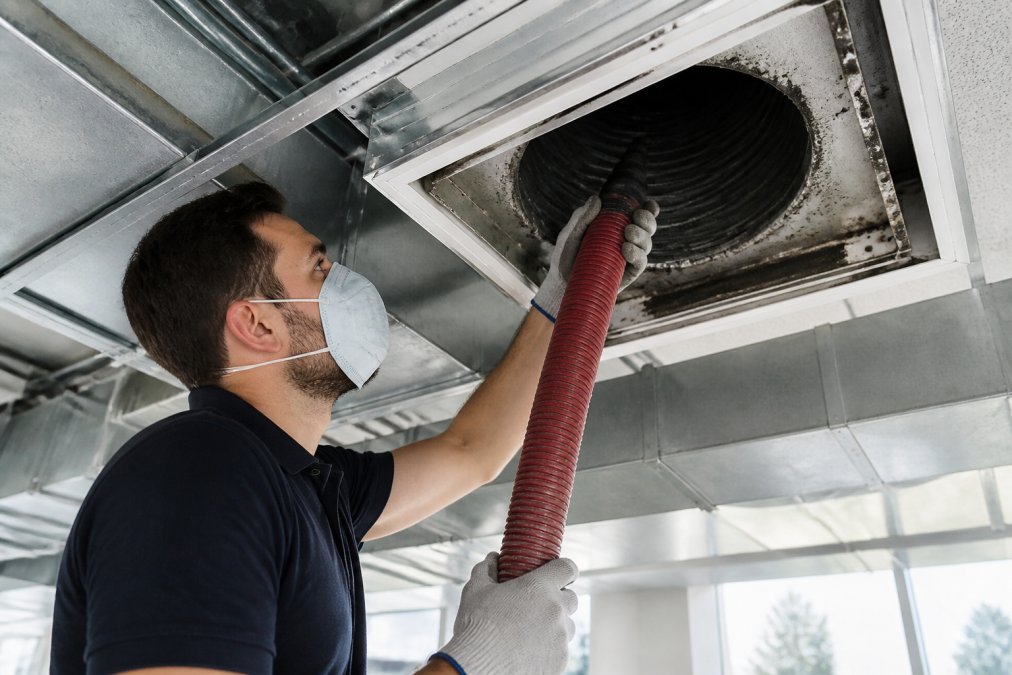
Inspectors look for dark staining on duct interiors, fuzzy growth on insulation, and standing water in drip pans. Condensate pans and drain lines are the usual first offenders. When a drain clogs, water pools, and mold spores land on a wet surface within a day or two.
Warning Signs in Occupant Complaints and Energy Bills
Occupants often notice before the building does. A cluster of allergy-like complaints, headaches, or throat irritation in one zone is a signal worth investigating. Rising energy costs can also point to the problem: contaminated HVAC coils lose heat-transfer efficiency, so the system runs longer to hit the same setpoint.
- Recurring musty odors in specific zones
- Visible dark spotting near vents or on ceiling tiles
- Unexplained increases in cooling costs
- Repeated occupant complaints concentrated in one area
- Standing water or overflow in drip pans
The Commercial HVAC Mold Removal Process, Step by Step
A proper remediation follows a defined sequence: assess, contain, clean, sanitize, and verify. Skipping the containment step is the mistake that turns a contained problem into a building-wide one.
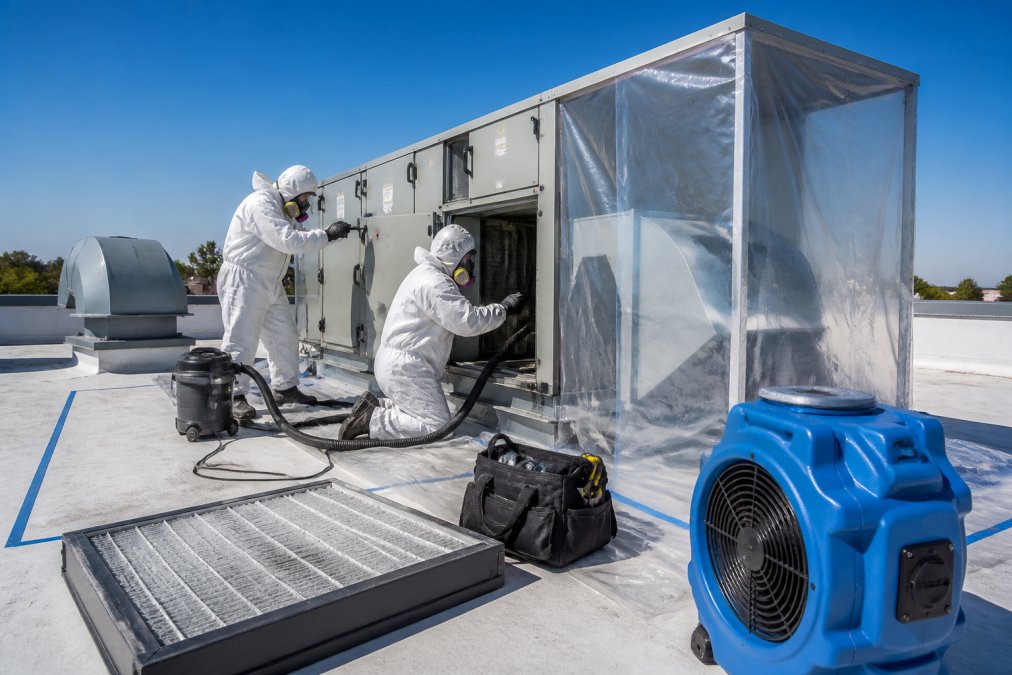
Containment, Negative Air, and HEPA Filtration
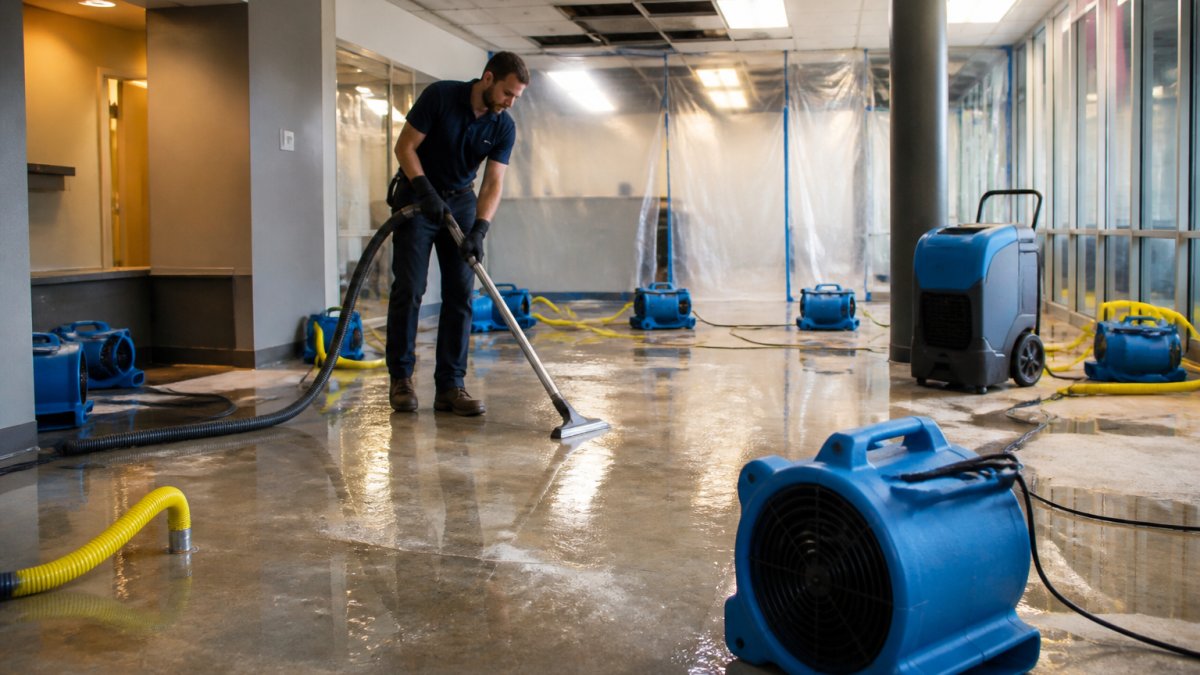
Technicians seal off the work area and set up negative air pressure so airborne contaminants flow inward, not into occupied space. HEPA filtration captures mold spores and bioaerosols that a standard filter would recirculate. This step protects both the building and the crew.
Ductwork Cleaning, Coil Sanitization, and Drip Pan Repair
Ductwork is cleaned mechanically, not just vacuumed. Coils get sanitized because their wet, finned surfaces are prime real estate for fungal contamination. Drip pans and drain lines are repaired or replaced, since a pan that still leaks guarantees the mold returns.
| Phase | What Happens | Why It Matters |
|---|---|---|
| Assessment | Moisture mapping, mold testing | Finds the source, not just the symptom |
| Containment | Negative air, HEPA filtration | Stops spores from spreading |
| Cleaning | Ductwork, coils, drip pans | Removes the contamination itself |
| Verification | Post-remediation testing | Confirms the fix actually worked |
IICRC Mold Remediation Standards and What They Require
IICRC mold remediation standards provide the industry framework for how contamination is assessed, contained, and cleared. The IICRC S520 standard is the reference most certified firms follow, and it emphasizes source correction over surface treatment.
IICRC certified firm and standards information
What Drives Commercial Air Duct Cleaning Cost
Commercial air duct cleaning cost depends on system size, access difficulty, and contamination level, not on a flat rate. Two buildings of identical square footage can carry very different price tags. For facility managers who need to build a capital or operating budget line, the useful exercise is understanding how a remediation contractor actually builds a number, because the line items are predictable even when the total is not.
The Four Cost Models Contractors Use
Most commercial quotes fall into one of four structures, and knowing which one you're being quoted changes how you compare bids:
- Per air handling unit (AHU). Common for buildings with a small number of large rooftop or mechanical-room units. The unit count drives the price, and each unit is scoped individually.
- Per linear foot of ductwork. Common in buildings with long, accessible trunk runs. This model rewards clean layouts and penalizes ductwork buried above finished ceilings.
- Per square foot of conditioned floor area. Common for portfolio-wide or multi-tenant contracts where the contractor wants a single blended rate. Convenient for budgeting, but it hides the difference between a lightly contaminated system and a heavily contaminated one.
- Time-and-materials with a not-to-exceed cap. Common when contamination level is unknown until containment is opened. The cap protects the owner; the open-ended labor line protects the contractor.
What Actually Moves the Number
Within any of those models, five variables do most of the work:
- Number and size of air handling units. A single rooftop unit serving one floor is a different project than a multi-story system with dozens of AHUs. Each unit adds containment setup, coil access, and verification sampling.
- Access difficulty. Tight mechanical rooms, duct runs behind finished ceilings, and units mounted above occupied tenant space add labor hours and require more containment plastic and negative-air equipment.
- Contamination level. Light surface growth on a drip pan is a cleaning job. Growth on porous duct liner, saturated insulation, or contaminated coils is a removal-and-replace job, and porous materials generally cannot be cleaned in place.
- Containment and filtration runtime. Negative air machines and HEPA scrubbers run for the duration of the work and often for a clearance period afterward. Longer runtime means more equipment on rent and more labor hours on site.
- Verification scope. Air sampling, surface sampling, and laboratory analysis are separate line items. A quote that stops at cleaning is not the full cost of the job, it is the cost of the first attempt.
How to Build a Budget Line Before You Have a Quote
Facility managers who need a planning number before an assessment can use a simple bracketing approach:
- Pull the AHU count and total conditioned square footage from your mechanical drawings.
- Note which units are in occupied zones versus mechanical rooms, occupied-zone work carries a containment premium.
- Note the age of the duct system. Older systems with fibrous liner are more likely to require removal and replacement rather than cleaning.
- Ask two or three contractors to quote the same written scope so the bids are comparable.
Post-Remediation Verification and Ongoing Prevention
Post-remediation verification, or PRV, is the step that separates a documented job from an assumed one. It combines visual inspection with air and surface sampling to confirm contamination has been removed and moisture levels are back to normal. Most competitors treat PRV as a checkbox; in commercial work it is the deliverable that protects the building owner, the tenant, and the contractor.
What PRV Actually Measures
A defensible PRV protocol typically includes three layers:
- Visual inspection. The remediator and, ideally, a third-party inspector confirm that no visible growth or dust remains on duct interiors, coils, drip pans, and plenum surfaces. Visual inspection alone is not clearance, it is the gate that must be passed before sampling.
- Surface sampling. Swab or tape-lift samples are collected from representative surfaces (duct interior, coil face, drip pan) and sent to an accredited laboratory for fungal analysis. Results are compared against a control sample collected from an unaffected area of the building.
- Air sampling. Spore-trap or similar air samples are collected inside the remediated system and in a reference outdoor or unaffected-indoor location. The comparison is what matters: indoor spore counts and species profile should be consistent with the reference, not elevated above it.
A common pattern is for the remediator to collect samples and a separate third-party consultant to interpret them. On larger commercial projects, that separation of duties is often required by the building owner's insurer or by the tenant's lease.
Clearance Criteria and Why They Matter
There is no single federal numeric clearance standard for mold in commercial buildings. In practice, clearance is judged against a project-specific criterion written into the remediation scope, typically that indoor samples are not elevated relative to outdoor reference samples and that no mold-amplification indicator species dominate the indoor result. That is why the scope of work matters as much as the lab report: a project without a written clearance criterion cannot be objectively cleared.
HVAC-Specific Prevention Protocols
General mold prevention advice, control humidity, fix leaks, is not useful to a facility manager running a commercial air handling system. The protocols that actually prevent recurrence are specific to the equipment:
- Condensate management. Drip pans should drain fully with no standing water after the system cycles off. Drain lines should be flushed on a schedule, and pan slope should be verified so water cannot pool. A pan that holds water is a mold incubator regardless of how clean the coil is.
- Coil cleaning on a set interval. Wet, finned coil surfaces are the single most common fungal reservoir in an air handling unit. Cleaning should be scheduled, not reactive, and the interval should be set by the coil's duty cycle and the building's outdoor air fraction, not by a generic annual calendar.
- Filter management. Filters should be changed per manufacturer specification, and filter fit should be verified. A filter that bypasses at the frame lets unfiltered air load the coil and the downstream duct.
- Humidity control in the occupied space. In humid months, space relative humidity should be held below the level that supports fungal growth on building surfaces. Dehumidification is a prevention cost, not a comfort upgrade.
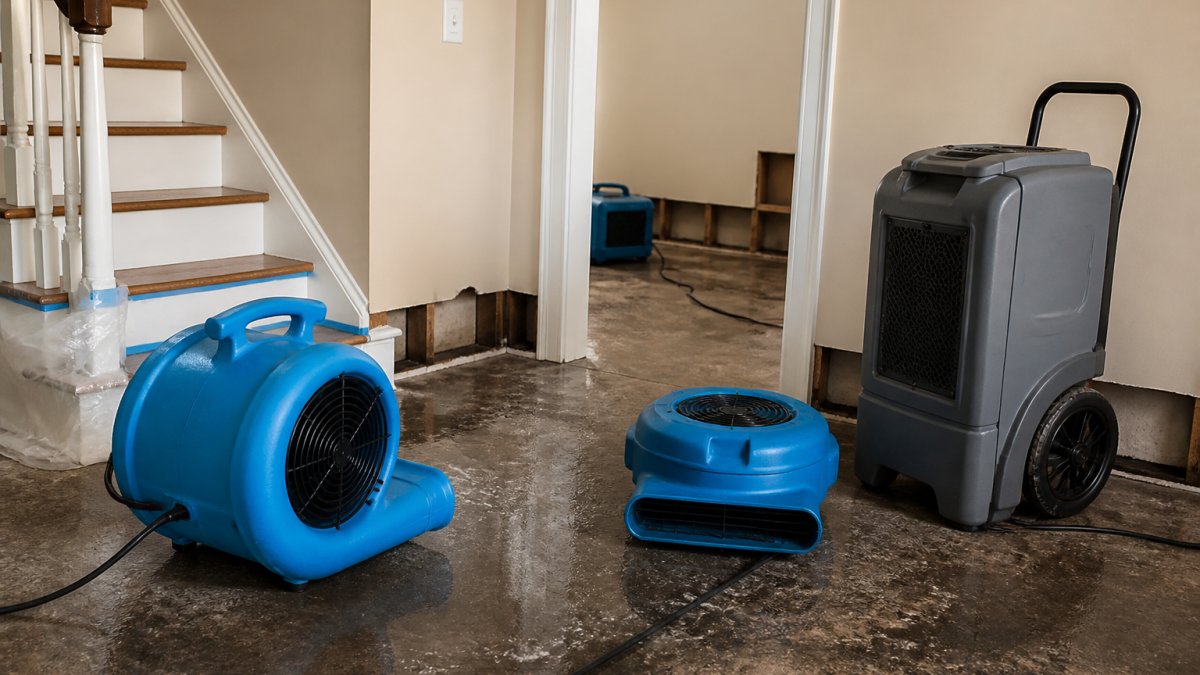
- Prompt water-damage response. Any water intrusion, roof leak, pipe failure, overflow, should be dried within 24 to 48 hours. Mold colonization on wet building materials is a time-dependent process, and the response window is short.
- Annual system inspection. A documented annual inspection of AHUs, duct interiors, and drain systems catches the conditions that precede growth, not just the growth itself.
A Facility Manager's Prevention Checklist
- Inspect drip pans and drain lines monthly
- Clean coils on a set schedule, not reactively
- Change filters per manufacturer spec and verify fit
- Address any water intrusion within 24 to 48 hours
- Hold space relative humidity below the fungal-growth threshold in humid months
- Schedule annual HVAC system inspection and document findings
- Retain PRV lab reports and moisture readings with building environmental records
For facility managers who need this handled end to end, AFC Cleaning & Restoration offers 24/7 emergency response and IICRC-certified technicians equipped for large commercial systems.
Frequently Asked Questions
How do I know if my commercial HVAC system has a mold problem?
Watch for musty odors when the system runs, visible dark speckling around diffusers or on drip pans, and repeated occupant complaints about headaches or allergy symptoms that ease when they leave the building. Water stains near the air handler or condensate overflow are another red flag. Because mold spores and bioaerosols spread through ductwork, a professional HVAC system inspection with moisture readings and air quality testing confirms what you are seeing before you commit to remediation.
How much does commercial air duct cleaning cost for a Kansas City building?
Commercial air duct cleaning cost depends on the number of air handling units, total ductwork length, contamination level, and how accessible the system is. Buildings needing containment, coil sanitization, and post-remediation verification run higher than routine cleaning. AFC Cleaning & Restoration provides quotes after an on-site assessment, so you get a written scope and price before any work begins. Contact us to schedule an inspection of your property.
What are the IICRC mold remediation standards and why do they matter?
The IICRC mold remediation standards set the accepted procedures for assessment, containment, removal, and verification on commercial projects. They cover moisture mapping, negative air pressure, HEPA filtration, and clearance testing before containment comes down. Following them matters because insurers, tenants, and building inspectors expect documented compliance. AFC Cleaning & Restoration technicians hold IICRC certifications, including WRT, ASD, and CCRN, so your remediation follows recognized protocols from start to finish.
Can mold come back after commercial HVAC mold removal?
It can if the moisture source is not fixed. Remediation removes fungal contamination, but condensation on HVAC coils, clogged drip pans, or roof leaks will feed new growth within weeks. That is why post-remediation verification and a preventative maintenance schedule matter. AFC Cleaning & Restoration documents clearance results and outlines moisture control steps, including dehumidification and drain maintenance, so your building stays dry after the crew leaves.