 how-to
Cost of Professional Mold Testing Services
Table of Contents
- What Professional Mold Testing Actually Costs
- Professional Mold Inspection Cost: What's Included
- Mold Inspection vs. Mold Testing: Understanding the Difference
- Mold Testing After Water Damage: Why Timing Matters
- Homeowners Insurance Mold Coverage: What You Need to Know
- When to Call a Professional vs. DIY Testing
- Getting an Accurate Quote for Mold Testing Services
- Frequently Asked Questions
Last Updated: October 8, 2026
What Professional Mold Testing Actually Costs
When water damage strikes, the question isn't whether you need mold testing, it's how much you'll pay. Understanding the cost of professional mold testing services helps you budget for remediation.
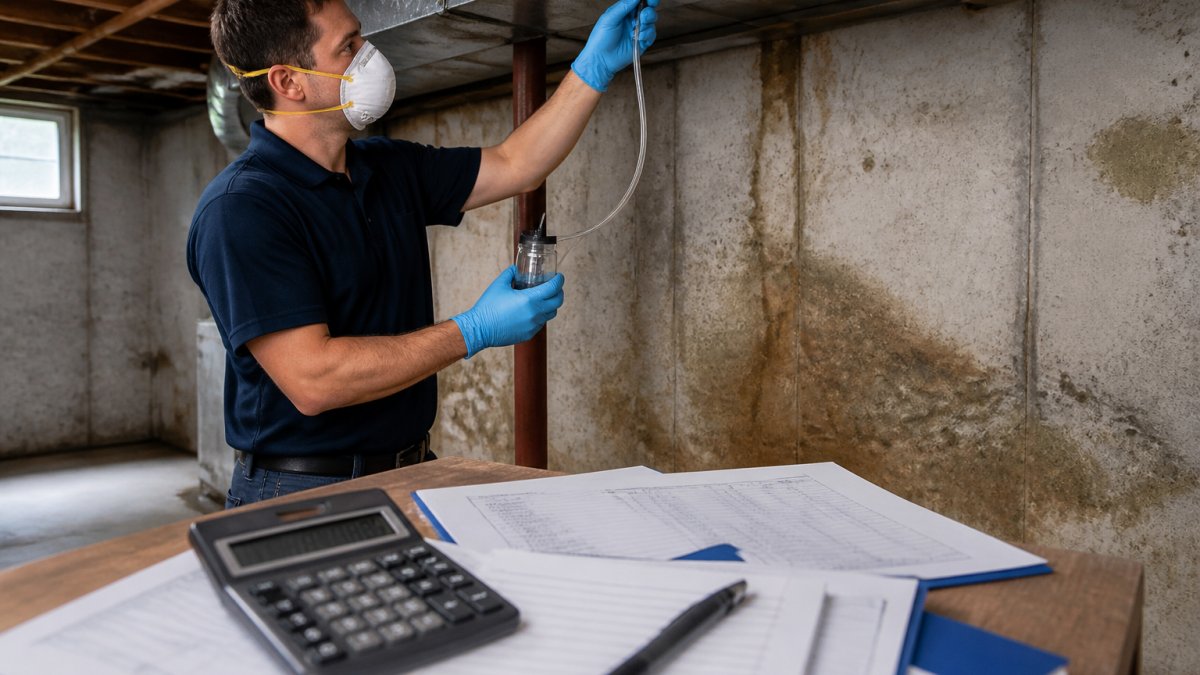
The cost of professional mold testing services typically ranges from a few hundred dollars to over a thousand, depending on property size, complexity, and testing methods.
Typical Price Ranges by Property Size
Homes under 2,000 square feet generally fall into the lower bracket: a basic inspection and air sampling covers visual assessment, moisture source identification, and air sample collection.
Larger homes, 2,000 to 4,000 square feet, typically reflect extra time to inspect more space and collect samples from multiple areas.
Commercial properties and very large homes can be more involved, since bigger buildings mean more square footage, complex HVAC systems, and more samples.
Factors That Affect Your Final Quote
Property size is just the starting point. Several other factors push costs higher or lower.
Accessibility matters. Easy-to-reach areas speed the job up; crawl spaces, attics, and wall cavities require more time and specialized equipment, increasing the bill.
Lab analysis fees vary by testing type. Surface and air samples require different processing. Some testing identifies mold species; others only measure spore concentration.
Geographic location affects pricing. Labor costs and inspector availability differ by region. Urban areas typically cost more than rural ones.
Professional Mold Inspection Cost: What's Included
When you pay for a professional mold inspection, you're paying for expertise, equipment, and documentation.
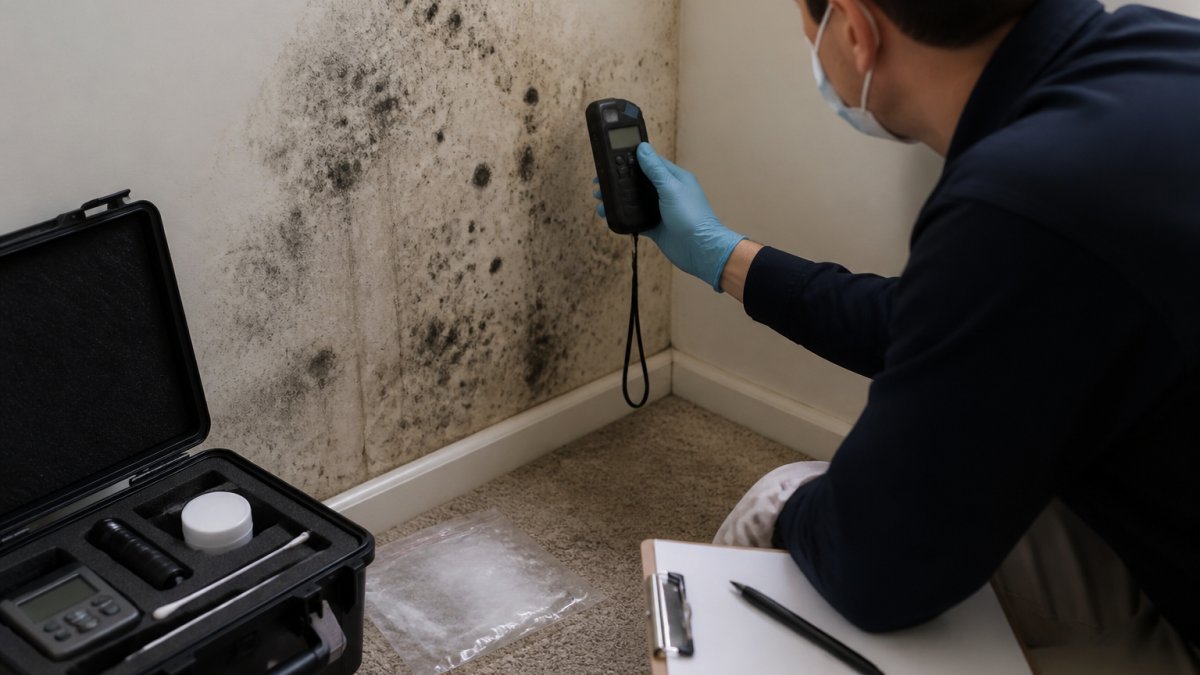
Air quality testing measures indoor spore concentration.
Surface sampling collects material from suspected contamination areas, walls, flooring, HVAC components. Lab analysis reveals whether dangerous species like Stachybotrys chartarum are present and at what concentration.
Documentation and reporting provide a detailed written assessment, essential for insurance claims, remediation planning, and post-remediation verification. Reports include photographs, sample locations, lab results, and recommendations.
Mold Inspection vs. Mold Testing: Understanding the Difference
These terms get used interchangeably, but they describe two different services. Knowing which one you're paying for, and which you need, is the difference between a useful report and a $400 piece of paper.
What a Mold Inspection Is
A mold inspection is a visual and instrumental assessment. The inspector looks for visible growth, water staining, and discoloration, and uses moisture meters, thermal imaging cameras, and borescopes to find hidden moisture inside wall cavities, under flooring, and above ceiling tiles. The deliverable is a written report describing conditions, moisture sources, and areas of concern.
A visual-only inspection does not include laboratory analysis. It can tell you where problems likely are, but not what species are present, whether airborne spore concentrations are elevated, or whether the mold produces mycotoxins.
What Mold Testing Is
Mold testing is the sampling and laboratory analysis component. Samples go to an accredited lab, which reports results. The three sample types quoted most often are:
Air samples (spore trap). A calibrated pump pulls a known volume of air through a cassette. The lab counts spores by genus and reports concentration per cubic meter, with an outdoor control sample collected the same day. This is the standard method for assessing indoor air quality.
Surface samples (swab, tape lift, or bulk). A swab or tape lift is taken from a visible suspect area, or a small piece of material is cut out as a bulk sample. These identify what is growing on a specific spot but do not measure airborne exposure.
Culture samples (viable). The sample is incubated so living organisms can grow and be identified. Slower and pricier than spore trap analysis, but useful when species-level identification of living mold is needed.
The Mycotoxin Distinction Most Articles Skip
"Black mold" is a marketing term, not a scientific one. Dozens of mold species are dark in color. The species most people mean is Stachybotrys chartarum, which can produce mycotoxins, toxic compounds linked to the more serious health complaints attributed to mold exposure.
Standard spore trap analysis identifies mold to the genus level; it does not tell you whether the Stachybotrys present is a toxigenic strain. Mycotoxin testing is a separate, specialized analysis, typically on bulk samples or specific lab panels, and is not included in a standard mold inspection quote.
Why the Combination Matters
Inspection without testing tells you where to look but not what you're dealing with. Testing without inspection produces lab numbers with no context. A competent provider sequences them: inspect first to identify suspect areas and moisture sources, then sample those areas plus an outdoor control, then interpret lab results against the inspection findings.
Questions to Ask Before You Sign
- Is the laboratory accredited, and can the company provide the accreditation number?
- Will an outdoor control sample be collected the same day as the indoor samples?
- What analytical method is used, spore trap, culture, or both?
- Does the report identify mold to genus and flag Stachybotrys specifically?
- Is mycotoxin testing included, or a separate line item?
- Will the inspector locate and document the moisture source, or only collect samples?
A quote that answers these questions in writing is one you can compare against others.
Mold Testing After Water Damage: Why Timing Matters
Water damage creates ideal conditions for mold growth: moisture, organic material, and warmth support rapid fungal colonization.
Mold can begin growing within 24 to 48 hours of water exposure (the CDC). By the time visible patches appear, contamination may already extend behind walls and under flooring.
Testing immediately after water damage establishes baseline conditions for your insurance claim, identifies contamination before remediation begins, and documents that cleanup was thorough.
Most professionals recommend testing within 48 hours of discovery.
Post-remediation testing is equally important. After mold removal and water damage repair, testing confirms remediation was successful and validates the work performed.
Homeowners Insurance Mold Coverage: What You Need to Know
Insurance coverage for mold is limited and often misunderstood. Most standard homeowners policies exclude mold damage unless it results directly from a covered peril like a burst pipe or storm damage.
If water damage is covered, mold testing and remediation related to it may also be covered. Mold from maintenance issues, a slow roof leak or poor ventilation, typically falls outside coverage.
Your insurer may require professional testing before approving a claim. The cost of professional mold testing services becomes part of your claim documentation, so keep all invoices and reports.
Some policies include a mold coverage rider.
When to Call a Professional vs. DIY Testing
DIY mold test kits sell for roughly $10 to $50 and look like a cheap shortcut to the same answer a professional provides, they are not. Understanding what these kits can and cannot do is the biggest factor in deciding whether you need professional testing.
What DIY Kits Actually Measure
Most consumer kits fall into one of two categories:
Petri dish / settle plate kits. You leave an agar dish exposed for 24 to 48 hours; airborne spores settle and grow into visible colonies. This measures only spores heavy enough to fall onto the plate, not total airborne concentration, and cannot distinguish outdoor species from a colony growing inside a wall cavity.
Swab or tape-lift kits. You rub a swab or press tape against a suspected surface, then mail it to a lab. This confirms something on that surface is mold, but says nothing about the air you breathe or contamination in unsampled areas.
Neither kit type produces a calibrated, time-weighted air sample. Indoor air quality standards are built around spore counts per cubic meter of air, not whether a colony grew on a plate.
What Professional Sampling Adds
Professional inspectors use calibrated air sampling pumps that pull a known volume of air, commonly 5 to 15 liters per minute, through a spore trap cassette. An accredited lab analyzes it under a microscope, reporting spore concentrations by genus and comparing indoor samples against an outdoor control taken the same day.
That outdoor control is the piece DIY kits cannot replicate.
Professional inspectors also use moisture meters, thermal imaging cameras, and borescopes to find the water source feeding the colony. Sampling without locating the moisture source produces a lab report you cannot act on.
Viable vs. Non-Viable Sampling
A distinction most DIY kits ignore: labs can test for viable spores (still able to grow) or non-viable spores (dead or dormant but still allergenic and detectable). Non-viable sampling via spore trap is faster, cheaper, and standard for most residential inspections. Viable sampling via culture identifies living organisms and is sometimes requested, but takes longer and costs more. If a company quotes "mold testing" without specifying the method, ask.
When DIY Is Reasonable, and When It Is Not
A DIY kit can be reasonable for a single small, visible spot on a non-porous surface with no musty odor, no water damage history, and no health symptoms, a rough confirmation before wiping the surface with a detergent solution.
Professional testing is the right call when any of the following apply:
- Water damage or flooding in the past 12 months
- A musty or earthy odor with no visible growth
- Visible growth over roughly 10 square feet, or on porous materials like drywall, ceiling tile, or carpet
- Occupants report respiratory symptoms, headaches, or allergy-like reactions that improve when they leave
- You are buying or selling a property and need documentation
- An insurance claim, landlord dispute, or remediation verification depends on the results
The Cost Comparison That Actually Matters
A DIY kit plus lab fees for a single swab is less expensive than a professional inspection with two to three air samples and a written report. The gap looks large until you factor in what DIY cannot do: support an insurance claim, establish a baseline for post-remediation verification, or tell you whether the air in your child's bedroom exceeds outdoor spore levels. If the decision is small, DIY may be enough. If it involves health, a real estate transaction, or a remediation budget, the professional report is often more cost-effective in the long run.
Getting an Accurate Quote for Mold Testing Services
When you contact AFC Cleaning & Restoration, several factors influence your quote.
Ask what the quote includes: visual inspection, air sampling, surface sampling, and laboratory analysis?
Request a written quote that itemizes inspection fees, sample collection, and laboratory analysis separately. This transparency makes comparing quotes easier.
Verify the company is properly certified.
The lowest quote isn't always the best value. A company quoting significantly less may be cutting corners on sampling locations, lab analysis, or documentation.
Understanding the cost of professional mold testing services helps you make informed decisions when water damage or mold concerns affect your property.
Frequently Asked Questions
How much does professional mold testing cost on average?
Your actual cost depends on property size, the number of samples collected, laboratory analysis fees, and your location. Contact a certified professional for a specific quote based on your situation.
What's the difference between mold inspection and mold testing?
Mold inspection is a visual and physical examination of your property to identify signs of mold growth, moisture sources, and potential problem areas. Mold testing involves collecting samples (air or surface) and sending them to a laboratory for analysis to identify mold species and spore counts. Many professionals combine both services. Inspection alone costs less but may miss hidden mold; testing provides definitive identification and helps determine if remediation is necessary.
Should I get mold testing after water damage?
Yes, professional mold testing after water damage is strongly recommended. Mold can begin growing within 24-48 hours of water exposure, and some species produce mycotoxins that pose health risks. Testing identifies whether mold is present, what type it is, and whether airborne spores are affecting indoor air quality. This documentation is also important for insurance claims and ensures remediation efforts target the actual problem rather than guessing where mold may be hiding.
Does homeowners insurance cover mold testing and removal?
Homeowners insurance coverage for mold depends on the cause and your specific policy. If mold results from a covered peril like sudden water damage from a burst pipe or storm, testing and removal may be covered. However, mold caused by ongoing moisture issues, poor maintenance, or condensation is typically excluded. Review your policy or contact your insurer to understand your coverage limits. Professional mold testing can help establish whether the damage qualifies under your policy.