 how-to
How to Dry Out Wet Hardwood Floors Quickly
Table of Contents
- How to Dry Out Wet Hardwood Floors Quickly: Start With a 24-Hour Plan
- Step 1: Assess the Water Damage and Remove Standing Water
- Step 2: Extract Water With Towels, a Wet/Dry Vacuum, or Extraction Mats
- How to Remove Moisture From Hardwood Floors With Airflow and Dehumidification
- Best Fans and Dehumidifiers for Drying Hardwood Floors (and How to Place Them)
- How to Dry Hardwood Floors Under the Floorboards
- How Long Does It Take for a Wet Hardwood Floor to Dry?
- When Wet Hardwood Floors Can Be Saved (and When to Call a Professional)
- Frequently Asked Questions
Last Updated: October 18, 2026
How to Dry Out Wet Hardwood Floors Quickly: Start With a 24-Hour Plan
Water on hardwood is a race against the clock. The faster you act, the better your odds of saving the floor.
Here's the hard truth most guides skip: mold can start growing within 24 to 48 hours on wet materials, according to the Environmental Protection Agency's mold guidance. That deadline shapes everything below.
Your 24-hour plan looks like this:
| Window | What to do |
|---|---|
| First 30 minutes | Stop the water source, cut power, make the area safe |
| 30-60 minutes | Remove standing water and extract what you can |
| 1-6 hours | Get airflow and dehumidification running |
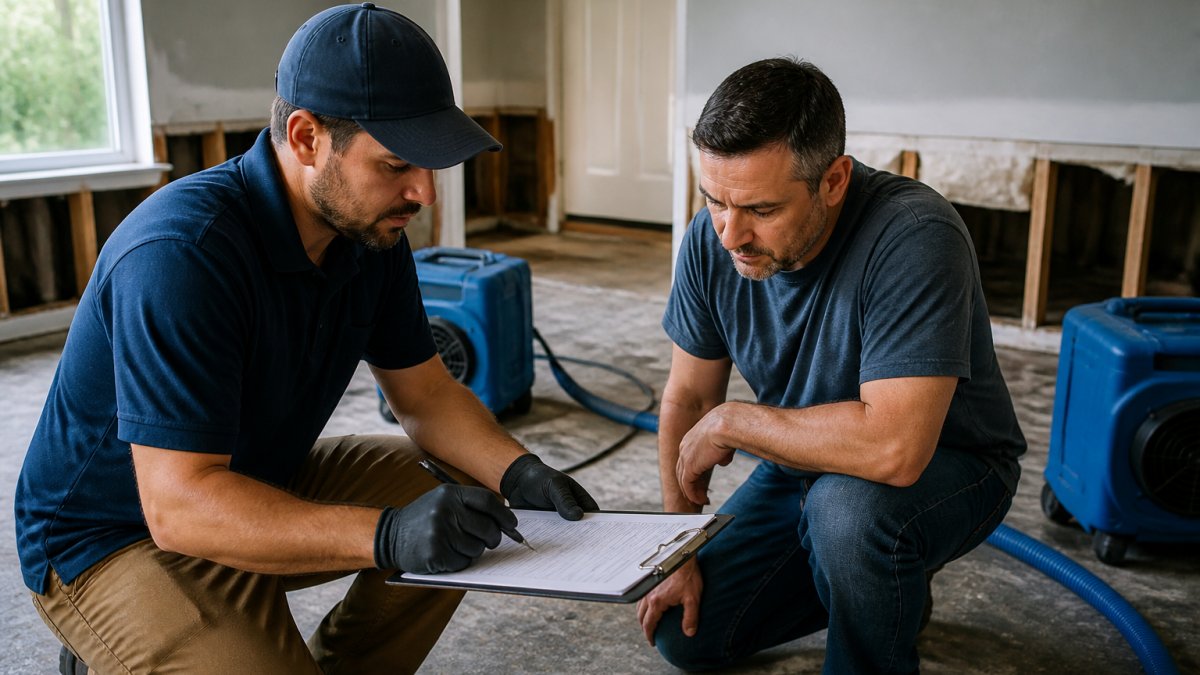
| 6-24 hours | Measure moisture, check the subfloor, decide on pros |
Below, we'll show you exactly how to run each phase.
The First 30 Minutes: Stop the Water and Make It Safe
Safety comes before drying. Every time.
Do these first:
- Shut off the water source. Close the supply valve or the main shutoff.
- Kill the power to any wet room at the breaker. Water and live outlets don't mix.
- Watch for hazards. Wet drywall, sagging ceilings, and slick floors are real risks.
A common mistake is grabbing towels before cutting power. Don't. One wrong outlet can turn a wet floor into an emergency room visit.
Once the area is safe, move fast to the next step.
Step 1: Assess the Water Damage and Remove Standing Water
Standing water is your first target. Remove it before it soaks deeper into the wood.
Start by sizing up the damage:
- How deep is the water? Puddles versus a full flood change the plan.
- What kind of floor is it? Solid hardwood, engineered wood, and laminate handle water differently.
- How long has it been wet? Minutes versus hours matters a lot.
Then remove the standing water. Use a mop, towels, or a wet/dry vacuum to pull up what's pooled on the surface.
If the leak came from above (a burst pipe, a roof leak), check the ceiling and walls too. Trapped moisture up high drips down for days.
Step 2: Extract Water With Towels, a Wet/Dry Vacuum, or Extraction Mats
Surface water is only half the problem. The real enemy is what's soaked into the boards.
Use the tools you have:
- Towels for small spills and quick passes. Press down hard to pull water up.
- A wet/dry vacuum for larger areas. Go slow so suction has time to work.
- Extraction mats for bigger jobs. These pull moisture from seams and gaps.
Press towels or mats firmly and let them sit. Then swap them out and repeat. This pulls moisture out of the wood instead of just pushing it around.
What most guides miss: the water between the boards is the hardest to reach. That's why extraction and airflow go together.
How to Remove Moisture From Hardwood Floors With Airflow and Dehumidification
Airflow plus dehumidification is the engine of the whole drying process.
Open interior doors and closets to keep air moving. But close the windows if it's humid outside. Pulling damp outdoor air inside slows drying and can push the dehumidifier to run nonstop without ever catching up.
Here's the setup that works:
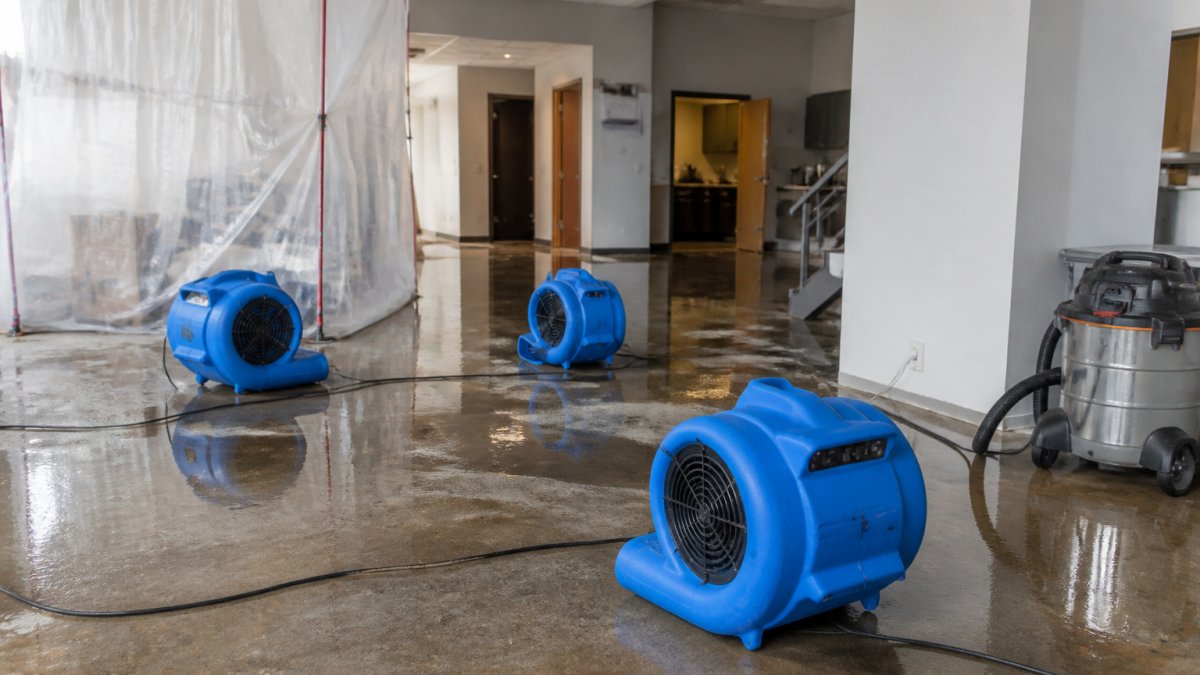
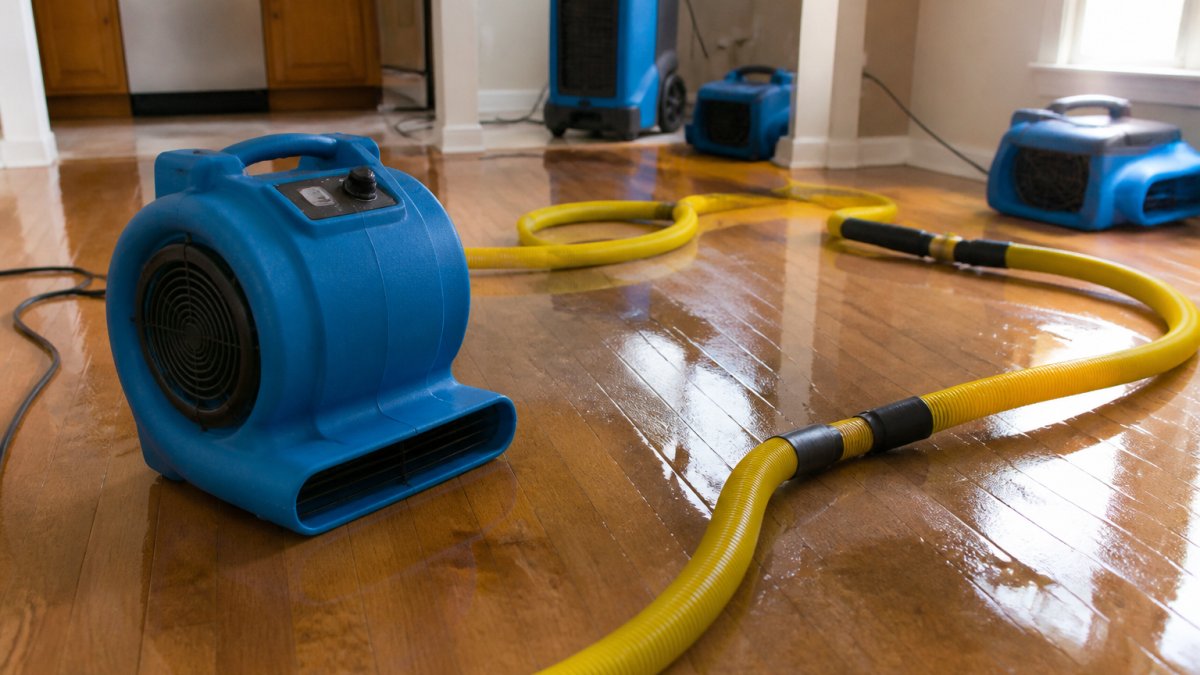
- Fans and air movers push air across the floor to speed evaporation.
- A dehumidifier pulls that moisture out of the air so it doesn't settle back in.
- Keep the room warm (around 70°F or above) to help water evaporate faster.
Run both together, not one at a time. Fans without a dehumidifier just move damp air around. A dehumidifier without airflow can't reach the moisture trapped in the boards.
Set the drying conditions, not just the equipment
The goal is a warm, dry, moving-air environment. A few practical targets most restoration practitioners work toward:
- Temperature: keep the drying area in the 70°F-80°F range. Below about 65°F, evaporation slows sharply and the dehumidifier loses efficiency.
- Relative humidity: aim to hold the room under roughly 50% RH. A cheap hygrometer placed in the drying zone tells you whether you're winning or losing.
- Airflow: air should be moving across the floor surface, not blasting straight down into it. You want a steady sweep that carries evaporated moisture toward the dehumidifier intake.
Size the equipment to the job
Small household fans and a single portable dehumidifier are fine for a spill in one room. They are not enough for a flooded great room or a wet subfloor. As a rule of thumb, most practitioners expect to run one air mover per 10-15 feet of wet wall or floor edge, and to match dehumidifier capacity (in pints per day) to the cubic footage of the drying zone.
Avoid the two common drying mistakes
- Don't overheat the room. Cranking the heat to 90°F dries the surface faster than the core, which drives uneven shrinkage and can worsen cupping. Warm and steady beats hot and fast.
- Don't seal the room with the dehumidifier off. A closed, humid room with fans running just recirculates moisture. If the dehumidifier quits, stop and fix it before continuing.
Know when the air is dry enough
Don't judge by feel. A hygrometer reading under about 50% RH in the drying zone, combined with steady moisture-meter readings on the boards, tells you the environment is doing its job. If humidity climbs while the dehumidifier runs, check for a blocked intake, a full tank, or a window left open.
Best Fans and Dehumidifiers for Drying Hardwood Floors (and How to Place Them)
Placement matters as much as the equipment. Get it right and drying time drops.
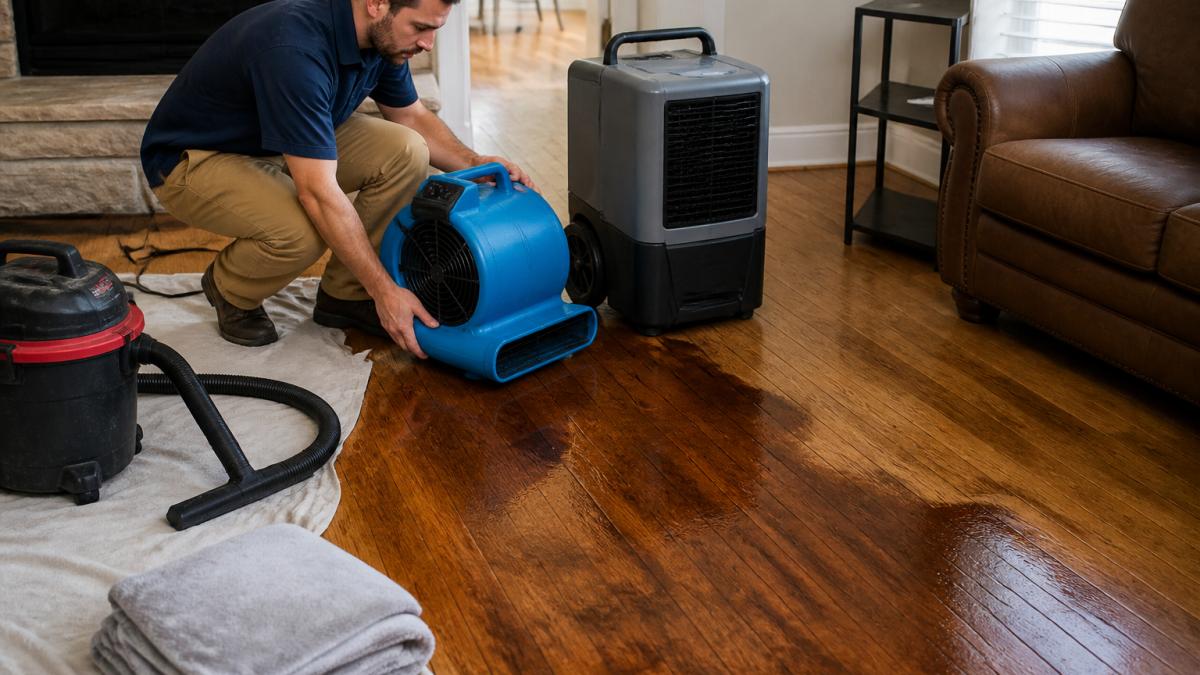
For fans and air movers:
- Aim airflow across the surface, not straight down. Angle them along the boards.
- Use high-volume fans for big rooms and air movers for tight spots.
- Set units on the dry side, blowing toward the wet area.
For dehumidifiers:
- Place them near the wet zone but not blocking airflow.
- Elevate equipment on blocks if the floor is still damp.
- Empty the tank often, or run a drain hose so it keeps working.
If you're drying a large area, you'll likely need more than one fan and a bigger dehumidifier. Small household units struggle with whole rooms.
How to Dry Hardwood Floors Under the Floorboards
Moisture under the floor is the sneaky part. The top can feel dry while the subfloor stays soaked, and that hidden moisture keeps feeding the problem long after the surface looks fine. This is the step most guides skip, and it's the one that decides whether your floor survives.
Measure before you guess
A moisture meter is the tool that separates drying from hoping. Pin-type meters read the surface and shallow depth; pinless meters scan through the board. Most practitioners take readings in three places:
- The wet boards, in several spots across the affected area.
- A known-dry board in another room, as your baseline.
- The subfloor, reached through a floor vent, a removed board, or an unfinished basement ceiling below.
Write the readings down with the time and location. You're looking for the wet readings to fall toward the dry baseline, not to zero. Wood always holds some moisture; the goal is to return to normal equilibrium, not bone-dry.
Reach the concealed moisture
To dry beneath the boards:
- Pull up a board or check a vent to see what's underneath. A floor vent is the least destructive access point.
- Aim air movers into gaps and along the floor edges, where water wicks and hides.
- Run a dehumidifier in the basement or crawl space below, if that's where the wet subfloor sits. Drying the room above while the space below stays damp is a losing battle.
When boards or baseboards have to come up
Sometimes drying in place isn't enough. Consider removing boards or baseboards when:
- The subfloor reads wet and won't drop after a day or two of drying.
- Water was trapped under a finished floor with no vent or gap to reach it.
- Baseboards are swollen or the drywall behind them is soft, moisture wicks up the wall and hides behind trim.
Pulling a few boards for access is far cheaper than replacing a whole floor later. A restoration professional can often lift a section, dry the subfloor, and reinstall.
Watch for hidden damage
Concealed moisture shows up in ways you can see and smell:
- A musty odor that persists after the surface dries.
- Dark staining or soft spots on the subfloor or joists.
- Nail heads or fasteners that rust, a sign of prolonged dampness.
If any of these appear, treat the area as still wet regardless of what the surface meter says, and keep drying or call a professional.
Know when the floor is actually dry
Stop drying when the wet-area readings match the dry baseline within a small margin and stay there across two readings taken several hours apart. Then wait another day before reinstalling trim or refinishing. Wood that looks dry but is still holding excess moisture will move, gap, or cup once the finish goes on.
How Long Does It Take for a Wet Hardwood Floor to Dry?
A wet hardwood floor usually takes several days to dry, not hours. Small spills may dry in a day or two. A full flood can take a week or more, especially if the subfloor is wet.
Drying time depends on:
- How much water soaked in
- How fast you started extraction
- Airflow and dehumidification power
Don't trust your hand to judge it. Use a moisture meter and compare wet boards to dry ones in another room. Keep drying until readings match.
When Wet Hardwood Floors Can Be Saved (and When to Call a Professional)
Some floors can be saved. Some can't. Here's how to tell.
Signs a floor can likely be saved:
- You caught the water within a few hours
- The water was clean, not sewage
- The boards are solid hardwood, not thin laminate
Signs it's time to call a pro:
- Contaminated water. Sewage or floodwater needs professional sanitation, not a shop vac.
- Widespread buckling or lifted flooring. Warped boards usually need replacement.
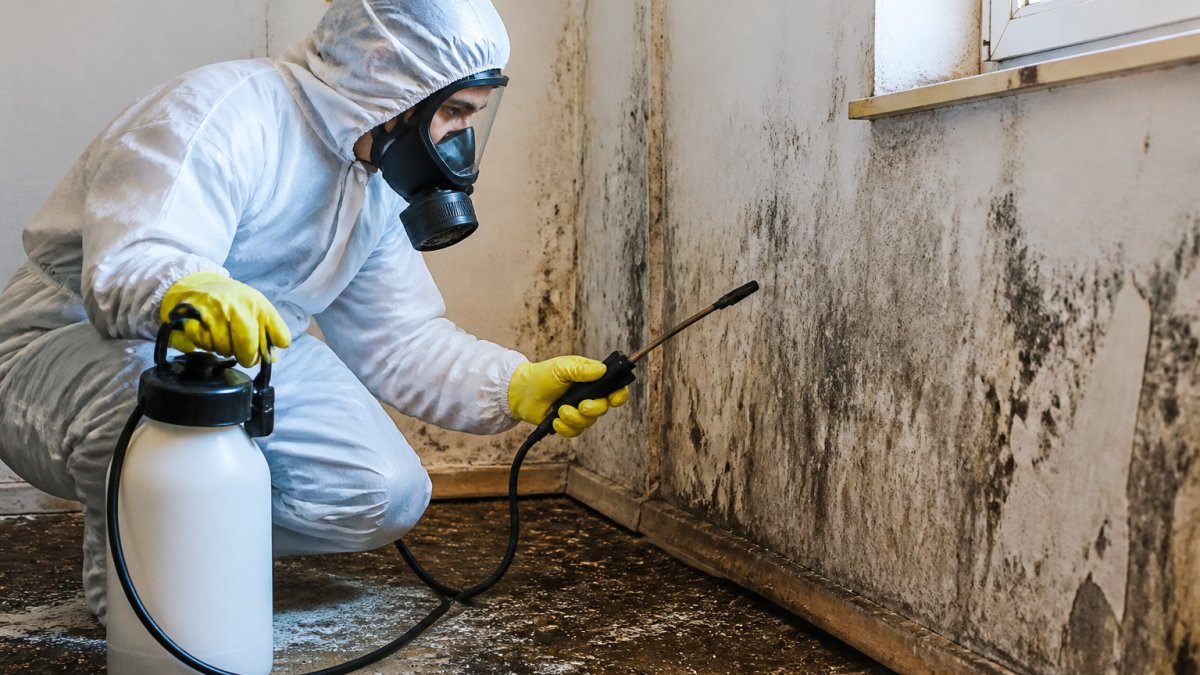
- Mold. Visible mold or a musty smell means the problem has spread.
This is where AFC Cleaning & Restoration comes in. Our IICRC-certified technicians use professional drying equipment, moisture meters, and air movers to dry floors fast and check the subfloor. We're available 24/7, 365 days a year, and we've served the area since 2003. We also handle both homes and commercial properties, from a single room to a large retail site.
Frequently Asked Questions
Can wet hardwood floors be saved, or do they always need to be replaced?
Many wet hardwood floors can be saved if drying starts within the first 24 to 48 hours. Solid hardwood responds best when standing water is removed and airflow plus dehumidification begin quickly. Boards that are already cupped, buckled, or lifting at the seams are harder to save. Engineered wood and laminate have thinner wear layers and often cannot be sanded back, so replacement is more likely. A moisture meter reading, not appearance alone, is the best way to tell whether the floor can be salvaged.
Should you use fans or a dehumidifier to dry wet hardwood floors?
Use both. Fans and air movers keep air moving across the surface, which speeds evaporation, while a dehumidifier pulls that moisture out of the room so it does not settle back into the wood. Running fans without dehumidification in a closed room just moves humid air around. Keep windows closed during active drying so outside humidity does not slow the process. Position air movers to blow across the floor at a low angle, and empty or drain the dehumidifier regularly.
How long does it take for a wet hardwood floor to dry?
Surface moisture can dry within 24 to 48 hours with good airflow and dehumidification. The wood itself usually needs three to five days, and thicker solid hardwood or water that reached the subfloor can take longer. Drying is finished when moisture meter readings match dry reference areas of the same floor, not when the surface feels dry to the touch. High humidity, closed rooms, and water trapped under boards all extend the timeline.
When should you call a professional to dry hardwood floors?
Call a professional when water has been sitting for more than 24 hours, when the water came from a sewage backup or appliance leak that may be contaminated, or when the floor is already cupping or lifting. A pro uses moisture meters, thermal imaging, and commercial air movers and dehumidifiers to dry the subfloor and hidden cavities. If you see mold, smell musty odors, or the affected area is larger than a small spill, professional drying is the safer and often cheaper choice.
A wet hardwood floor is stressful, and the clock is working against you. If the water is deep, the subfloor is soaked, or you spot mold, don't wait it out. AFC Cleaning & Restoration brings IICRC-certified technicians, professional drying equipment, and 24/7 emergency response to dry your floors and protect your property. Contact us to get a crew on site and start drying today.