 how-to
Minimizing Business Interruption After Property Damage
Table of Contents
- Why Every Hour of Downtime Costs You Money
- The First 24 Hours: A Commercial Property Damage Response Checklist
- Building a Business Continuity Plan for Property Damage
- How Commercial Water Damage Restoration Fits Your Recovery Timeline
- Business Interruption Insurance Claim Documentation That Gets Paid
- What a Restoration SLA Should Cover Before You Sign
- Recovery Metrics That Show You Are Minimizing Business Interruption
- Frequently Asked Questions
Last Updated: October 17, 2026
Why Every Hour of Downtime Costs You Money
A burst pipe at 2 AM does not just soak carpet. It stops your business.
The math is simple and brutal. Rent keeps running. Salaries keep running.
Here is what most owners miss. The damage itself is only half the cost.
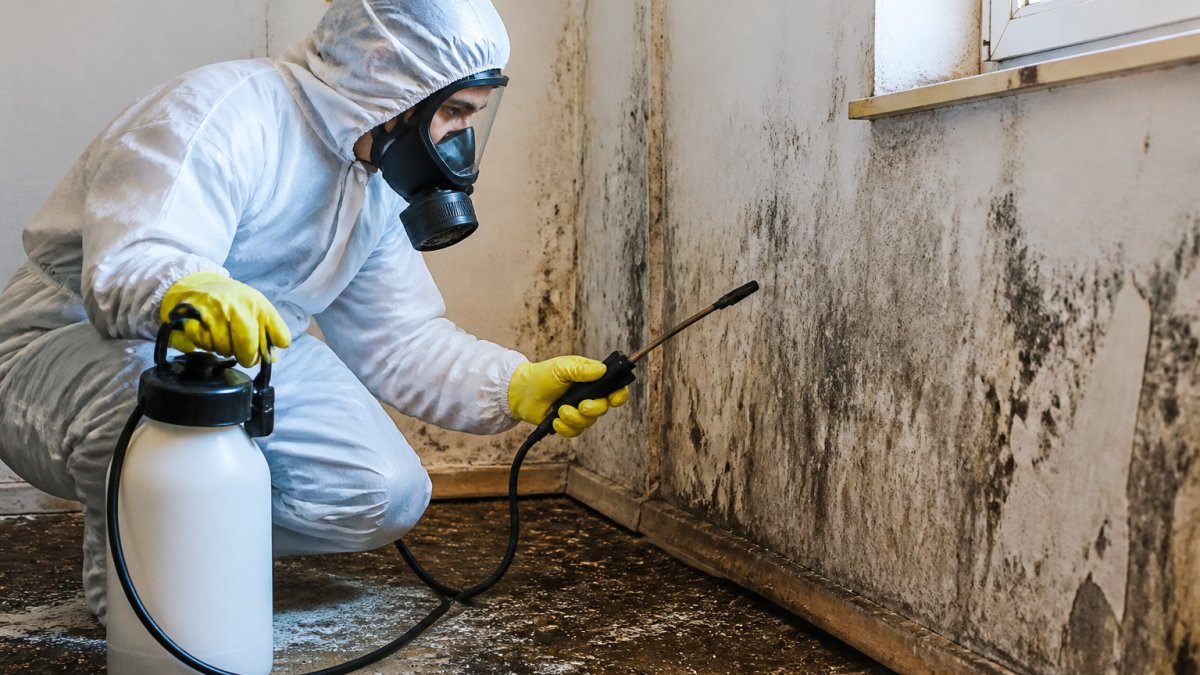
Water spreads through walls and under floors within hours. Mold can start growing on wet materials in as little as 24 to 48 hours, according to the Environmental Protection Agency's mold guidance.
AFC Cleaning & Restoration has handled emergency calls across the greater Kansas City area since 2003.
This guide shows you how to cut that downtime.
The First 24 Hours: A Commercial Property Damage Response Checklist
The first day decides how long you stay closed. Move fast and you shrink the damage. Freeze up and you hand the problem weeks of extra time.
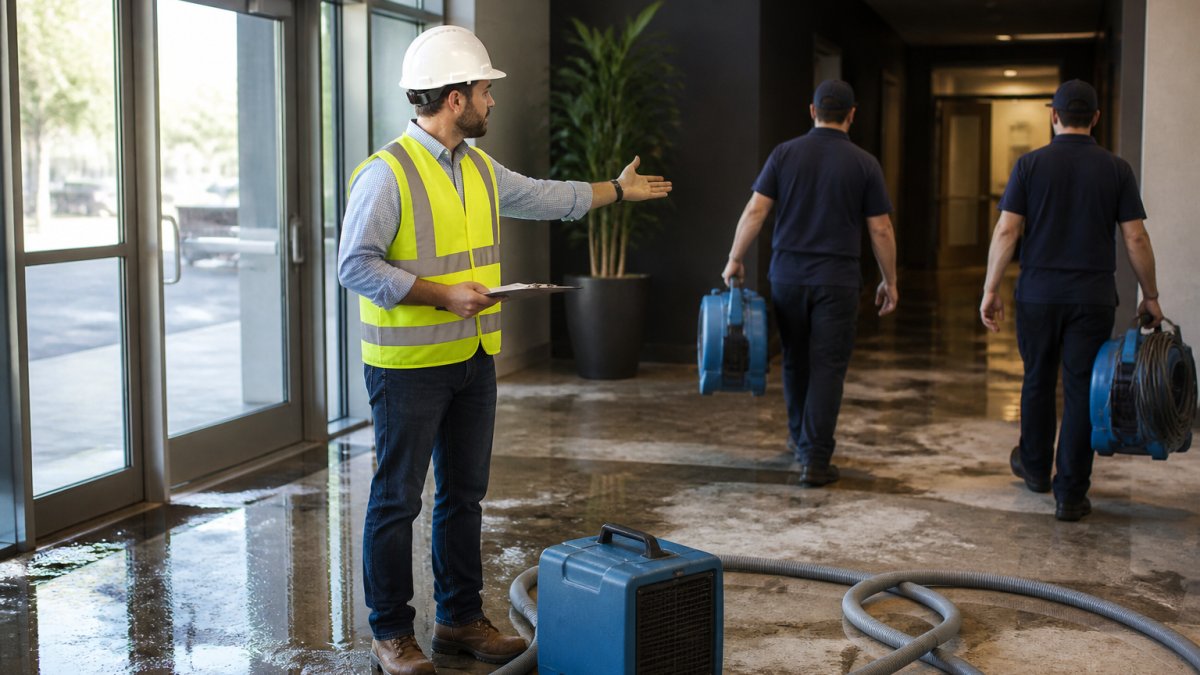
Work through this commercial property damage response checklist in order:
- Make the area safe. Shut off power and gas to affected zones. Keep people out.
- Stop the source. Close the main water valve or call the utility.
- Call your insurer. Open the claim and get a claim number the same day.
- Call a restoration crew. Confirm their arrival time in writing.
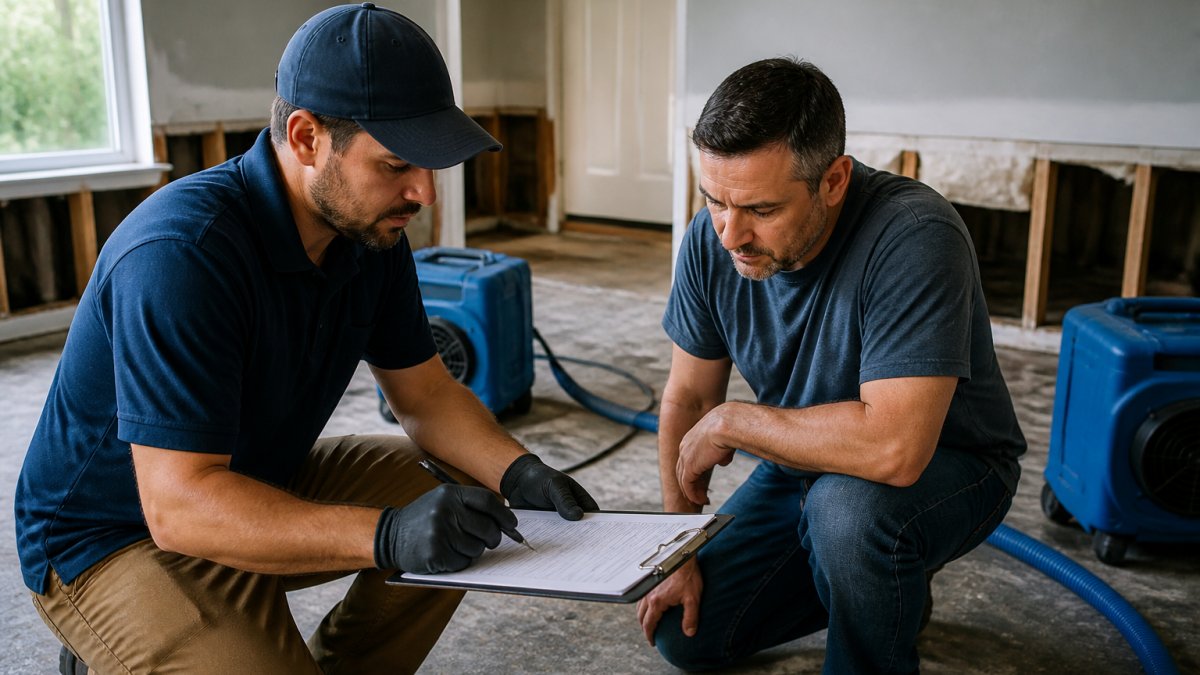
- Document everything. Photograph and video every room before anything moves.
- Protect what is dry. Move stock and records to a safe area.
- Notify key people. Tell staff, tenants, and top customers what is happening.
- Start the loss log. Track every hour closed and every dollar spent.
A common mistake is cleaning up before you document. Insurers need proof of the damage as it was. Once you haul out wet drywall, that evidence is gone.
Building a Business Continuity Plan for Property Damage
A business continuity plan for property damage is a written set of steps that keeps your company running while the building is repaired. It names who does what, where you go, and how you pay for it.
Build yours around five parts:
- A backup location. Where will staff work if the site is unusable?
- Critical functions. List the three tasks your business cannot pause.
- A contact tree. Names and numbers for staff, insurer, and vendors.
- Data backups. Keep records off-site and cloud-based.
Test the plan once a year. A plan nobody has read is just paper.
Many owners find that the backup location is the hardest piece. Line up a short-term option now, before you need it.
How Commercial Water Damage Restoration Fits Your Recovery Timeline
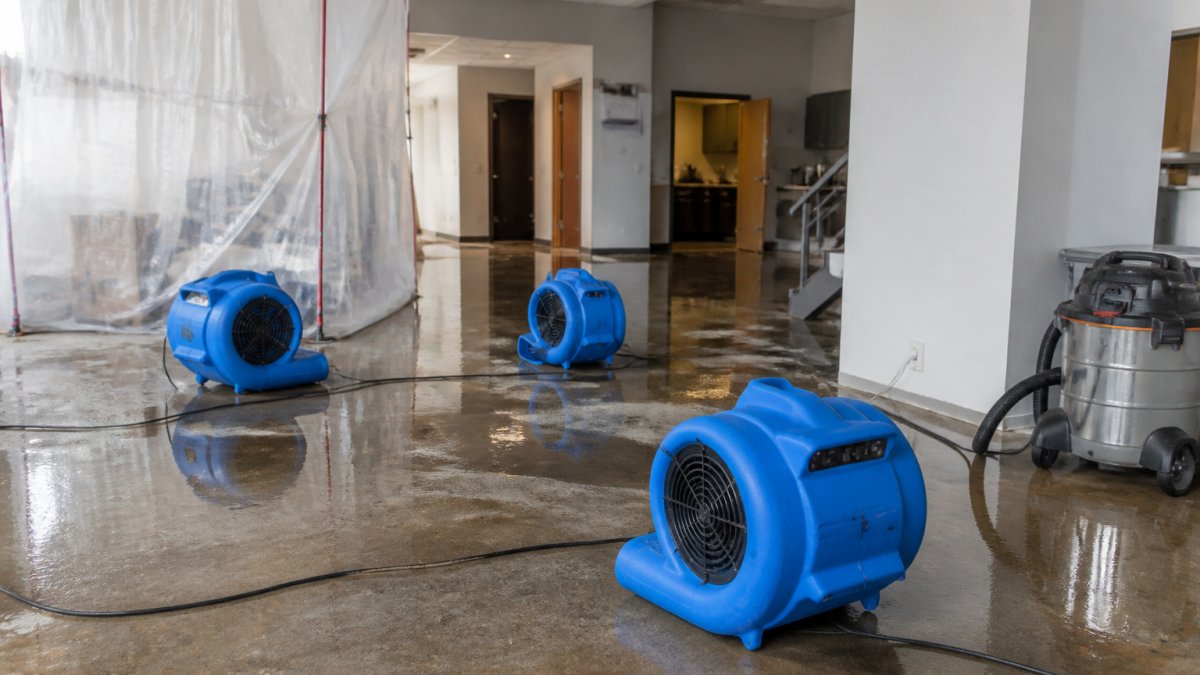
Commercial water damage restoration is the process of extracting water, drying the structure, and returning the space to a usable condition.
Here is how a typical recovery timeline moves:
| Phase | Typical Timing | What Happens |
|---|---|---|
| Emergency response | First few hours | Water extraction begins |
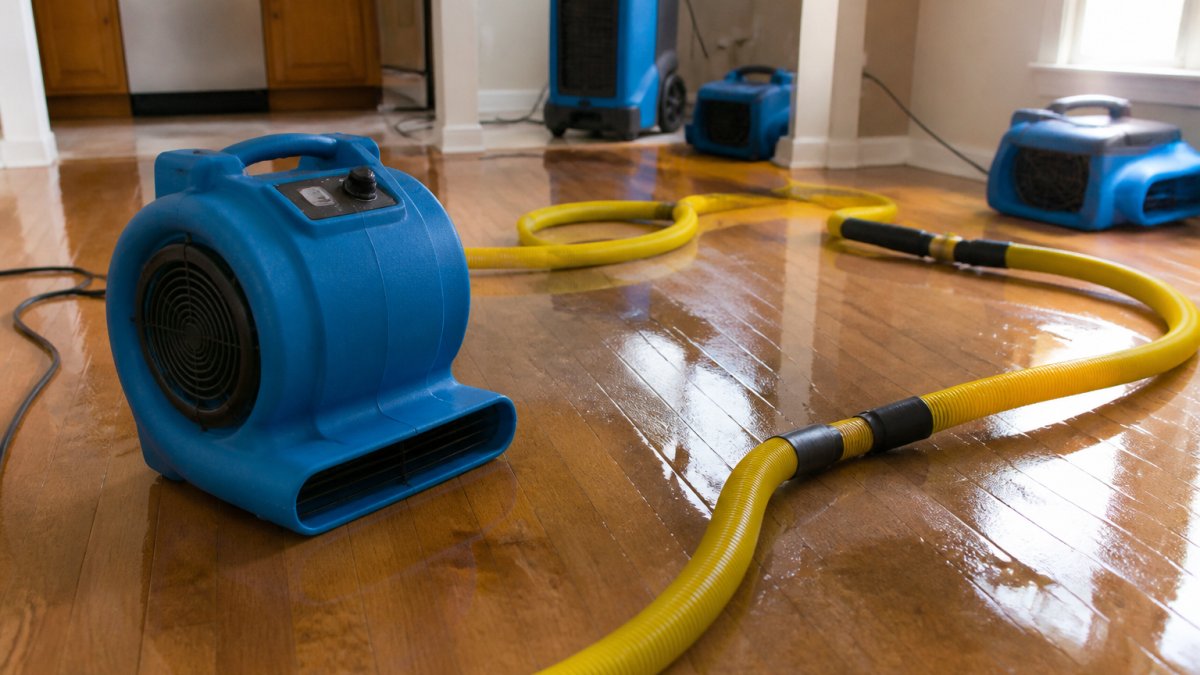
| Drying | Several days | Air movers and dehumidifiers run |
| Repairs | Days to weeks | Drywall, flooring, and paint restored |
| Reopening | After clearance | Space is safe to use again |
The drying phase is where shortcuts cause trouble. Skip it and moisture hides behind walls. Mold follows, and you are back to square one.
At AFC Cleaning & Restoration, our IICRC-certified technicians use moisture meters to confirm a space is truly dry before anyone reopens it.
Business Interruption Insurance Claim Documentation That Gets Paid
Claims get denied for one reason more than any other: weak paperwork. Strong business interruption insurance claim documentation turns a slow fight into a clean payout.
Gather these records as you go, not at the end:
- Photos and video of all damage, taken before cleanup
- Receipts for emergency repairs and temporary fixes
- Payroll records showing staff you kept on
- Revenue reports from the same period last year
Keep one folder, digital and shared. Update it every day.
The Insurance Information Institute's guidance on filing claims stresses prompt notice and full records. Both protect you.
What a Restoration SLA Should Cover Before You Sign
A service-level agreement, or SLA, is a contract that sets what a restoration vendor must deliver and how fast. Signing one before disaster hits is how you guarantee a response instead of hoping for one. Generic vendor SLAs cover scope, uptime, and service credits. A restoration SLA has to go further, because the clock that matters is measured in hours of business closure, not server uptime.
Here is what a restoration-specific SLA should lock down, clause by clause.
1. Severity tiers and a response-time matrix
A single "prompt response" promise is meaningless. Insist on a matrix that maps loss type and severity to acknowledgement, dispatch, and on-site arrival targets. A workable structure most practitioners use:
| Tier | Typical trigger | Acknowledge | Dispatch | On-site arrival |
|---|---|---|---|---|
| Emergency | Active water intrusion, fire/smoke, sewage, or any loss threatening a critical function | Within 30 minutes | Within 1 hour | Within 2-4 hours |
| Urgent | Category 2 water, visible mold under 10 sq ft, partial ceiling collapse | Within 2 hours | Same business day | Within 8 hours |
| Standard | Old stains, minor mold, non-critical cosmetic damage | Within 1 business day | Within 2 business days | Within 48 hours |
Define each term in the contract, "acknowledge" (a human answers and logs the call), "dispatch" (a crew is assigned and en route), and "on-site arrival" (crew crosses the threshold with extraction equipment). Vague verbs are where disputes start.
2. Restoration-specific performance targets
Replace generic uptime metrics with targets tied to the actual work:
- Emergency dispatch, crew assigned within the tier window, confirmed in writing (text or email) to a named contact.
- Extraction start, standing water extraction begun within a set window of arrival.
- Drying milestones, daily moisture readings logged, with a target drying window by material class (for example, a standard dry-out target in days, adjusted for Category 2 or 3 water).
- Documentation completeness, photos, moisture maps, and daily logs delivered to the client and adjuster on a set cadence.
3. Claims coordination terms
This is the clause most generic SLAs skip and most owners wish they had. Spell out how the vendor works with your insurer:
- Who communicates with the adjuster, and how often.
- How estimates, change orders, and supplements are submitted and approved.
- Photo and moisture documentation standards, including delivery format and timeline.
- How the vendor handles scope changes without stalling work.
4. Availability, geography, and surge capacity
Confirm 24/7/365 coverage in writing, with a named after-hours contact and a backup number. Define the service radius and any travel surcharges beyond it. Ask how the vendor staffs simultaneous incidents and severe-weather surges, backup crews, mutual-aid partners, or equipment reserves. A vendor who cannot handle two losses at once is a single point of failure.
5. Roles, responsibilities, and client obligations
The SLA should split duties clearly. The vendor handles extraction, drying, documentation, and reporting. You handle site access, utility shutoffs, security, and timely approvals. List what happens if the client delays access or approval, the clock should pause, not silently run.
6. Remedies, service credits, and exclusions
Define what happens when targets are missed: service credits, escalation to a manager, or a right to terminate. List exclusions honestly, acts of God beyond the tier triggers, pre-existing damage, and client-caused delays. A contract with no remedy is a promise, not an SLA.
7. Review cadence and scorecard
Set a review rhythm, after every event, plus a quarterly review. Use a simple scorecard: response time versus target, drying days versus target, documentation delivered on time, rework rate, and customer satisfaction. Scorecards turn the SLA into an operating tool instead of a signed PDF in a drawer.
Recovery Metrics That Show You Are Minimizing Business Interruption
You cannot manage what you do not measure. But most recovery dashboards stop at downtime and response time, which tells you how fast a crew showed up, not whether the job was done right. The metrics that actually protect a business combine speed, quality, and claims outcomes.
Speed and continuity metrics
- Hours of downtime, from the event to reopening, tracked per incident.
- Response time, call to acknowledgement, dispatch, and on-site arrival, measured against the SLA tier.
- Drying days, extraction to confirmed dry, compared with the target for the material class.
- Claim cycle time, filing to payment, including any supplement rounds.
Quality and outcome metrics
These are the measures generic SLA guides leave out, and they are where rework and repeat losses hide:
- Moisture documentation completeness, percentage of affected areas with daily readings and a final dry-standard confirmation.
- Rework rate, share of jobs requiring a return visit for the same loss.
- Mold recurrence, callbacks for mold growth within a set window after closeout.
- Customer satisfaction, a short post-job survey score from the business owner or facility manager.
- Compliant closeout, documentation package delivered to the client and adjuster on time, with all change orders approved.
A simple restoration scorecard
Put the numbers on one page and review them after every event, plus quarterly:
| Metric | Target | Actual | Trend |
|---|---|---|---|
| Emergency on-site arrival | Within SLA tier | ||
| Drying days | Within material-class target | ||
| Documentation delivered on time | 100% | ||
| Rework rate | Near zero | ||
| Claim cycle time | Within agreed window | ||
| Customer satisfaction | High |
Tie each row back to a clause in your SLA. If a metric has no clause behind it, either add one or drop the metric, otherwise you are measuring without leverage.
How to use the numbers
The goal is continuous improvement, not a perfect score. After each event, ask three questions: Did we hit the response tier? Did the dry-out close on target?
Minimizing business interruption comes down to speed, paperwork, and planning, and the metrics that prove all three are working. The businesses that bounce back fastest treat recovery as a measured process, not a scramble.
Frequently Asked Questions
What should a business do first after property damage?
Stop the source of damage if it is safe, then document everything before anything is moved. Photograph affected areas, keep a written log of the time damage was discovered, and call your insurance carrier to open a claim. Next, bring in a certified restoration vendor who can begin water extraction or board-up the same day. Every hour of delay raises the chance of secondary damage like mold, which grows in 24 to 48 hours in wet materials. Starting documentation early also protects your business interruption claim later.
How do you create a business continuity plan for property damage?
Start by listing your critical operations and the minimum space, equipment, and staff each one needs. Identify alternate locations, backup suppliers, and a pre-vetted restoration vendor you can call at any hour. Write down who has authority to approve emergency spending and who files the insurance claim. Test the plan once a year with a tabletop exercise, and update contact lists quarterly. A continuity plan for property damage should fit on a few pages so staff can act without hunting for details during an emergency.
When should a business contact its insurance company after property damage?
Contact your carrier as soon as the property is safe and the damage is contained, ideally the same day. Most commercial policies require prompt notice, and late reporting can complicate a business interruption claim. Have your policy number, a description of the damage, and initial photos ready. Ask the adjuster whether you can begin emergency mitigation before an inspection, since delaying water extraction to wait for approval often causes more damage and higher costs.
How long does commercial property restoration usually take?
Timelines depend on the damage type and building size. Water extraction and drying typically take 3 to 5 days for a contained area, while mold remediation can run one to two weeks. Full reconstruction after a fire or major flood often takes several weeks to months. A restoration vendor should give you a written schedule with milestones after the initial assessment, and your business continuity plan should assume the longer end of that range so operations stay covered.
Property damage will test your business. The difference between a short pause and a long shutdown is who you call and how fast they move. AFC Cleaning & Restoration offers round-the-clock emergency response, certified technicians, and full-service restoration to get you back to work. Contact us to set up a response plan before the next emergency finds you.