 ultimate-guide
Does Insurance Cover Mold Remediation Costs?
Table of Contents
- When Homeowners Insurance Covers Mold Remediation Costs
- When Insurance Denies Mold Remediation Costs
- Coverage Limits and Deductibles for Mold Claims
- Average Cost of Mold Remediation and What Drives It
- How to File a Mold Insurance Claim Step by Step
- Mold Remediation Process Steps: What Happens After Approval
- State Variations and Health Liability: Angles Most Homeowners Miss
- Frequently Asked Questions
Last Updated: September 10, 2026
When Homeowners Insurance Covers Mold Remediation Costs
The short answer: homeowners insurance covers mold remediation costs when the mold traces back to a sudden and accidental event your policy already covers, such as a burst pipe or an appliance failure. It rarely covers mold that grew slowly from a leak you knew about. This guide from AFC Cleaning & Restoration explains where the line falls, why claims get denied, and how to document a claim that holds up.
Mold remediation is the process of removing mold growth, treating affected surfaces, and restoring the property to a safe, dry condition. Insurance treats it as a secondary consequence, not a standalone problem. That distinction decides almost every claim.
Sudden and Accidental Damage: The Covered Trigger
The phrase "sudden and accidental" is the hinge your entire claim swings on. A pipe that bursts overnight and soaks a wall cavity is sudden. A slow drip under a sink that you noticed months ago is not. Most standard policies built on an all-risk HO-3 homeowners policy form framework treat the first as a covered peril and the second as maintenance.
Where Mold Coverage Typically Applies
Coverage usually follows water damage from a covered peril:
- A burst supply line or failed washing machine hose
- Storm-driven water entering through a damaged roof or window
- Firefighting water used to extinguish a fire
- Accidental overflow from a fixture, such as a bathtub left running
Notice what's missing: groundwater, seepage, and long-term humidity. Those need a separate endorsement or flood policy.
When Insurance Denies Mold Remediation Costs
Denials almost always come down to one question: did the mold develop gradually? If the answer is yes, the claim is treated as maintenance neglect, not a covered loss.
Gradual Damage and Maintenance Neglect
A common mistake is assuming that because water was involved, insurance will pay. Insurers distinguish between water damage (sudden) and water intrusion (often gradual). A roof leak that stains the ceiling for two seasons before you call someone is water intrusion. In practice, this means the timeline of the damage matters more than the damage itself.
Common Policy Exclusions That Lead to Claim Denial
Standard exclusions that sink mold claims include:
- Fungus and mildew, often capped with a sub-limit rather than fully excluded
- Constant or repeated seepage over 14 days or more
- Poor maintenance, including failed caulking, clogged gutters, and unaddressed condensation
- Faulty workmanship from a prior repair
Coverage Limits and Deductibles for Mold Claims
Mold coverage is almost never a full-limit payout. On a standard HO-3 homeowners policy form, fungus and mold is handled one of three ways, and which one you have decides how much is actually recoverable.
The Three Ways Policies Cap Mold
- A flat dollar sub-limit. Many carriers set a mold cap of $10,000 per occurrence, and some set it as low as $5,000. That cap covers testing, removal, and repairs combined, not each one separately.
- A percentage sub-limit. Some policies express the cap as a percentage of the dwelling (Coverage A) limit. A 1% cap on a $400,000 dwelling is $4,000; a 5% cap on the same home is $20,000. The percentage varies by carrier and by state, so read the declarations page, not the marketing summary.
- A full exclusion with buy-back. Some policies exclude fungus outright and let you add a limited fungus endorsement. The endorsement raises the cap, but usually to a still-modest figure rather than the dwelling limit.
How the Deductible Interacts With the Cap
Your deductible applies before the sub-limit is paid, and the two do not offset each other. If you have a $5,000 mold sub-limit and a $2,500 deductible, the most the policy pays toward mold is $2,500, and that is only after the loss is confirmed as covered. On a small job, the deductible can swallow the entire recovery. This is the single most common reason homeowners decide not to file.
Why the Math Often Favors Paying Out of Pocket
Run the numbers before you open a claim. If the remediation estimate is close to your deductible plus the sub-limit ceiling, filing may cost you more in future premium surcharges than it recovers. A claim stays on your loss history for years, and some carriers treat any water-related claim as a rating factor at renewal (naic.org). For small, contained mold, paying directly and preserving your claims-free status is often the better financial move.
| Scenario | Likely Covered? | Why |
|---|---|---|
| Burst pipe, mold found within days | Yes, up to the sub-limit | Sudden and accidental |
| Slow roof leak over months | Usually no | Gradual damage, neglect |
| Flood-driven mold | Only with flood policy | Excluded from standard policies |
| Firefighting water, mold after | Often yes | Water from covered fire loss |
| Mold above the sub-limit | Partial | Cap applies; overage is out of pocket |
Raising Your Mold Cap Before You Need It
If you own an older home, a basement, or a rental, ask your agent about a scheduled fungus endorsement or an increased mold sub-limit. The premium bump is usually modest compared with the gap between a $5,000 cap and a five-figure remediation. Do this at renewal, not after a loss, because you cannot add coverage retroactively for mold that already exists.
Average Cost of Mold Remediation and What Drives It
There is no single average cost of mold remediation. Pricing depends on the square footage affected, how deep the mold reaches into drywall or framing, whether the HVAC system is contaminated, and how much testing is required. A small surface patch in one room costs far less than whole-house remediation with containment and air scrubbing. Because every project differs, AFC Cleaning & Restoration provides a written scope and estimate after inspection.
How to File a Mold Insurance Claim Step by Step
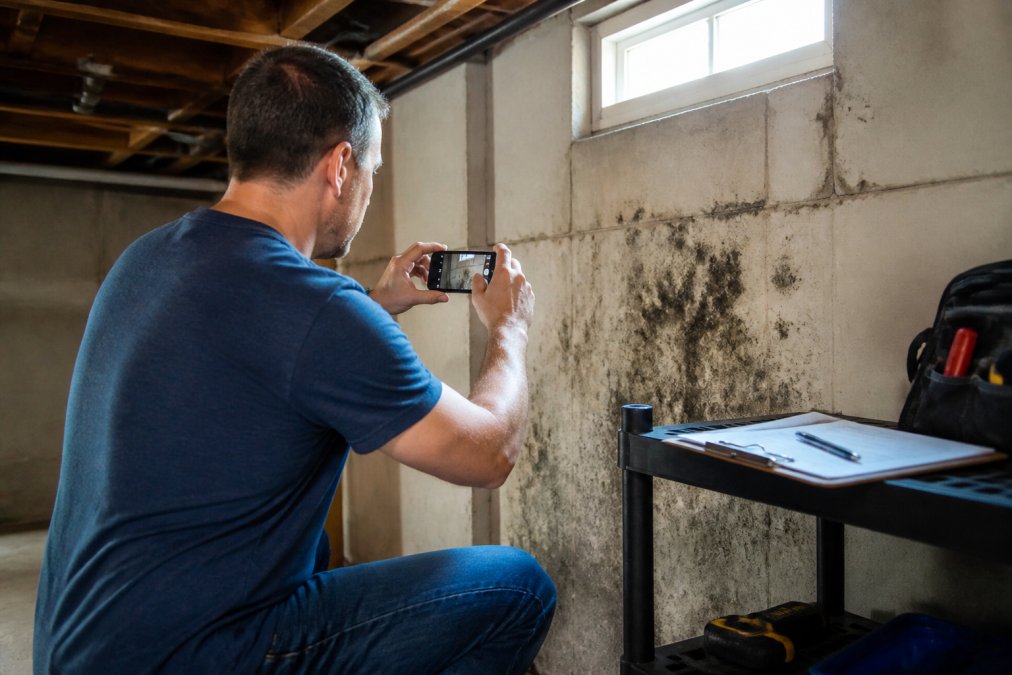
Filing a mold claim successfully comes down to documentation and speed. The homeowner who photographs everything, fixes the water source, and calls a certified remediator within 24 hours has a far stronger file than one who waits.
- Stop the water source and document it before repairs
- Photograph and video all visible mold and moisture
- Call a certified remediation company for an inspection
- Notify your insurer and open the claim
- Submit the remediation scope, photos, and testing results
- Keep every receipt, including temporary lodging if applicable
Documenting Damage Before and After Mitigation
Photograph wide shots and close-ups, include a date reference, and shoot a short walkthrough video narrating what you see. After mitigation, keep the clearance documentation and any post-remediation testing. This is the part most homeowners skip, and it's the first thing an adjuster asks for.
Working With Your Insurance Adjuster
Your adjuster needs three things: proof the loss was sudden, proof the mold resulted from that loss, and a clear scope of work. A professional remediation report supplies all three. At AFC Cleaning & Restoration, our IICRC-certified technicians document moisture readings and affected materials as part of every job, which gives adjusters the evidence they need to approve rather than deny.
Mold Remediation Process Steps: What Happens After Approval
Once a claim is approved, the remediation process steps follow a defined sequence. Containment goes up first to stop spores spreading. Then technicians remove affected materials, HEPA-vacuum surfaces, apply antimicrobial treatment, and run air scrubbers. Finally, the area is dried to verified moisture levels and, in many cases, third-party tested for clearance. Skipping the drying or testing stage is how mold returns.
State Variations and Health Liability: Angles Most Homeowners Miss
Most guides stop at "it depends on your policy." Two things they almost never cover can change the outcome of a mold situation more than the policy language itself: state-specific rules, and the line between fixing the building and paying for someone's health.
State Rules That Override the Policy Conversation
Mold law is set at the state level, and it varies enough that a national answer is incomplete. Three patterns are worth knowing:
- Disclosure states. Some states require sellers to disclose known mold or moisture problems in a residential property disclosure statement. Failing to disclose can expose a seller to liability even when insurance denied the remediation claim.
- Landlord-tenant habitability rules. Several states treat mold as a habitability issue, which means a landlord may have a duty to remediate regardless of what the property policy covers. The insurance claim and the legal duty are separate questions.
- Licensing and certification requirements. A handful of states regulate who may perform mold assessment or remediation, and some require a separate license for the assessment versus the removal. Using an unlicensed contractor can void your ability to recover or create a compliance problem.
Because these rules change and are state-specific, confirm your state's requirements with a local licensed professional or your state's consumer protection office before relying on any general guide, including this one.
Property Damage vs. Health-Related Liability
A mold claim has two possible tracks, and they are paid from different parts of the policy:
- Property damage (Coverage A/C). Pays to remove mold, repair the structure, and restore affected contents, up to the mold sub-limit. This is the track most homeowners are asking about.
- Personal liability (Coverage E). Pays when a third party is injured or their property is damaged and you are legally responsible. It does not pay for the policyholder's own family's medical bills.
Medical payments to others (Coverage F) is a narrow, no-fault coverage that can pay small medical claims for guests injured on your property, but it is not a mold-remediation or chronic-illness coverage. If occupants of the home develop respiratory symptoms, that is generally a health matter, not a property claim, and standard homeowners policies typically exclude pollution and contamination, which many carriers apply to mold-related bodily injury.
Why This Matters for Landlords and Property Managers
For a rental, the split is sharper. The property policy may pay to remediate the unit, but a tenant's health claim or a constructive-eviction dispute is a liability exposure, not a repair bill. Documenting prompt mitigation, moisture readings, and clearance testing is the strongest defense on both tracks, because it shows you acted reasonably the moment you knew.
Professional Mold Testing and Inspection
Professional mold testing establishes what type of mold is present, where it is concentrated, and whether air quality is affected. This matters because insurers and contractors both rely on testing to define scope, and because some state licensing rules treat assessment as a distinct service from remediation. A visual inspection alone often misses mold hidden behind drywall or inside ductwork. Ask upfront whether the inspection fee is billed separately from the remediation and whether your policy's mold sub-limit can absorb it, since testing is frequently counted against the same cap.
Frequently Asked Questions
How do I get insurance to pay for mold remediation?
To get insurance to pay for mold remediation, the mold must stem from a covered peril like a sudden pipe burst or storm-driven water intrusion. Document the damage with photos and dates, file your claim promptly, and keep all receipts. Most policies cap mold coverage at $10,000 or less, so review your limits. Professional mold testing and a detailed remediation estimate can strengthen your claim significantly.
What is the average cost for mold remediation?
The cost of mold remediation depends on the affected area size, mold type, and accessibility. Larger commercial jobs or mold behind walls can be more extensive. Your actual cost depends on the scope of contamination and local labor rates. Get a professional inspection and written estimate before filing your claim.
Does homeowners insurance cover mold caused by a leaky pipe?
Yes, if the leak was sudden and accidental. A pipe that bursts unexpectedly and causes water damage that leads to mold is generally covered. However, if the leak was slow and gradual over weeks or months, insurers often classify it as maintenance neglect and deny the claim. Document when you discovered the leak and any repair records to support your case.
How do I document mold damage for an insurance claim?
Document mold damage by taking clear photos and videos of the mold, the water source, and affected belongings. Note the date you discovered it and any prior maintenance. Keep receipts for emergency mitigation like drying or boarding. Get a professional mold inspection report and a written remediation estimate. Submit all documents with your claim and keep copies for your records.
Mold claims are won or lost in the first 48 hours, and the paperwork matters as much as the cleanup. AFC Cleaning & Restoration has served the greater Kansas City area since 2003 with IICRC-certified technicians available 24/7, 365 days a year, handling everything from emergency water removal to full mold remediation and insurance documentation. Get started with AFC Cleaning & Restoration and restore your property to its pre-disaster condition.