 how-to
How to Prevent Mold in Commercial Buildings
Table of Contents
- Why Mold Prevention Matters in Commercial Buildings
- Step 1: Identify Common Moisture Sources in Your Facility
- Step 2: Implement Commercial Building Moisture Control
- Step 3: Maintain Commercial HVAC Mold Prevention
- Step 4: Create a Mold Inspection Checklist for Commercial Buildings
- Step 5: Respond Quickly to Water Damage and Leaks
- Step 6: Know When to Call for Commercial Mold Remediation
- Common Mistakes to Avoid
- Frequently Asked Questions
Last Updated: October 13, 2026
Why Mold Prevention Matters in Commercial Buildings
Mold growth in commercial buildings damages property, harms indoor air quality, and poses health risks. Dealing with mold after it spreads costs far more than prevention.
At AFC Cleaning & Restoration, we've worked with commercial property managers facing mold crises. The pattern is always the same: moisture went undetected, and by the time visible mold appeared, it had spread behind walls and through ductwork.
Learning how to prevent mold in commercial buildings requires a systematic approach: control moisture, maintain HVAC systems, inspect regularly, and respond quickly to water intrusion.
Step 1: Identify Common Moisture Sources in Your Facility
Finding where moisture enters your building is the foundation of mold prevention. Most commercial buildings have multiple moisture sources.
Start by mapping your facility's high-risk zones. These are the places where dampness naturally accumulates:
High-humidity areas and locations prone to dampness:
Basements and below-grade spaces trap groundwater seeping through concrete. Utility rooms house pipes, water heaters, and condensation-prone equipment.
Walk through each of these spaces monthly.
Water intrusion points and potential leaks:
Roof leaks are the most common culprit.
Windows and doors leak when seals fail or caulking cracks, inspect frames and sills for water damage or soft spots.
Plumbing leaks hide inside walls; a slow supply-line drip can run for weeks unnoticed.
Condensation forms on cold pipes and poorly insulated areas.
Step 2: Implement Commercial Building Moisture Control
Once you've identified moisture sources, you need systems to manage them: reduce humidity, remove standing water, and keep air moving.
Humidity and moisture monitoring thresholds:
Mold needs liquid water or sustained high relative humidity to grow.
What to measure, and where:
- Air temperature and RH at each monitoring point, your primary reading.
- Dew point. This tells you the temperature at which condensation forms on a surface. If your dew point is 55°F and a cold-water pipe surface is 52°F, you'll get condensation on that pipe. Tracking dew point catches problems RH alone misses.
- Surface temperature on cold pipes, exterior walls, and HVAC components in humid months. A low-cost infrared thermometer gives you this in seconds.
Where to place sensors:
- Basements and below-grade spaces, one sensor per 2,000 to 3,000 square feet, plus one near any sump pit or floor drain.
- Utility rooms, one sensor near each water heater, boiler, or chilled-water line.
- Archive and storage rooms, one at floor level and one at mid-height; moisture stratifies.
- Ceiling plenum above drop ceilings, one per HVAC zone; this is where hidden mold most often starts.
- Return-air plenum and air-handler closets, one at each air handler.
- Bathrooms, break rooms, and locker rooms, one each, positioned away from direct steam.
Set alerts, not just readings:
A sensor nobody checks is decoration. Configure your monitoring system, networked BMS or standalone Wi-Fi loggers, to alert when:
- RH exceeds 55 percent for more than 4 continuous hours.
- Dew point is within 5°F of any monitored surface temperature.
- RH drops below 25 percent (over-drying causes joint separation and static).
- Any sensor goes offline for more than 24 hours, a dead sensor is a blind spot.
Log readings at least hourly.
Dehumidification systems:
Portable consumer dehumidifiers suit small, enclosed spaces, a utility room or records closet, but not open commercial floor plates. For those, you need one of:
- Desiccant dehumidifiers, which work well below 60°F where refrigerant units lose efficiency. Common in below-grade spaces and cold storage adjacent areas.
- Refrigerant dehumidifiers, more energy-efficient in warm, humid conditions and typical for occupied spaces.
- Integrated HVAC dehumidification, where the air handler controls latent load. Most efficient in buildings with high outside-air requirements, but it must be designed in, retrofitting is expensive.
Size the unit based on space volume, expected moisture load (occupancy, infiltration, process moisture), and target RH.
Ventilation and exhaust:
Run exhaust fans during use and at least 20 minutes after.
Drainage and water extraction protocols:
- Clean gutters and downspouts at least twice yearly and after any major storm.
- Downspouts should discharge at least 6 feet from the foundation, with the ground sloping away at roughly a 6-inch drop over the first 10 feet.
- Test sump pumps monthly by pouring water into the pit and confirming automatic activation; test backup power quarterly.
- Inspect roof drains and scuppers before every rainy season.
When water intrusion happens, extract it fast, standing water becomes a mold breeding ground within 24 to 48 hours (the CDC).
Step 3: Maintain Commercial HVAC Mold Prevention
Your HVAC system moves air throughout the building.
HVAC system inspections and ductwork cleaning:
Schedule professional HVAC inspections twice yearly: before heating season and before cooling season.
Ductwork collects dust, debris, and moisture over time; professional cleaning removes this buildup.
Condensation forms inside ducts when warm air meets cold surfaces.
Replace HVAC filters monthly during heavy use seasons.
Ventilation and air quality management:
Fresh air intake brings outside air in.
Supply and return ducts need proper balance; restricted return airflow builds pressure and accumulates moisture.
Air handler drain lines must slope downward and drain to a proper location.
Maintain consistent temperature and humidity year-round, fluctuations create condensation.
Step 4: Create a Mold Inspection Checklist for Commercial Buildings
Regular inspections catch problems before they become emergencies, and a structured checklist ensures nothing gets missed.
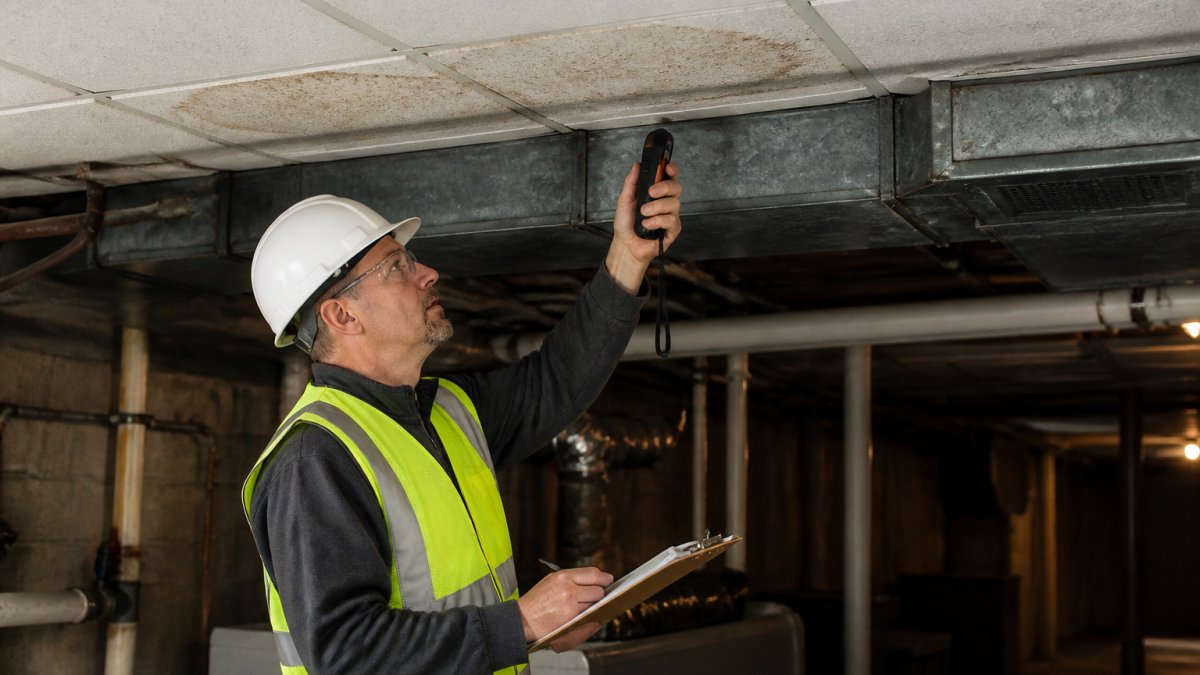
A measurable preventive maintenance schedule:
Daily (building engineer or facility technician):
- Walk mechanical rooms for standing water, drips, or new pipe condensation.
- Confirm all monitoring sensors are online in the BMS or logger dashboard.
- Check active water-related work orders and confirm closure.
- Visually check restrooms and break rooms for leaks under sinks and around ice machines.
Weekly (facility technician):
- Review the week's humidity and dew-point logs for alert events.
- Spot-check two high-risk zones on rotation (basement, plenum, archive, utility room).
- Confirm restroom and kitchen exhaust fans are operating.
- Inspect under-sink cabinets in break rooms and janitorial closets.
Monthly (facility manager):
- Full walkthrough of every high-risk zone using the checklist below.
- Test sump pumps and confirm backup power.
- Inspect roof drains, scuppers, and visible roof penetrations from a safe vantage point.
- Review the prior month's incident log and confirm all water events closed out with drying verification.
Seasonal (facility manager, with HVAC vendor):
- Pre-heating-season HVAC inspection (early fall).
- Pre-cooling-season HVAC inspection (early spring), with coil cleaning and condensate drain flush.
- Gutter and downspout cleaning before and after the rainy season.
- Exterior envelope walk: caulking, window seals, door sweeps, flashing.
Annual (facility manager, with third-party review):
- Full building envelope assessment: roof, walls, below-grade waterproofing.
- Infrared or moisture-meter survey of suspect wall and ceiling assemblies.
- Review and update the building-specific risk assessment (see below).
- Review insurance coverage and confirm the emergency response vendor list is current.
Building-specific risk assessment:
Not every building has the same mold risk. Before building the schedule, rank your facility on these factors:
- Climate. Humid regions face year-round risk; cold climates face winter condensation on cold surfaces and ice-dam risk at roofs.
- Building age. Older buildings have more deferred maintenance, legacy materials, and hidden leaks.
- Occupancy. High-occupancy spaces generate more moisture from people, cooking, and showers; vacant spaces lose airflow and develop humidity pockets.
- Construction materials. Paper-faced drywall, organic insulation, and wood framing are more mold-susceptible than inorganic substrates.
- History. Any building with a prior flood, roof failure, or unresolved leak is elevated risk for at least 24 months after the event.
Use the ranking to weight inspection frequency.
Documentation standard:
Every inspection entry should include date, time, inspector name, location, observation, humidity and dew-point readings, photo, and action taken.
Identifying visible mold and hidden mold in building materials:
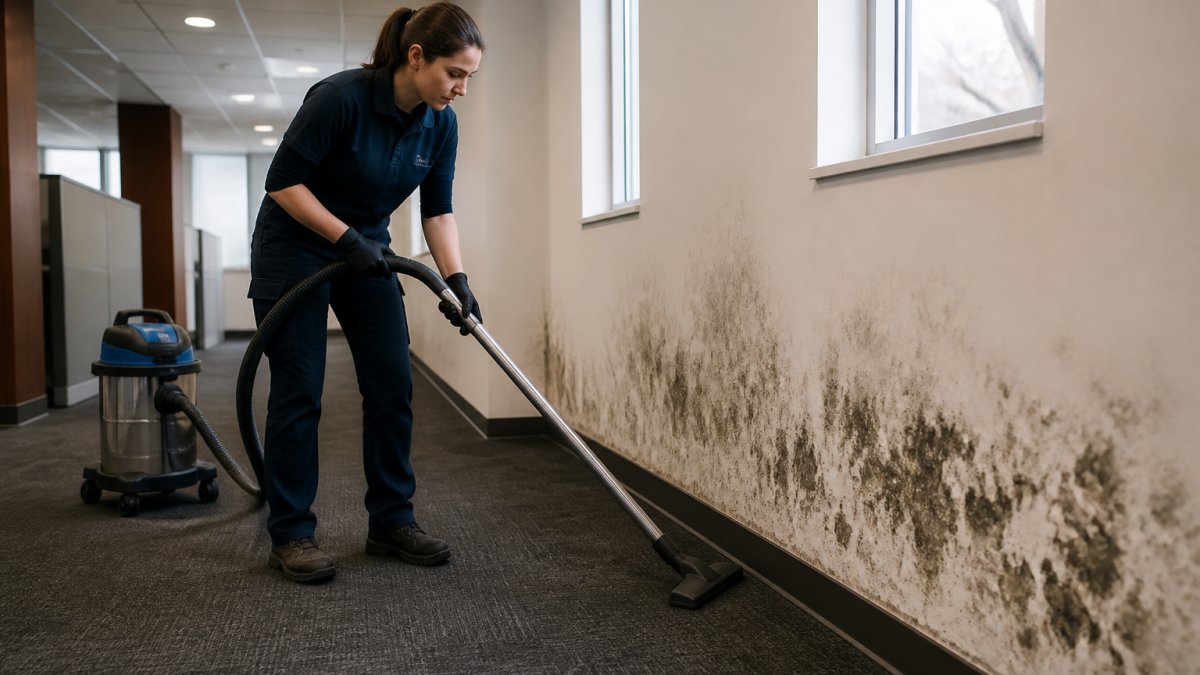
Visible mold appears as black, green, or white spots, often on ceiling tiles, drywall, wood framing, and insulation.
Hidden mold grows inside walls, above drop ceilings, and inside ductwork.
If you suspect hidden mold, hire a professional who uses moisture meters, thermal imaging, and air sampling.
Step 5: Respond Quickly to Water Damage and Leaks
Water damage requires immediate action. The first 24 to 48 hours are critical. Mold can begin growing within this window if conditions are right.
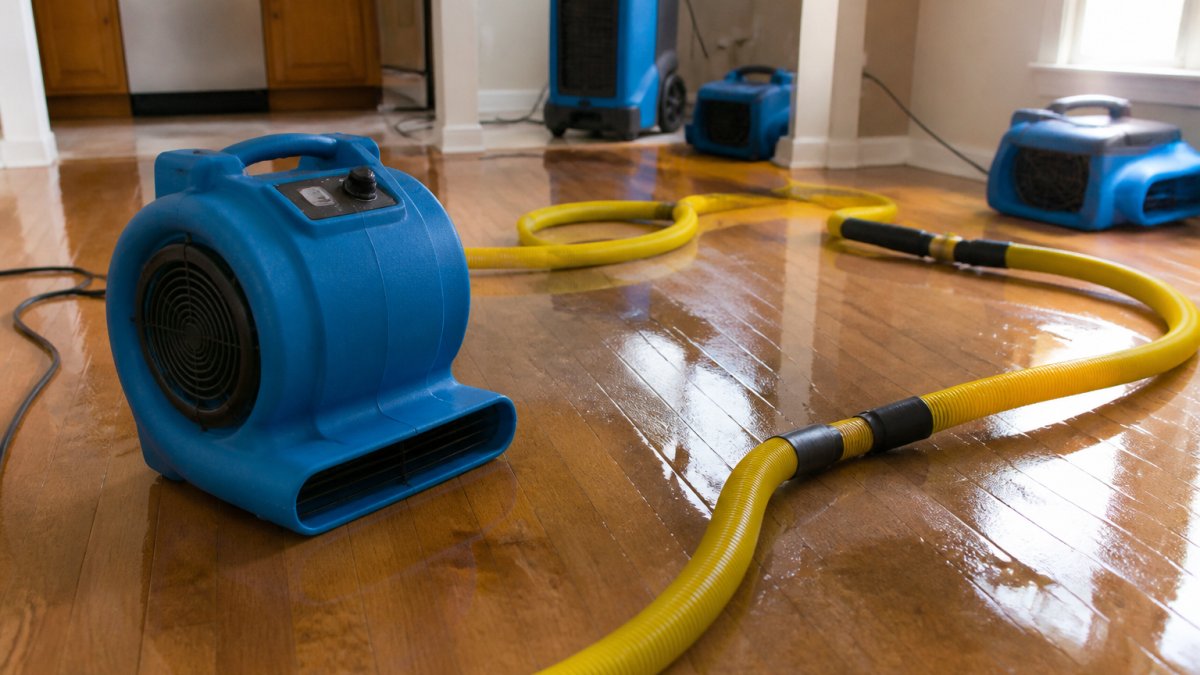
Extract standing water immediately with pumps, wet vacuums, or professional equipment, pulling water from walls, floors, and materials.
Dry the affected area completely. Open windows if weather permits. Run fans and dehumidifiers. Keep air moving.
Remove damaged materials that can't dry properly, wet insulation, carpet, and drywall often need replacement. Replacing them now is cheaper than mold remediation later.
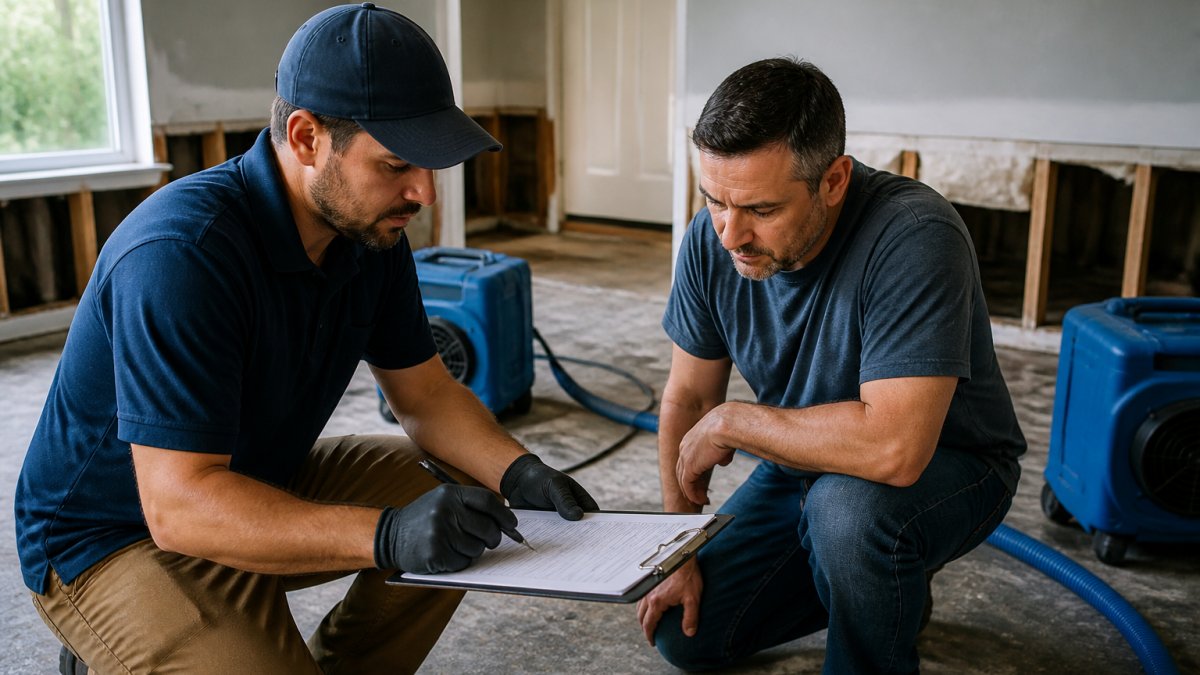
Document everything with photos and notes to support insurance claims and show you acted responsibly.
Step 6: Know When to Call for Commercial Mold Remediation
Some mold situations require professional help. Knowing when to call saves time and prevents bigger problems.
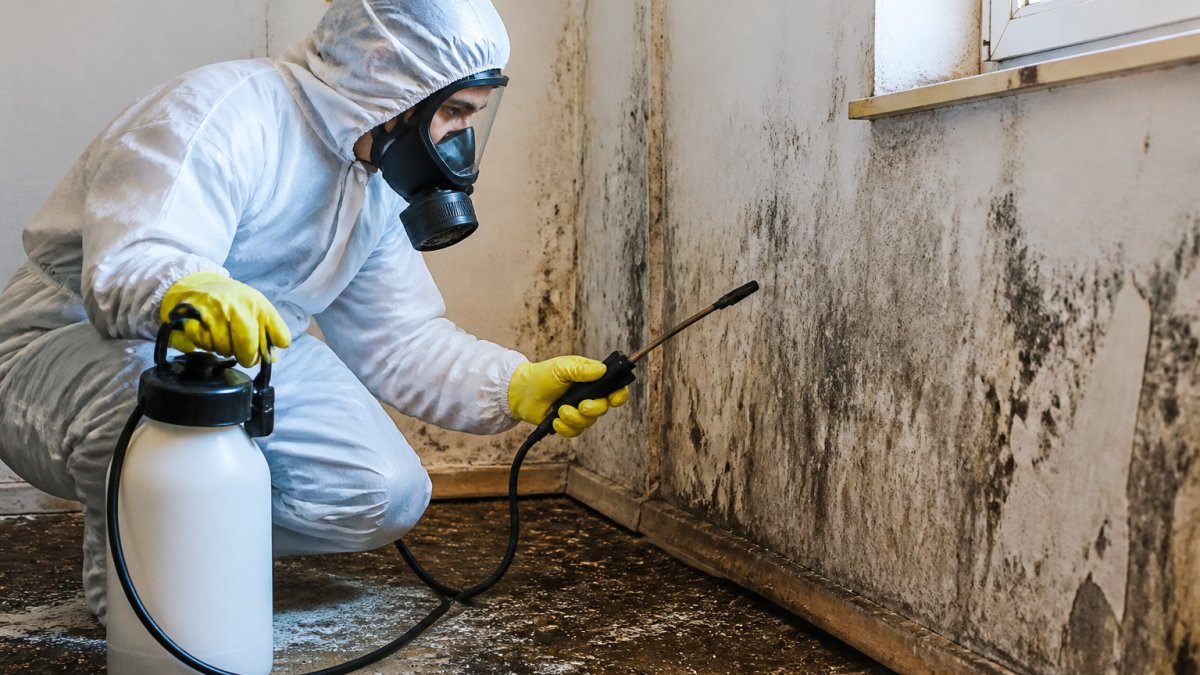
Professional remediation includes containment, removal, disinfection, and verification. AFC Cleaning & Restoration has IICRC-certified technicians trained in commercial mold remediation.
Don't attempt large-scale mold removal yourself. Disturbing mold releases spores, and without proper containment and equipment you can spread the problem throughout your building.
After professional remediation, get written verification that the work is complete. This documentation protects you and ensures the problem was actually solved.
Common Mistakes to Avoid
Many facility managers make preventable errors that lead to mold problems.
Ignoring small moisture problems is mistake number one. A small water stain seems harmless. But if moisture continues, mold will grow.
Skipping HVAC maintenance is expensive. Dirty filters, clogged drains, and poor ductwork create the humid conditions mold loves.
Not documenting inspections leaves you vulnerable. If mold appears and spreads, you need proof you were monitoring and maintaining the building.
Waiting too long after water damage is critical, every hour matters, and water sitting more than 48 hours almost always develops mold.
Assuming mold will go away on its own never works.
Understanding how to prevent mold in commercial buildings requires consistent effort, but it's far more cost-effective than dealing with contamination. We handle water extraction, dehumidification, mold removal, and complete building restoration to get your property back to normal condition.
Frequently Asked Questions
What are the most common causes of mold in commercial buildings?
The primary causes are moisture and water intrusion. Leaks in roofs, walls, and plumbing; poor ventilation in HVAC systems; high ambient humidity; and inadequate drainage around building foundations create conditions where mold thrives. Basements, utility rooms, supply closets, and archive spaces are especially vulnerable because they often lack proper air circulation and monitoring. Water damage from flooding or slow leaks can seed mold growth within 24-48 hours if the affected area is not dried promptly.
How often should commercial buildings be inspected for mold?
Establish a routine inspection schedule at minimum quarterly, with additional inspections after any water intrusion event, heavy rain, or HVAC maintenance. High-risk areas like basements, utility rooms, and around HVAC ductwork should be checked monthly. Document all findings and corrective actions. If your facility has a history of moisture problems or operates in a humid climate, increase frequency to monthly building-wide inspections. This preventive approach catches early signs of dampness and hidden mold before they spread.
Can I prevent mold in my commercial HVAC system?
Yes. Commercial HVAC mold prevention requires regular maintenance: inspect ductwork and supply closets quarterly for visible mold or moisture; clean or replace air filters monthly; ensure condensation drain lines are clear and flowing; maintain relative humidity between 30-50% using dehumidifiers if needed; and verify that ventilation systems are functioning properly. Moisture inside ductwork creates ideal conditions for mold spores to colonize. Professional HVAC inspections and cleaning every 1-2 years are recommended for large commercial systems. Poor ventilation is a leading cause of mold in office spaces and warehouses.
What should I do immediately after water damage or flooding in a commercial building?
Act within the first 24-48 hours. Shut off water sources, isolate the contaminated area to prevent mold spores from spreading, and begin water extraction and drying using fans and dehumidifiers. Remove wet building materials (ceiling tiles, insulation, drywall) if they cannot be dried completely. Document all damage with photos for insurance purposes. If the affected area is large or involves HVAC systems, contact a professional remediation service immediately. Incomplete drying or delayed response leads to hidden mold growth behind walls and in ductwork, which is far more expensive and disruptive to remediate later.