 how-to
How to Safely Remove Standing Water From a Basement
Table of Contents
- Before You Touch the Water: A Safety Decision Tree
- Electrical Hazard Check: When to Kill the Power
- Sewage and Contamination: When to Call a Pro Immediately
- When to Pump Water Out of a Flooded Basement (and When to Wait)
- Choosing a Basement Water Removal Pump
- Basement Water Removal Without a Pump
- How to Dry Out a Basement After Flooding
- When to Stop DIY Cleanup and Call a Professional
- Conclusion: Protect Your Home and Health
- Frequently Asked Questions
Last Updated: October 14, 2026
Before You Touch the Water: A Safety Decision Tree
A flooded basement is a race against time, but the wrong first move can be fatal. Standing water and electricity kill people every year, and contaminated floodwater carries serious health risks.
This guide from AFC Cleaning & Restoration walks you through how to safely remove standing water from basement spaces, step by step.
Here is the hard truth most guides skip: your basement is now a hazard zone, not a chore. The CDC guidance on floodwater safety treats floodwater as a health threat because it can carry sewage, chemicals, and bacteria.
So use this decision tree:
- Is the water touching electrical outlets, appliances, or the panel? Stop. Kill the power first.
- Does the water smell like sewage? Stop. Call a professional.
- Is the water deeper than a few inches or still rising? Slow down and read on.
Get this wrong and you risk electrocution, structural damage, or a mold problem that costs far more than the original flood.
Electrical Hazard Check: When to Kill the Power
Turn off the power before you enter a flooded basement whenever the water may have reached outlets, appliances, or the electrical panel. This is the single most important safety step.
Do not walk through water to reach your breaker box. If the panel is in the flooded area, stop and call an electrician or your utility company.
Here is what to check:
- Water near outlets or cords: Cut power at the main breaker.
- Water near your furnace, water heater, or washer: Cut power before touching anything.
- Panel already submerged: Leave the basement. Call a pro.
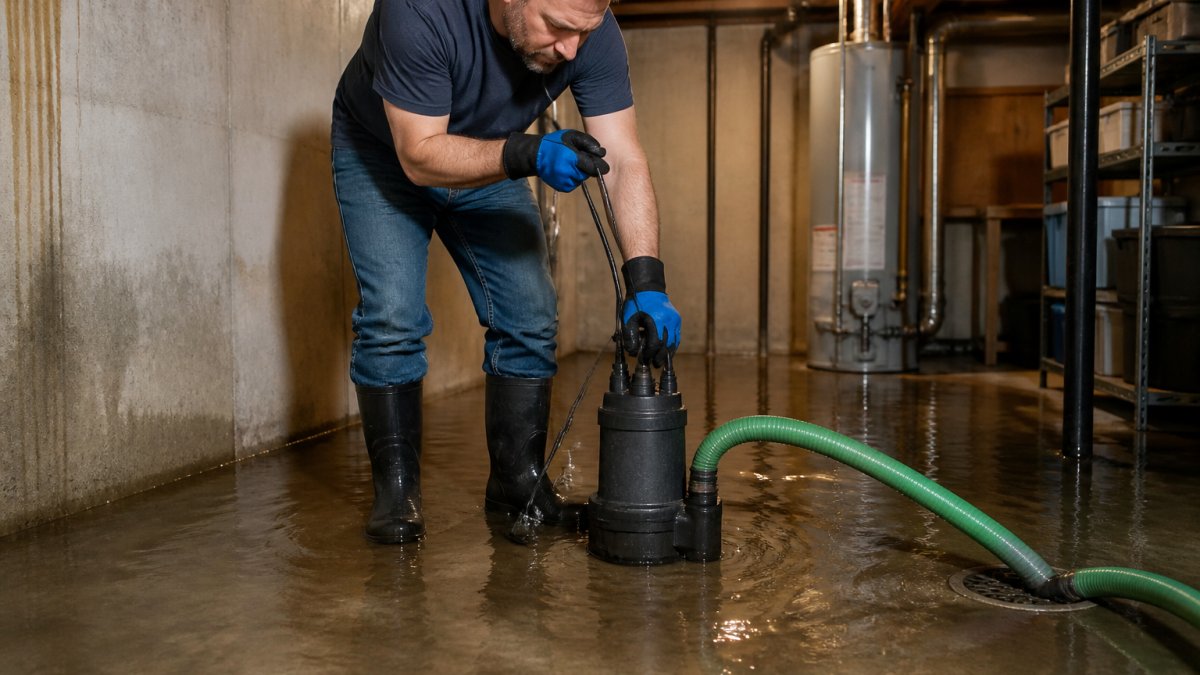
Once the power is off, suit up in rubber boots and protective gloves, floodwater hides glass, nails, and sharp debris. Use a flashlight so both hands stay free.
Sewage and Contamination: When to Call a Pro Immediately
Sewage backups and outdoor floodwater are not the same as a clean supply-line leak. Contaminated water carries bacteria, viruses, and parasites that can make you seriously ill.
Call a professional immediately if you see any of these:
- The water smells like sewage or waste
- The water is dark, murky, or has visible solids
- The flooding came from outside, a drain, or a toilet
The EPA guidance on dealing with flooded homes recommends treating all floodwater as contaminated until proven otherwise. For sewage or outdoor floodwater, do not attempt DIY removal. Professional crews use personal protective equipment and disinfection that keeps your family safe.
When to Pump Water Out of a Flooded Basement (and When to Wait)
Start pumping only after four conditions are met: the water has stopped rising, the power is off, you have ruled out sewage or outdoor floodwater, and the ground outside the foundation is no longer saturated. If any one is false, pumping now can make the damage worse.
Most guides say "pump when the water stops rising." That is necessary but not sufficient. The order of operations is what protects you:
- Stop the source. Shut the main water valve, patch the supply line, or wait out the storm. Pumping while water is still entering just moves the same water twice.
- Kill the power at the source. Confirm the panel is dry and reachable, or call an electrician.
- Rule out contamination. Sewage, drain backups, and outdoor floodwater change the job from DIY to professional.
- Check the outside water level. If the ground against your foundation, window wells, and yard is still saturated, the walls are still under load.
Hydrostatic Pressure: Why Pumping Too Fast Can Crack Your Foundation
When your basement floods, water in the saturated soil outside the foundation walls pushes inward with enormous force, hydrostatic pressure. The water inside pushes back. Drain the inside too fast and you remove that counterweight, so the outside pressure can crack, bow, or shift the walls.
This is one of the most common and expensive mistakes homeowners make after a flood, and it is entirely preventable.
Pace the pump in stages:
- Mark the starting water level on the wall with a pencil or painter's tape.
- Pump down roughly one-third of the depth, then stop.
- Wait several hours, overnight if the flooding was deep, and watch the water level. If it climbs back up, water is still entering and you have not stopped the source.
Reading the Outside Water Level Before You Start
Before you plug in a pump, walk the exterior:
- Window wells full of water? The soil is saturated. Wait.
- Yard still holding puddles near the foundation? Wait.
- Street or storm drains still backed up? Wait, the water has nowhere to go and may re-enter.
If you are unsure, call your local water damage professional or municipal building department and ask whether it is safe to pump right now. Many jurisdictions issue specific guidance after widespread flooding, and following it protects your foundation and your insurance claim.
What to Do While You Wait
Waiting does not mean doing nothing. Use the time to:
- Photograph and video the water level, damaged belongings, and any visible cracks for your insurance file.
- Move undamaged items off the floor and out of the affected area.
- Set up ventilation if it is safe to do so.
Choosing a Basement Water Removal Pump
The right removal method depends on three things: water depth, debris load, and whether the water is clean. Match the method to the conditions and you will finish faster with less risk.
| Water depth | Best first tool | Why |
|---|---|---|
| Under 1 inch | Wet/dry vacuum + squeegee | Fast, precise, no setup |
| 1-6 inches | Wet/dry vacuum or utility pump | Vacuum for small areas, pump for volume |
| 6 inches to 2 feet | Submersible pump | Sits in the water, moves high volume |
| Over 2 feet | Submersible pump, staged | Deep water needs paced drawdown |
| Any depth with sewage or outdoor floodwater | Stop, call a professional | Contamination changes the job |
Submersible vs. Pedestal Pumps
Submersible pumps sit fully underwater and handle larger volumes and some solids, the default for deep standing water because they push water out fast and need no priming.
Pedestal pumps sit above the water with the intake hose below.
Utility pumps are a middle option: portable, often able to handle small solids, and useful for a sink, tub, or shallow puddle.
For most flooded basements, a submersible pump with a 1.5-inch or 2-inch discharge is the practical choice.
Electrical Setup: GFCI, Cords, and Placement
This is where DIY water removal turns dangerous. Follow these rules without exception:
- Plug into a GFCI outlet. A ground-fault circuit interrupter cuts power the instant it detects a leak to ground. If your basement has no GFCI, use a portable GFCI adapter or a GFCI-protected outlet on a dry floor above.
- Never plug a pump into an extension cord that lies in or near water. If you must use one, keep the connection elevated, dry, and out of the flood zone, and use a heavy-gauge cord rated for the pump's amperage.
- Keep the pump's cord connection out of the water. The plug end should sit above the waterline at all times.
Discharge Routing: Where the Water Goes Matters
Where you send the water is as important as how you pump it. Mistakes here cause re-flooding, foundation damage, or problems with neighbors and code enforcement.
- Route the hose downhill and away from the foundation. A discharge that dumps water right next to the wall sends it straight back into the soil and back into your basement.
- Aim for a lawful discharge point, a storm drain where allowed, a dry well, a curb drain, or a graded area of the yard well away from the house. Check local rules; many jurisdictions prohibit discharging into sanitary sewers or onto a neighbor's property.
- Never discharge into a septic system. The added volume can overload the drain field and back up into the home.
Pump Maintenance and Safety Checks
- Check the float switch. The pump should turn on and off as the water level rises and falls. A stuck float means the pump runs dry or floods the floor.
- Watch for clogging. Sediment, leaves, and debris can block the intake. Shut off and clear it if flow drops.
- Do not let the pump run dry. Running a submersible pump without water can burn out the motor in minutes.
Basement Water Removal Without a Pump
No pump? You can still make progress, but it takes muscle and time. This method works best for shallow water under an inch deep.
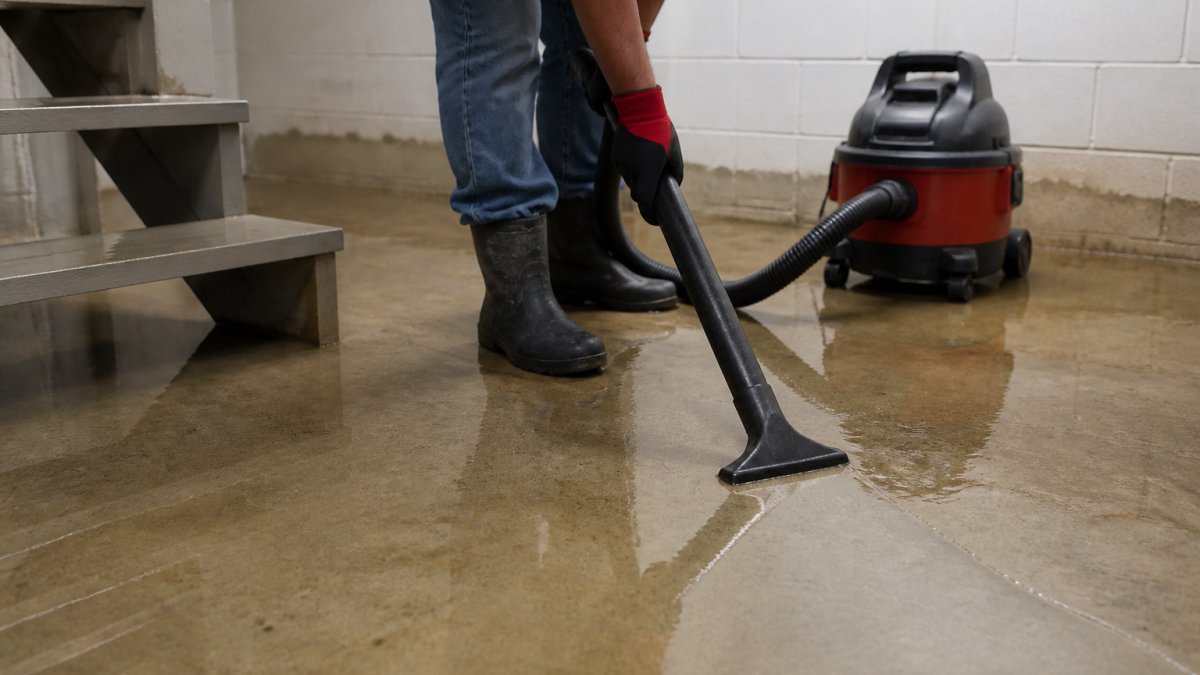
Start with a wet/dry vacuum for the bulk of it. A shop vac pulls water fast and reaches corners a mop cannot. For the rest:
- Use a bucket and mop for the last shallow puddles
- Push water toward a floor drain with a squeegee
- Soak up residue with old towels or a wet vac
Work in sections. Finish one area completely before moving on. A common mistake is spreading water around instead of removing it.
How to Dry Out a Basement After Flooding
Removing the water is only half the job. A wet basement that stays damp grows mold fast, often within a day or two. Drying protects your home long term.
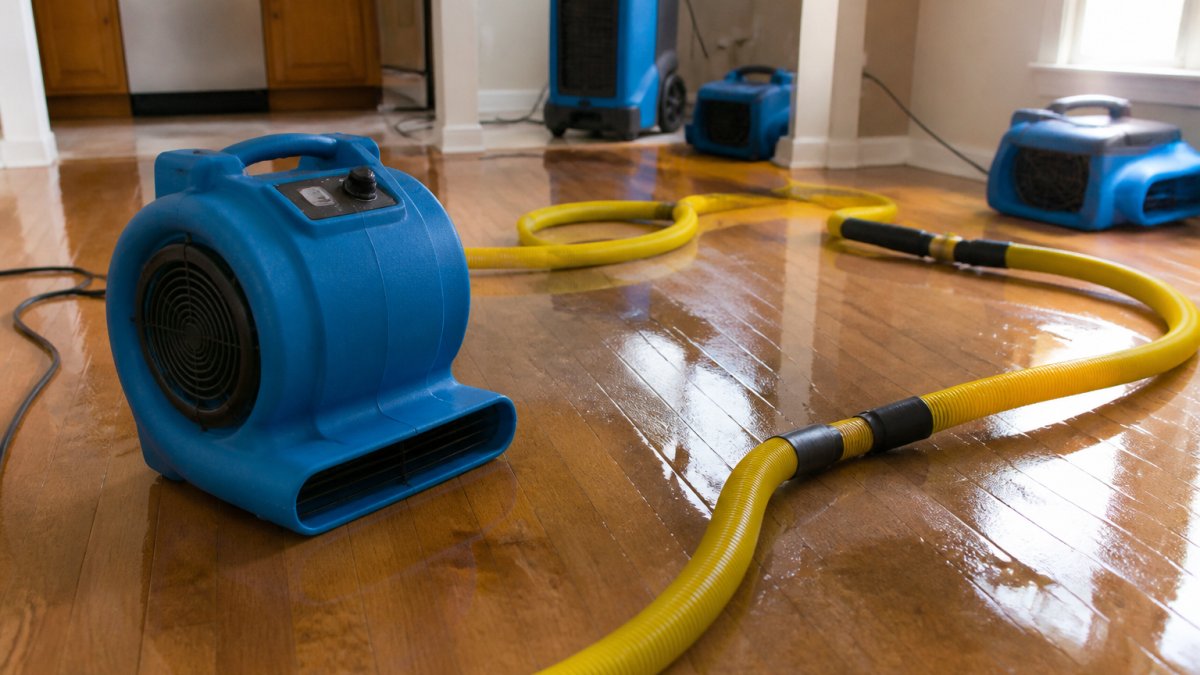
Open windows and doors for ventilation if the weather allows, then bring in the equipment:
- Set up fans and air movers to keep air moving across wet surfaces
- Run a dehumidifier to pull moisture out of the air
- Point airflow along walls, not just at the floor
Moisture Verification and Mold Prevention
Do not trust your hand to tell you it is dry. Moisture hides in drywall, wood, and carpet padding long after the surface feels fine. Use a moisture meter to check walls, floors, and framing.
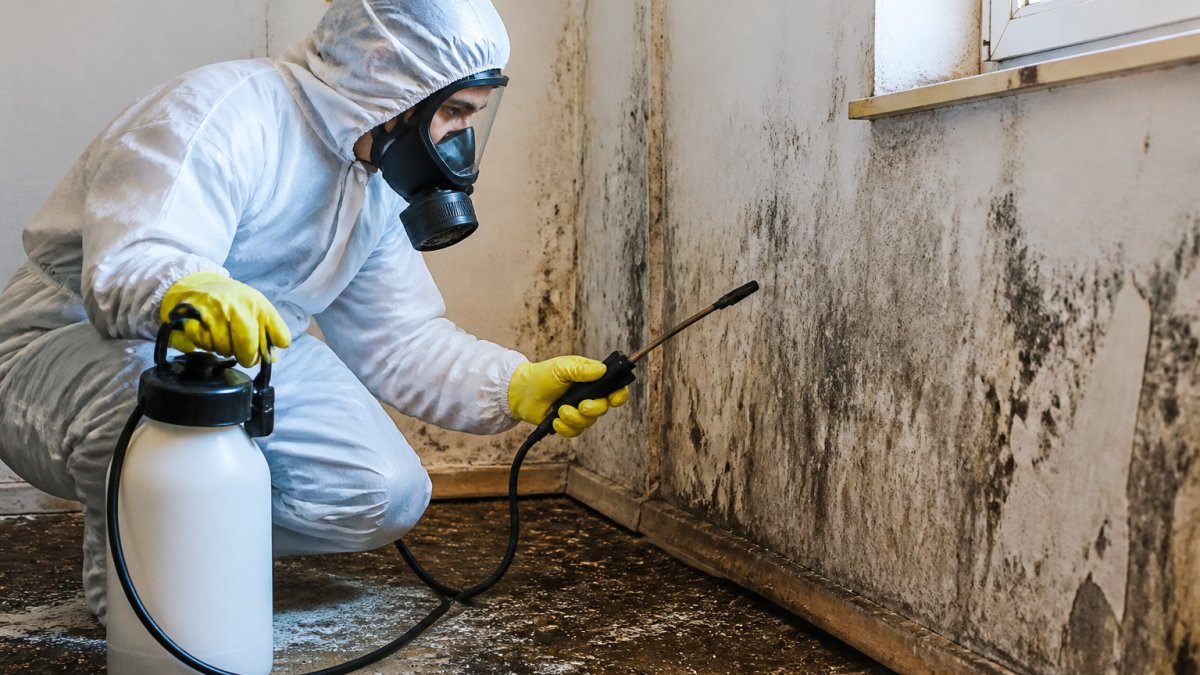
Watch for these mold warning signs:
- A musty, earthy smell that lingers
- Dark spots or discoloration on walls and baseboards
- Warping or bubbling paint
Remove and discard porous materials that stayed wet, carpet, padding, ceiling tiles. They rarely dry fully and become mold food. Disinfect hard surfaces after cleaning.
When to Stop DIY Cleanup and Call a Professional
Stop and call a pro when the water is contaminated, the flooding is deep, or the damage reaches inside your walls. DIY cleanup has limits, and pushing past them costs more in the end.
Call for help if:
- The water came from sewage or outdoor flooding
- Standing water is deeper than a couple of feet
- Your foundation shows cracks or bowing
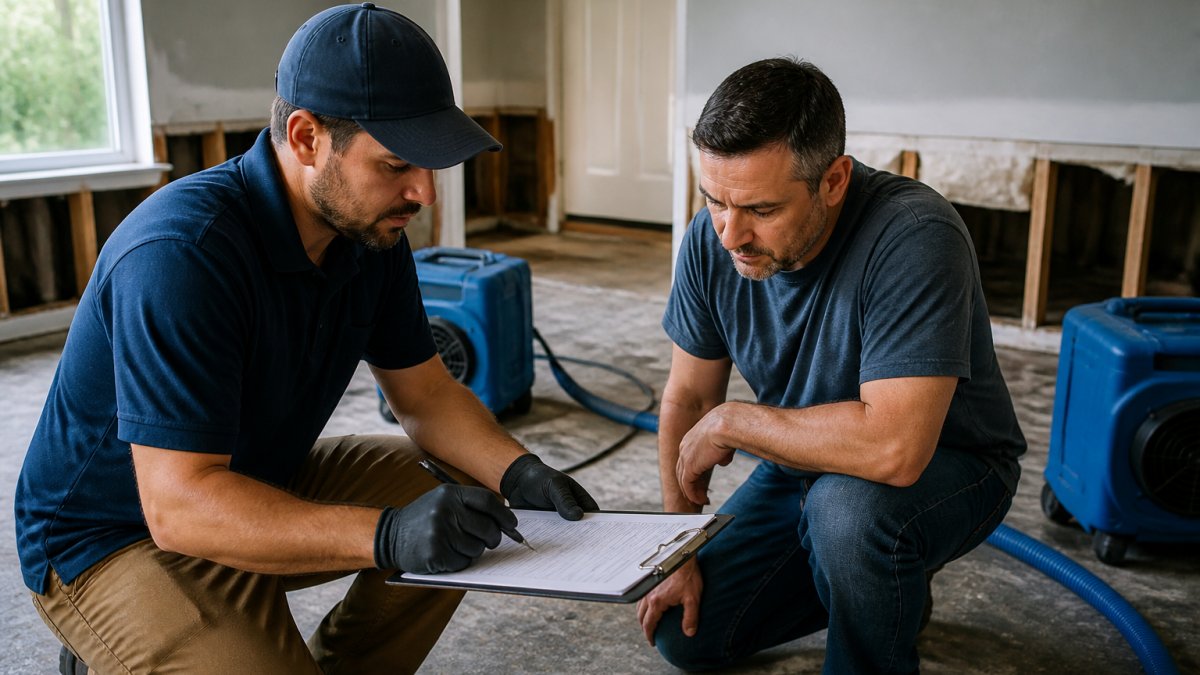
AFC Cleaning & Restoration sends IICRC-certified technicians who handle flood water damage repair, mold removal, and full restoration. We are available 24/7, 365 days a year, for homes and commercial properties, and we document the damage and support your insurance claim so you are not juggling paperwork while your basement sits wet.
Conclusion: Protect Your Home and Health
The hardest part of a flooded basement is knowing when to act and when to wait. Move too fast and you risk your foundation. Move too slow and mold takes hold.
When the job is too big or too risky, AFC Cleaning & Restoration is here. Our IICRC-certified technicians handle emergency water removal, mold remediation, and complete property restoration, backed by rapid 24/7 response.
Frequently Asked Questions
How do I remove water from my flooded basement?
First, ensure it's safe to enter: check for electrical hazards and turn off power at the circuit breaker if water is near outlets. Wear rubber boots and gloves. If the water is contaminated (sewage), call a professional. For clean water, use a submersible pump or wet/dry vacuum to remove standing water. Work slowly to avoid structural damage. Then dry the area with fans and a dehumidifier. If the water level is high or you're unsure, contact a restoration company.
When is it safe to start pumping water out of a flooded basement?
It's safe to start pumping only after you've confirmed there's no electrical hazard (power is off to the area) and the water isn't contaminated by sewage. If the flooding is due to a rising water table, pump slowly, about 2-3 inches per day, to prevent hydrostatic pressure from cracking the foundation. If you see structural cracks or the water is still rising, wait and call a professional.
How can I get water out of a basement without a pump?
You can use a wet/dry vacuum for small amounts, or manually remove water with buckets, mops, and towels. For larger volumes, a bucket brigade is slow but possible. Another option is a floor drain if it's clear and the water can flow into it. However, without a pump, removing significant standing water is labor-intensive and may not fully dry the space. For deep water, a pump is far more efficient.
Will insurance cover basement flooding?
Standard homeowners insurance typically does not cover flooding from outside sources like heavy rain or rising water tables; that requires a separate flood insurance policy through the National Flood Insurance Program (NFIP) or a private insurer. However, sudden accidental discharges (like a burst pipe) are often covered. Document all damage with photos and keep receipts. Contact your insurance agent to confirm your coverage and file a claim promptly.