 how-to
Is Air Duct Cleaning Necessary for Mold?
Table of Contents
- Is Air Duct Cleaning Necessary for Mold?
- The Difference Between Dust Buildup and Mold Growth
- Why Cleaning Ducts Without Fixing Moisture Fails
- Signs of Mold in an HVAC System
- EPA Guidelines for Duct Cleaning and Mold
- Moisture Control and HVAC System Design Flaws
- DIY vs. Professional Mold Testing and Cleaning
- The Cost of Professional Mold Remediation
- Post-Cleaning Verification: Confirming the Mold Is Gone
- Frequently Asked Questions
Last Updated: September 21, 2026
Is Air Duct Cleaning Necessary for Mold?
Mold needs moisture to grow. That single fact answers the question most homeowners ask: is air duct cleaning necessary for mold? Cleaning your ducts removes mold spores and debris, but it will not stop mold from coming back if a moisture problem still exists in your HVAC system. At AFC Cleaning & Restoration, our IICRC-certified technicians have handled mold removal across the Kansas City area since 2003, and we see the same pattern: homeowners pay for a duct cleaning, feel relief for a few weeks, then watch the musty smell return because nobody fixed the water source.
The Difference Between Dust Buildup and Mold Growth
Dust inside a duct is normal and usually harmless. Mold is different: it grows in wet spots, spreads in patches, and gives off a musty smell. Dust is dry and gray; mold is often dark, fuzzy, or slimy.
Here is how to tell them apart:
- Dust: dry, light, easy to wipe away, faint or no odor
- Mold: damp, dark, returns after cleaning, strong earthy musty smell
Why Cleaning Ducts Without Fixing Moisture Fails
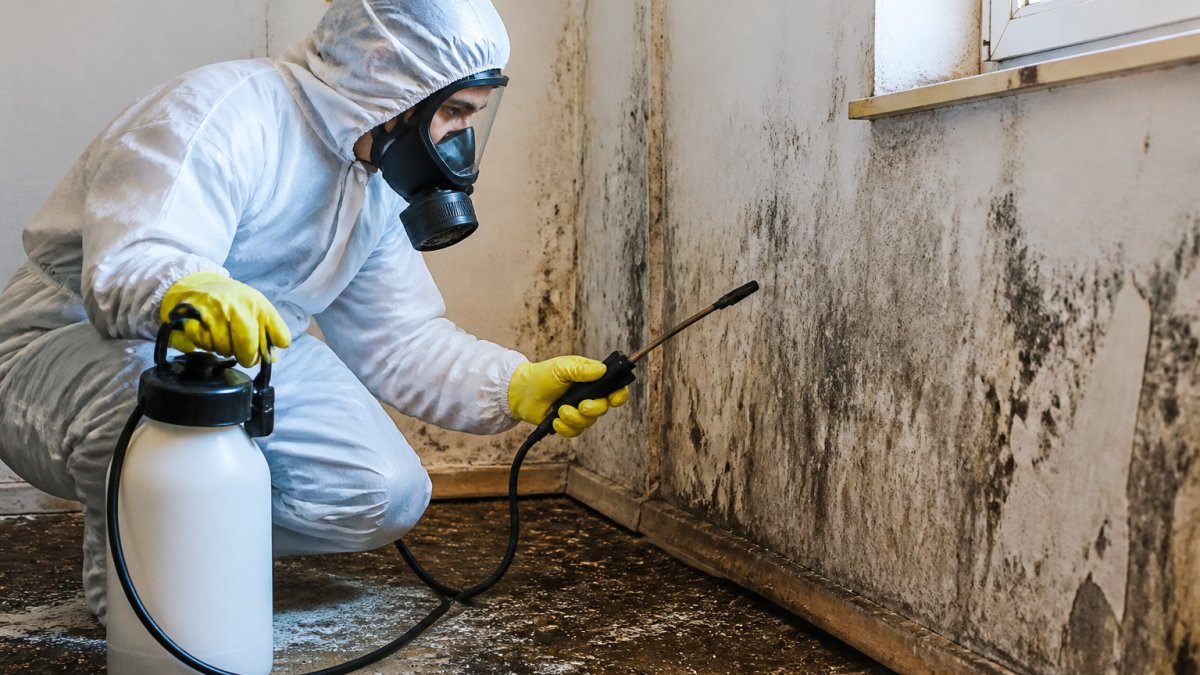
Cleaning ducts without fixing moisture fails because mold is a symptom, not the cause. Spores are everywhere and only grow on wet surfaces. If your air handler has a slow leak, or condensation keeps a duct panel damp, cleaning just clears space for new growth, and the mold returns within weeks.
So the order matters:
- Find and fix the moisture source
- Dry the system completely
- Then clean or replace affected ducts
- Verify the fix with testing
Skip step one and the rest does not hold.
Signs of Mold in an HVAC System
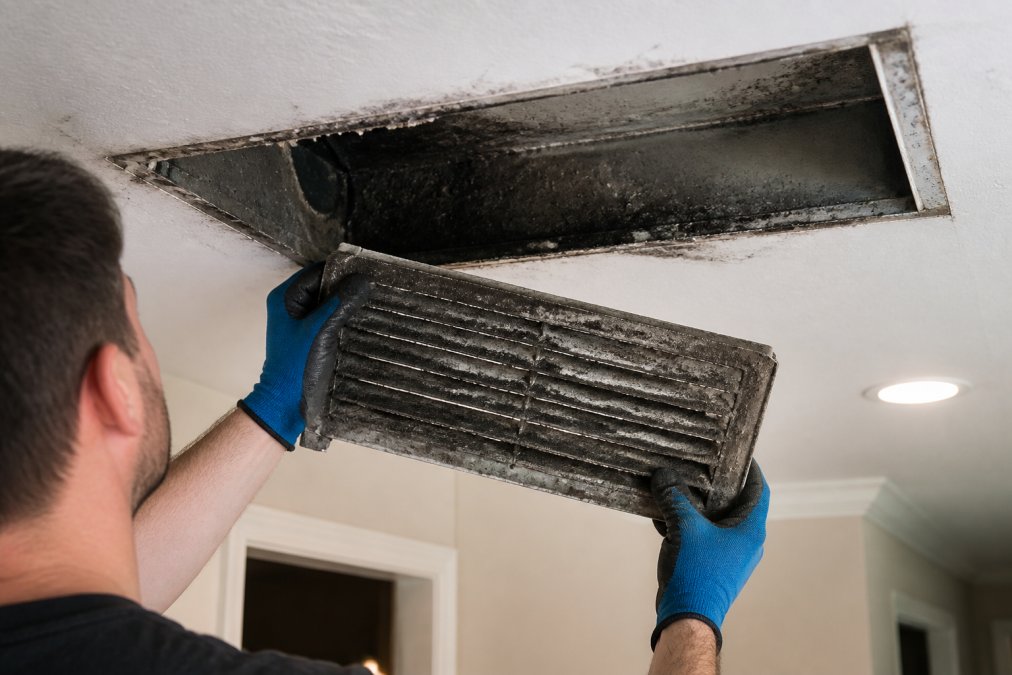
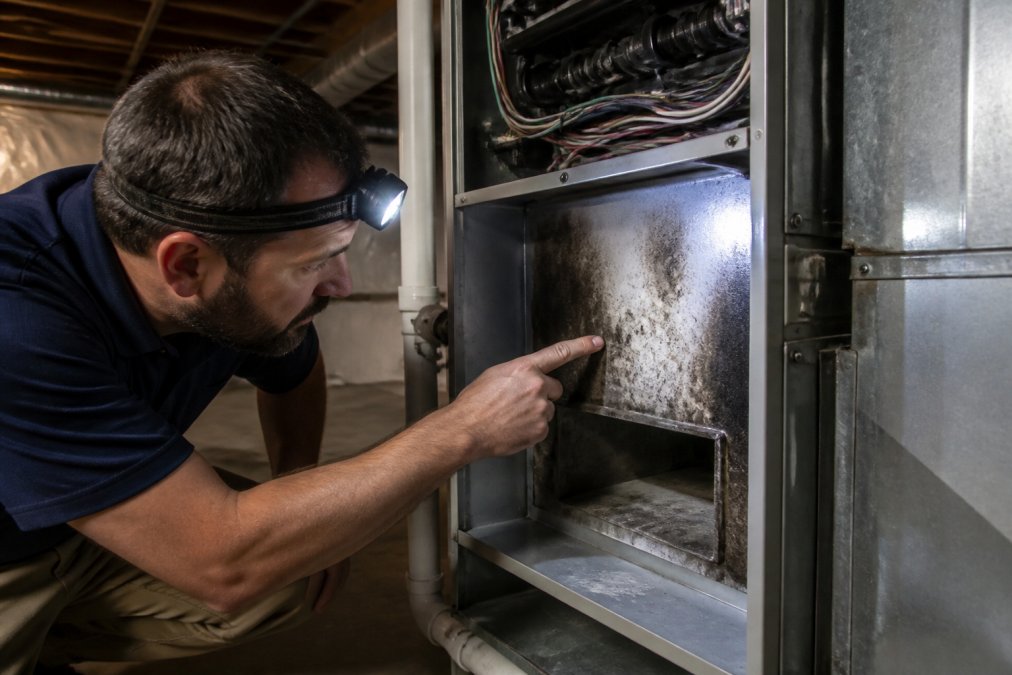
The most common signs of mold in an HVAC system are a musty odor, dark patches near vents or the air handler, and allergy-like symptoms that worsen when the system runs. Notice two or more, and get the system inspected.
Musty Odors and Visible Discoloration
A musty smell is the number one sign, often showing up when the heat or AC kicks on because the system pushes air across the mold. Visible discoloration is the second sign. Check the air handler cabinet, the drain pan under the unit, duct openings and grilles, and insulated ductwork near the unit. Dark, patchy growth on any of these is worth a closer look.
Health Symptoms and Airborne Particles
Mold releases spores and airborne particles that can trigger coughing, sneezing, and congestion in people with allergies or asthma. If symptoms ease when you leave the house, your indoor air quality may be the cause.
EPA Guidelines for Duct Cleaning and Mold
The EPA does not recommend routine duct cleaning for every home (the EPA). It advises cleaning when there is a specific problem, such as mold growth, vermin, or heavy debris.
Moisture Control and HVAC System Design Flaws
Moisture control is the only lasting fix for mold in ducts. Cleaning removes growth; controlling moisture removes the conditions that created it. Most systems that grow mold do so because of a design or installation flaw that traps water where no one looks.
Why Wet Ducts Stay Wet: The Mechanism
Condensation forms when warm, humid air meets a surface colder than its dew point. In cooling season, supply ducts run well below indoor air temperature, so humid air that reaches them condenses. That film of water is enough for mold.
Three things make it worse:
- Leaky return ducts. Returns under negative pressure pull in hot, humid attic or crawlspace air. That air hits cold supply surfaces and condenses.
- Oversized equipment. An oversized air conditioner cools the space quickly and short-cycles, so it never runs long enough to pull humidity out of the air. The coil stays wet between cycles.
- High static pressure. Undersized or crushed ducts slow airflow across the coil. A coil that stays cold and wet is a mold incubator.
Which Duct Materials Fail First
Not all ductwork handles moisture the same way.
- Flex duct. A thin plastic liner wrapped in insulation sags, kinks, and traps condensation. Once wet, mold grows on the interior surface and cleaning cannot reach past the corrugation.
- Fiberglass duct board. Porous by design, so water soaks in and stays. Cleaning abrades the surface and can release fibers.
- Sheet metal. The best case: mold grows on the surface, not inside the material, so it can be cleaned and dried.
- Internally lined metal. The liner behaves like duct board. If wet, replacement is usually the answer.
A technician should identify the duct material before quoting. Cleaning wet flex duct or duct board can spread spores and damage the duct without solving anything.
Measuring and Controlling Humidity
You cannot manage what you do not measure. A cheap hygrometer near the return grille gives a running indoor relative humidity reading.
Targets most practitioners use:
- Keep indoor relative humidity between 30% and 50%. Under 60% is the floor; below 50% is where mold growth slows dramatically.
- Watch the shoulder seasons. Spring and fall, when the AC runs little, are when indoor humidity creeps up unnoticed.
- Check the coil and drain pan. A pan that does not fully drain leaves standing water. A clogged condensate line backs water up into the cabinet.
Tools that actually move the needle:
- Whole-home dehumidifier. Tied into the HVAC system, it controls humidity even when the AC is off. This is the single most effective fix in humid climates.
- Correctly sized AC. A load calculation (Manual J) tells you what size the system should be. If yours short-cycles, sizing may be the root cause.
- Sealed and balanced ducts. Sealing leaks and correcting airflow keeps the coil dry and the system running long enough to dehumidify.
- Vapor barrier in crawlspaces. Ground moisture migrates up into the return air. A proper barrier cuts that load.
Preventative Maintenance That Targets Moisture
Routine maintenance should be about water, not just filters:
- Change air filters on schedule, a clogged filter reduces airflow and keeps the coil wet.
- Flush the condensate drain line each season and confirm the pan drains fully.
- Inspect supply duct insulation in attics and crawlspaces for tears or saturation.
- Have the coil cleaned and refrigerant charge checked annually.
- Recheck indoor humidity after any HVAC change, new equipment, ductwork, or an addition can shift the balance.
Dehumidification in Practice
A dehumidifier is not a substitute for fixing a leak, and a leak repair is not a substitute for humidity control. Most homes with recurring mold need both. Set the dehumidifier to hold 45-50% relative humidity, run it through the cooling season and shoulder months, and drain the reservoir on schedule. If it runs constantly and humidity stays high, the envelope, crawlspace, attic, or duct leakage, is the real problem.
DIY vs. Professional Mold Testing and Cleaning
DIY mold testing kits are cheap, but they often give vague results that do not tell you where the mold is or how bad it is. Professional testing uses air and surface samples to pinpoint the source. For anything beyond a small, visible patch, it saves time and guesswork.
The Cost of Professional Mold Remediation
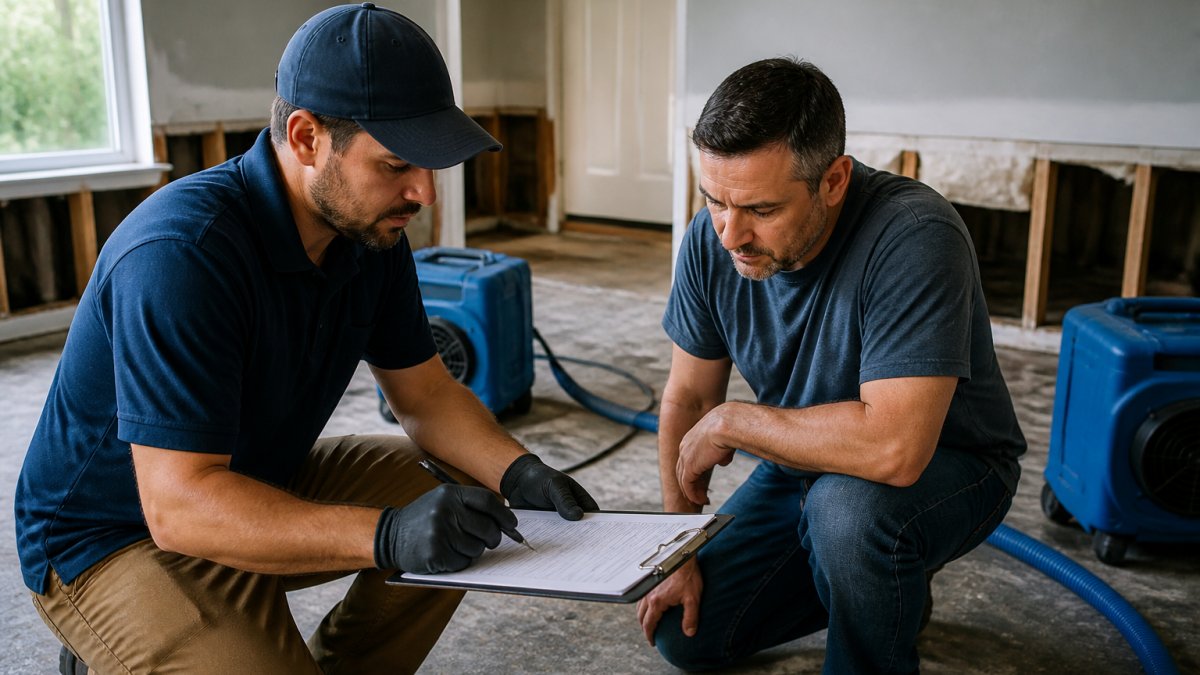
Mold remediation pricing is not a single number. It depends on how much material must be removed, how accessible it is, and whether the moisture source has been fixed. Any quote given before an inspection is a guess.
What Drives the Price
- Scope. A single vent grille or a short metal run is a small job. A whole-system problem with wet flex duct or duct board is a large one.
- Duct material. Sheet metal can be cleaned and dried. Wet flex duct, duct board, and internally lined metal usually have to be removed and replaced, which adds labor and material.
- Access. Ducts in a finished basement, a tight attic, or behind drywall take longer to reach and protect.
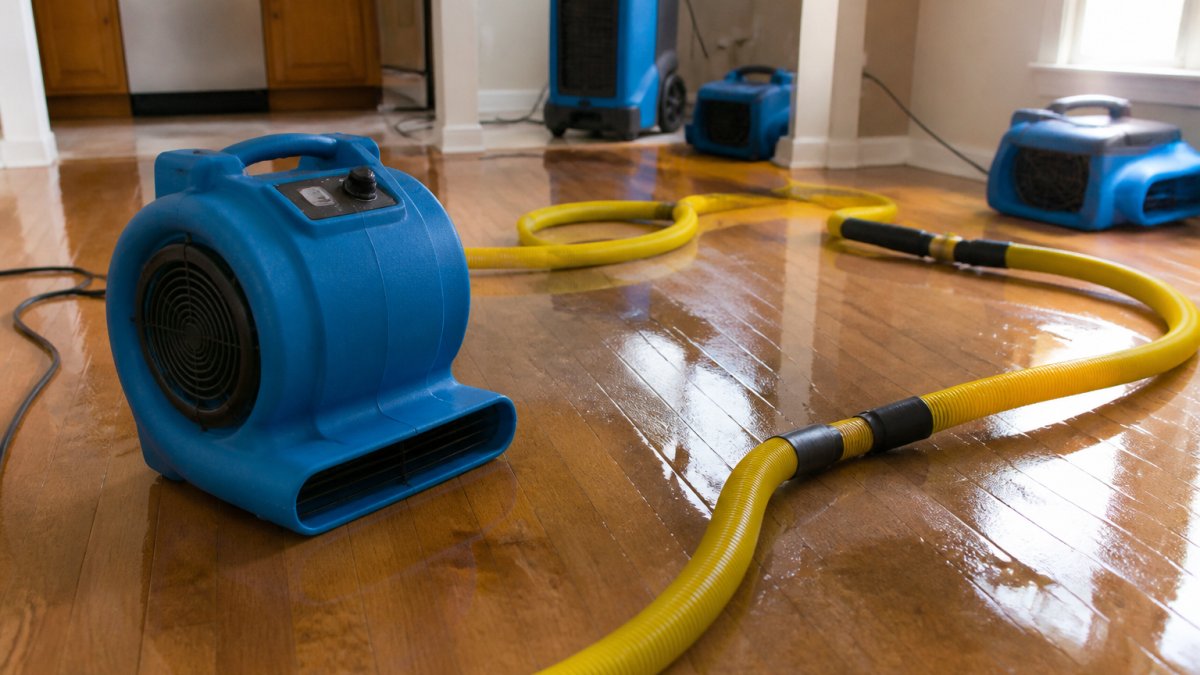
- Containment. Proper remediation uses negative air pressure and HEPA filtration to keep spores from spreading. That equipment and setup time are part of the cost.
- Testing. Pre- and post-remediation air and surface samples add a line item, but they are what prove the job worked.
- Moisture repair. If the source is a leaking coil, a clogged drain, or a design flaw, that repair is separate from the mold work.
Cleaning vs. Replacing Insulated Ducts
Cleaning works when the mold sits on a hard surface, like a metal duct or a vent grille.
| Situation | Best Option | Why |
|---|---|---|
| Mold on metal duct or grille | Clean | Hard surface wipes clean |
| Light surface growth | Clean and treat | Growth has not soaked in |
| Wet insulated ductwork | Replace | Insulation traps mold |
| Wet flex duct or duct board | Replace | Porous material cannot be cleaned |
| Widespread system mold | Replace affected runs | Cleaning cannot reach it all |
How to Compare Quotes
Ask every contractor the same questions so quotes are comparable:
- What is the scope, which runs, which components?
- Is the ductwork being cleaned, encapsulated, or replaced?
- Is the moisture source included in the price, or a separate repair?
- What containment and filtration will be used?
- Is post-remediation testing included?
- What warranty covers the work, and for how long?
Post-Cleaning Verification Checklist
Verification is how you know the job actually worked. A good remediation ends with testing and documentation, not just a clean-looking duct. Use this checklist before you sign off:
- Pre- and post-remediation air samples. Compare spore counts and types. Levels should drop to normal outdoor/indoor background ranges.
- Surface samples from the air handler, drain pan, and any previously affected duct.
- Written report listing what was cleaned, what was replaced, and what was found.
- Confirmation the moisture source was fixed, leak repaired, drain cleared, humidity controlled.
- Photos of the air handler and duct interiors before and after.
- A prevention plan describing humidity targets and maintenance intervals.
- Warranty terms in writing, including what triggers a return visit.
Red Flags in a Quote
- A price given over the phone without an inspection.
- No mention of containment or HEPA filtration.
- A promise to 'kill mold' with a spray or fogger alone.
- No discussion of the moisture source.
- No post-remediation testing offered.
- Pressure to decide on the spot or a discount that expires today.
A legitimate quote explains what will be removed, how the work area will be contained, how the moisture problem will be corrected, and how the result will be verified. If any of those are missing, keep looking.
Post-Cleaning Verification: Confirming the Mold Is Gone
Ask for these steps:
- Air samples before and after the work
- A written report of the findings
- Confirmation that the moisture source was fixed
- A plan to prevent the mold from returning
Frequently Asked Questions
What happens if you never clean air ducts that have mold?
Mold in ductwork keeps releasing spores into the air every time the HVAC system runs, so the problem spreads rather than staying contained. Over time, fungal contamination can move onto coils, insulation, and nearby building materials. For people with allergies or asthma, ongoing exposure can worsen respiratory symptoms. Skipping duct cleaning for mold also lets moisture problems go unnoticed, which usually means a bigger and more expensive repair later.
How common is mold in air ducts?
Mold growth in ductwork is less common than most homeowners assume. It typically appears only when there is an active moisture source: a refrigerant leak, condensation on cold surfaces, high indoor humidity, or water intrusion near the air handler. Dust buildup alone is not mold. If you see dark spots but no moisture problem, the material may simply be dirt, which changes whether duct cleaning for mold is actually needed.
Does the EPA recommend air duct cleaning for mold?
The EPA does not recommend routine duct cleaning for every home. It advises cleaning when there is visible mold growth inside hard-surface ducts, when ducts are infested with pests, or when they are clogged with debris. The agency also notes that if mold is present, the underlying moisture problem must be corrected first, or the growth will return. Cleaning without fixing the moisture source does not solve the issue.
How much does professional mold remediation cost?
The cost of professional mold remediation depends on the size of the affected area, whether insulated ductwork must be replaced, and how much moisture control work is needed. Because pricing depends on the scope of the job and the condition of the HVAC system, AFC Cleaning & Restoration provides a quote after an on-site inspection rather than a flat rate. Contact AFC Cleaning & Restoration for current pricing.