 ultimate-guide
Managing Insurance Claims for Water Damage: A 2026 Guide
Table of Contents
- Immediate Steps After Water Damage Hits
- How to Document Water Damage for Insurance
- Does Homeowners Insurance Cover Mold Removal?
- What Not to Say to an Insurance Adjuster After Water Damage
- Your Water Damage Claim Timeline: What to Expect
- Denied Claims and Appeals: Your Options
- Frequently Asked Questions
Last Updated: September 14, 2026
Immediate Steps After Water Damage Hits
Managing insurance claims for water damage starts with the first hour, not the first phone call. The actions you take before your adjuster arrives shape what your policy ultimately pays. At AFC Cleaning & Restoration, we've watched Kansas City homeowners either protect their claim or weaken it within hours of a burst pipe or flooded basement.
Here's what to do, in order:
- Shut off the water source if you can reach it safely.
- Cut power to affected areas at the breaker box, but only if you can stand on dry ground.
- Photograph and video everything before you move a single item.
- Call your insurance company to open the claim and get a claim number.
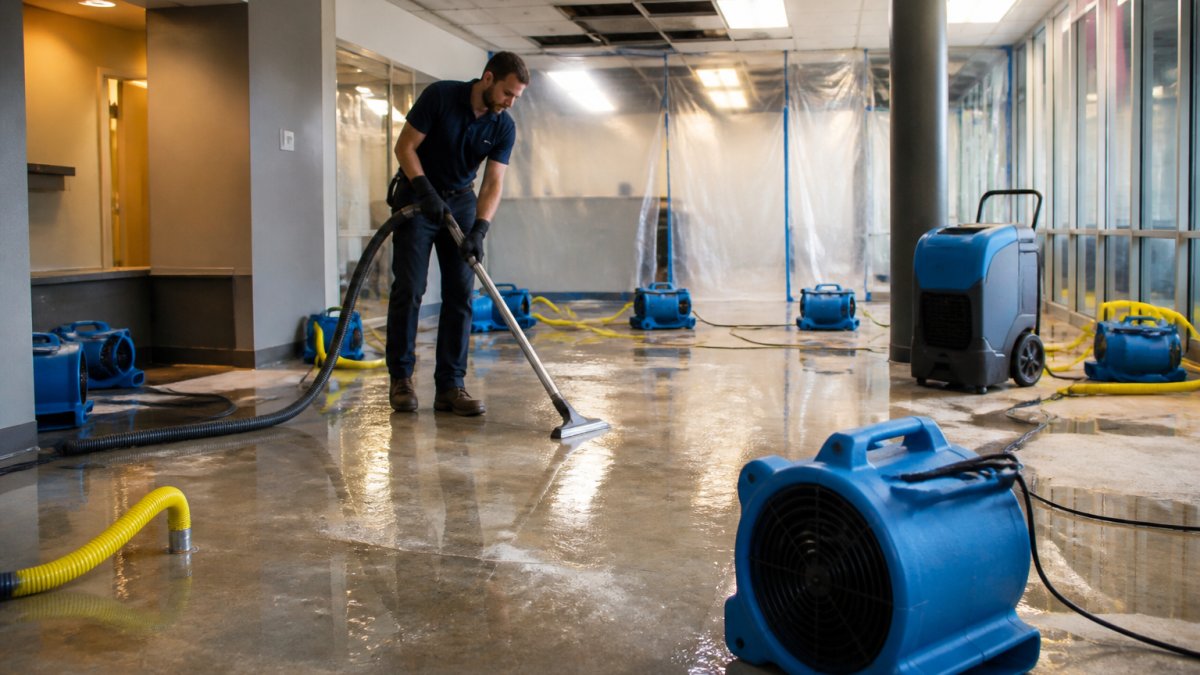
- Begin water extraction and drying to prevent further damage.
That last step matters: your policy generally requires you to mitigate further damage, so you can't wait for the adjuster while water sits in your walls (Residential Property Claims Guide).
Safety First: When to Call a Professional
Call a professional immediately when water has reached electrical outlets, the source is a sewage backup, or the affected area exceeds what a shop vacuum and fans can handle. Category 2 and Category 3 water (gray and black water) carry contamination standard cleanup won't address (iicrc.org).
Floodwater from outside is treated differently than a clean supply-line leak, both for safety and claims handling. If unsure which category you're dealing with, assume the worse one and call for help.
How to Document Water Damage for Insurance
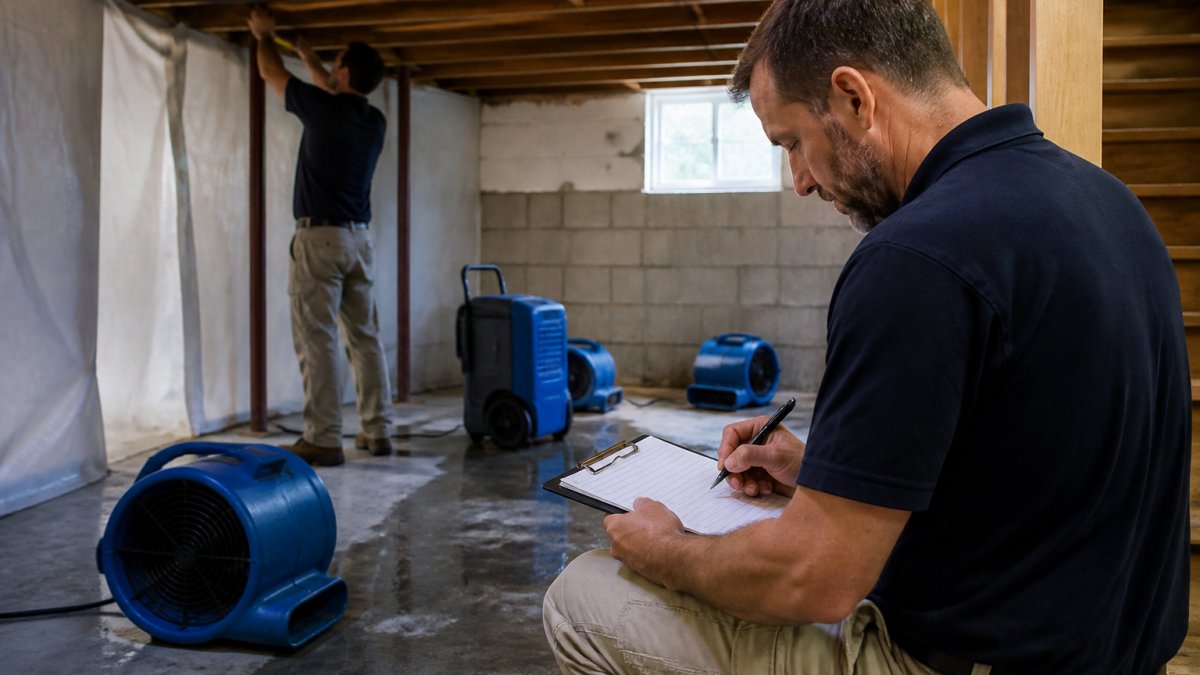
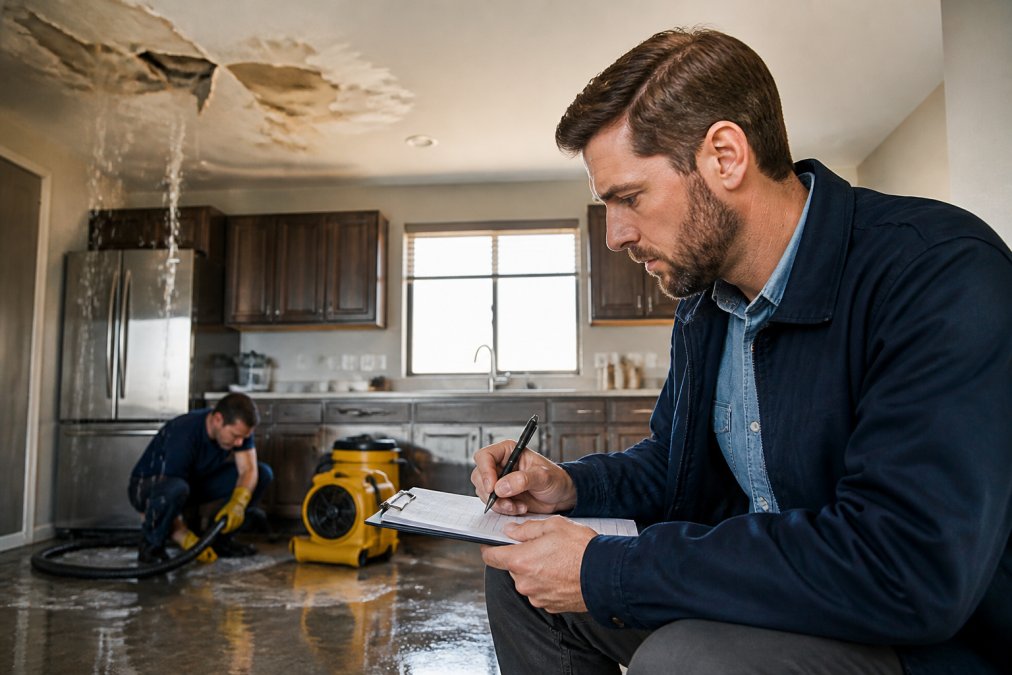
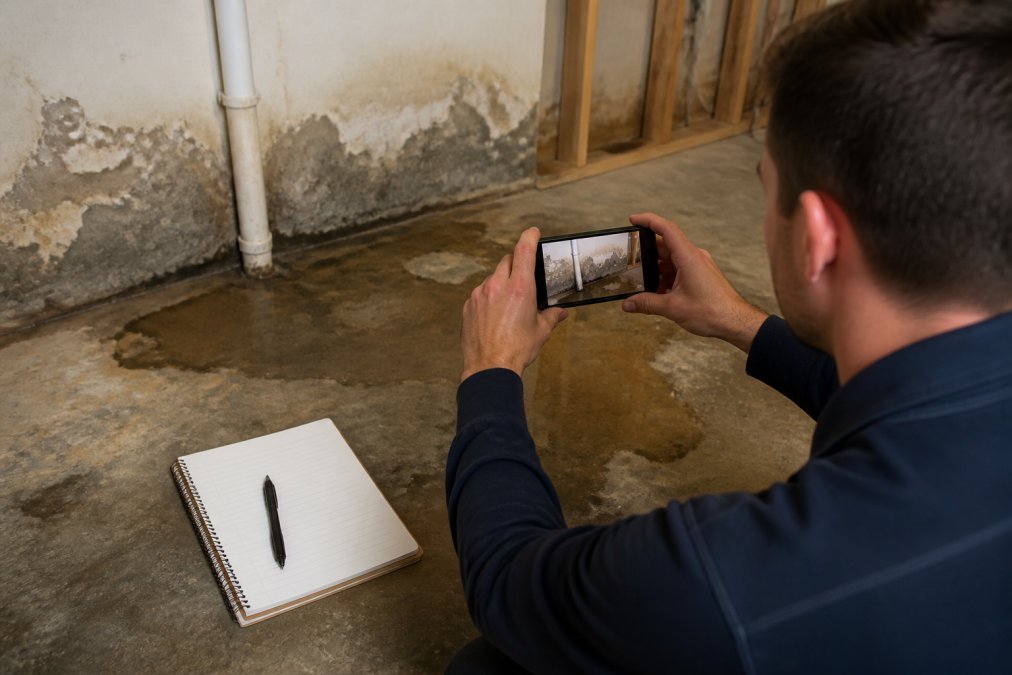
Documentation is the backbone of a successful claim: the more thorough your records, the harder it is for an adjuster to dispute your loss. Build a digital folder the day damage occurs.
What to photograph and record:
- Wide shots of each affected room before any cleanup
- Close-ups of water lines on walls, warped flooring, and stained ceilings
- The failed source, such as a cracked supply line or ruptured pipe
- Serial numbers and model plates on damaged appliances and electronics
- An inventory list of every damaged item with approximate age and value
Keep receipts for emergency purchases, hotel stays, or equipment rentals. These often fall under additional living expenses coverage, but only if you can prove them.
What to Photograph and Record
Photograph the water source, the path it traveled, and every item it touched. Date-stamp photos if your phone doesn't. A written inventory paired with photos gives your adjuster a complete picture and reduces disputed line items.
Does Homeowners Insurance Cover Mold Removal?
Homeowners insurance typically covers mold removal only when it results from a covered peril, such as a sudden and accidental burst pipe. Mold from long-term neglect, slow leaks, or repeated seepage is usually excluded, the most misunderstood part of managing insurance claims for water damage.
The distinction comes down to two words: sudden and accidental. A pipe that fails overnight and soaks your drywall is sudden; a slow drip behind the washing machine unnoticed for months is not. Insurers treat the second as a maintenance failure, the policyholder's responsibility.
Mold remediation limits are often capped separately from dwelling coverage, so even an approved claim may not pay the full cost. Read your declarations page to find that cap before assuming you're fully covered.
Hidden Mold and Secondary Damage: What Your Policy Might Miss
Mold often hides behind baseboards, under flooring, and inside wall cavities where moisture lingers after surfaces feel dry. Secondary damage, warped subfloors, delaminated cabinetry, compromised framing, is frequently missed in a quick visual inspection.
Professional moisture mapping and thermal imaging catch what the eye cannot. Without that documentation, you may be paid for visible damage only, then discover hidden damage after your claim has closed.
What Not to Say to an Insurance Adjuster After Water Damage
What you say to an adjuster can help or hurt your claim, often by a single sentence. Anything you volunteer can reduce your payout. Most homeowners treat the adjuster visit as a conversation when it is actually a recorded fact-finding interview feeding a coverage decision.
Avoid these statements:
- "It's been leaking for a while." This signals a maintenance issue and invites a denial under the policy's neglect or repeated-seepage exclusions.
- "I think it's probably my fault." Fault language can be interpreted as admitting negligence, which matters in states that allow comparative fault to reduce a payout.
- "It's not that bad, I don't think I'll need much." Never minimize your own loss before it is fully assessed. Adjusters document your own words in the claim file.
- "I already threw out the wet stuff." Disposing of damaged items before documentation destroys your proof of loss and can void coverage for those items.
- "I'm not sure what my policy says." This hands the adjuster control of the coverage conversation.
- "Just tell me what to sign." Signing a proof of loss or a release before you have a contractor's scope of work can lock in an underpayment.
Stick to facts: what happened, when you noticed it, and what you've done so far. Let your documentation and contractor's report carry the weight. If an adjuster pressures you for a recorded statement before you've reviewed your policy, ask for time and request the questions in writing first.
Company Adjuster vs. Public Adjuster: Who Is Actually on Your Side
The person at your door is almost always a company adjuster, a staff or independent adjuster working for the insurer. They're paid by the insurer and measured on how efficiently claims close. That doesn't make them dishonest, but their scope of loss is written from the insurer's perspective.
A public adjuster is licensed by the state and contracted by you, typically for a percentage of the final settlement (most states cap that fee) (naic.org). They re-inspect the loss, build an independent scope, and negotiate with the carrier. Hire one when the loss is large, the claim has been denied or clearly underpaid, the cause of loss is disputed, or the damage is complex enough that you don't trust the insurer's number.
For a straightforward burst-supply-line claim with clean documentation, you likely don't need one, the fee can eat into an already fair settlement. Public adjusters typically earn their fee on hidden mold, code-upgrade disputes, or business-interruption losses, rarely on simple Category 1 losses under a few thousand dollars.
How Restoration Billing Actually Works
Most restoration invoices are built in platforms such as Xactimate, which uses a standardized price list by ZIP code. That's why two contractors in the same market arrive at similar line items but very different totals: the difference is scope, quantity, and which line items were included, not unit price.
Ask your contractor for the line-item estimate, not just a lump-sum bid. Look for whether the scope includes:
- Demolition and disposal of affected materials
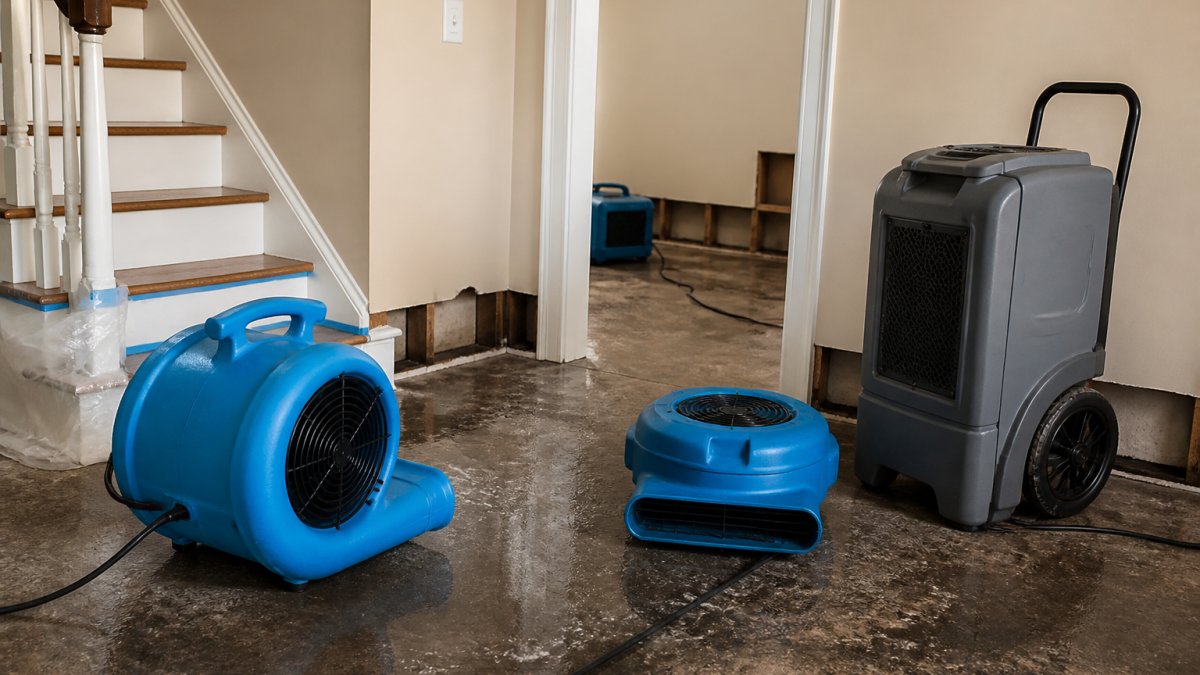
- Drying equipment by day, with the number of air movers and dehumidifiers listed
- Antimicrobial application where required
- Moisture documentation before, during, and after drying
- Rebuild line items such as drywall, paint, trim, and flooring
If the insurer's and contractor's estimates disagree, the gap is almost always in scope, not price. A line-item comparison is the fastest way to see what the adjuster left out and the document that most often supports a supplement request.
Your Water Damage Claim Timeline: What to Expect
A typical water damage claim moves through several stages; knowing the sequence helps you spot when something has stalled:
| Stage | What Happens | Typical Timing |
|---|---|---|
| Claim filing | You report the loss and get a claim number | Day 1 |
| Adjuster inspection | Adjuster visits and assesses damage | Within a few days |
| Documentation review | Insurer reviews photos, inventory, contractor estimates | 1-2 weeks |
| Settlement offer | Insurer presents a payout figure | 2-4 weeks |
| Payment and repairs | Funds released, restoration begins | After agreement |
Timelines vary by insurer and complexity; large losses with hidden mold or structural damage take longer. If weeks pass with no adjuster contact, follow up in writing and log every call and email. Many policies set a proof-of-loss deadline measured in weeks from the date of loss, and missing it is a common reason claims are denied on procedural grounds.
When the Offer Is Too Low: Supplements and Re-Inspections
An initial settlement offer is not final. If your contractor's line-item estimate exceeds the insurer's, the next step is a supplement: a written request for additional funds tied to specific line items the original scope missed. Supplements are routine because hidden moisture, code upgrades, and secondary damage often surface after demolition begins.
A re-inspection is different: if the adjuster's scope is materially wrong, request that the same or a different adjuster return with your contractor present. Walking the loss together with moisture readings in hand resolves more disputes than any phone call.
Denied or Underpaid Claims: Your Appeal Path
A denial is not the end of your claim. Insurers deny for reasons that are sometimes correctable, missed deadlines, insufficient documentation, or a dispute over the cause of loss. You have the right to appeal, and many denials get overturned when the policyholder supplies better evidence.
Your appeal path usually looks like this:
- Request the denial in writing with the specific policy language cited.
- Review whether the stated reason is accurate and whether the cited exclusion actually applies.
- Submit a formal appeal with additional documentation, such as a contractor's report, moisture readings, or an engineer's letter on cause of loss.
- If the internal appeal fails, request an independent appraisal if your policy includes an appraisal clause, which many homeowners policies do.
- If the carrier still refuses, file a complaint with your state's department of insurance and consider consulting a policyholder-side attorney.
The appraisal clause is the most underused tool here: each side hires an independent appraiser, and if they disagree, an umpire decides. It's usually faster and cheaper than litigation, and it's written into the policy you already paid for.
Denied Claims and Appeals: Your Options
Water damage claims reward preparation and punish panic. Homeowners who get fair settlements document thoroughly, mitigate quickly, and know their policy before they need it. AFC Cleaning & Restoration has handled emergency water removal and mold remediation across the Kansas City area since 2003, with IICRC-certified technicians available 24/7. We provide the moisture readings, photo documentation, and detailed reports that support your claim from day one. Contact us and let our team handle the damage while you focus on getting your home or business back to normal.
Frequently Asked Questions
How do I maximize my water damage insurance claim?
Document everything immediately with photos and video before cleanup. Keep receipts for emergency mitigation like water extraction. File your claim promptly and provide a detailed inventory list of damaged items. Understand your coverage limits and deductible. If the settlement seems low, you can request a second contractor estimate or hire a public adjuster to negotiate on your behalf.
What should I avoid saying to an insurance adjuster about water damage?
Never speculate about the cause if you're unsure, as this can be used to deny your claim. Avoid saying the damage is 'minor' or that you 'should have fixed that leak sooner,' which suggests neglect. Don't accept a settlement on the spot or sign anything without reviewing it. Stick to facts about what happened and what you've documented.
How much does homeowners insurance go up after a water damage claim?
Premium increases vary by insurer, claim history, and your location. A single water damage claim may raise rates by a modest percentage, but multiple claims in a short period can lead to larger increases or non-renewal. Some policies offer claim forgiveness for first-time filers. Check with your agent about how a claim might affect your specific policy before filing.
Does homeowners insurance cover mold removal after water damage?
Coverage depends on the cause. Mold resulting from a sudden and accidental event, like a burst pipe, is typically covered. Mold from long-term neglect or ongoing moisture issues is usually excluded. Most policies cap mold remediation at a specific dollar amount, often $10,000 or less. Review your policy exclusions and consider additional mold coverage if you live in a high-humidity area.
How long does a water damage claim take to settle?
A typical water damage claim timeline runs from a few weeks to several months. The insurer usually inspects within days of filing. Complex claims involving mold, structural damage, or disputed amounts take longer. If you hire a public adjuster or appeal a denial, add several more weeks. Keep records of every communication and follow up regularly to avoid delays.