 how-to
Restoration Services for Retail Buildings: A 2026 Guide
Table of Contents
- What Retail Restoration Services Actually Cover
- Emergency Restoration Services for Property Managers: What to Expect
- The Commercial Water Damage Restoration Process, Step by Step
- Minimizing Business Interruption During Restoration
- Inventory Salvage Protocols for Retail Stores
- Fire, Smoke, and Mold Remediation in Retail Environments
- Cost Estimation and Insurance Navigation for Retail Claims
- Conclusion
- Frequently Asked Questions
Last Updated: September 12, 2026
What Retail Restoration Services Actually Cover
Restoration services for retail buildings is the coordinated work of returning a damaged store to safe, sellable condition after water, fire, mold, storm, or structural failure, from emergency stabilization through final rebuild. This guide from AFC Cleaning & Restoration breaks down each phase so retail owners and property managers know exactly what they are buying.
Retail damage rarely stays contained. A burst pipe behind a display wall soaks flooring, wicks into drywall, and reaches inventory before anyone notices.
Below, we walk through the full scope: emergency response, water mitigation, inventory salvage, mold and smoke remediation, and the insurance documentation that keeps a claim moving. For retail operators, the goal is never just a dry building. It is a reopened store.
Emergency Restoration Services for Property Managers: What to Expect
Emergency restoration services for property managers begin with a call, a rapid site assessment, and immediate stabilization to stop damage from spreading. Most commercial losses worsen within the first 24 to 48 hours, so response speed matters more than almost anything else (the EPA).
24/7 Availability and Rapid Site Assessment
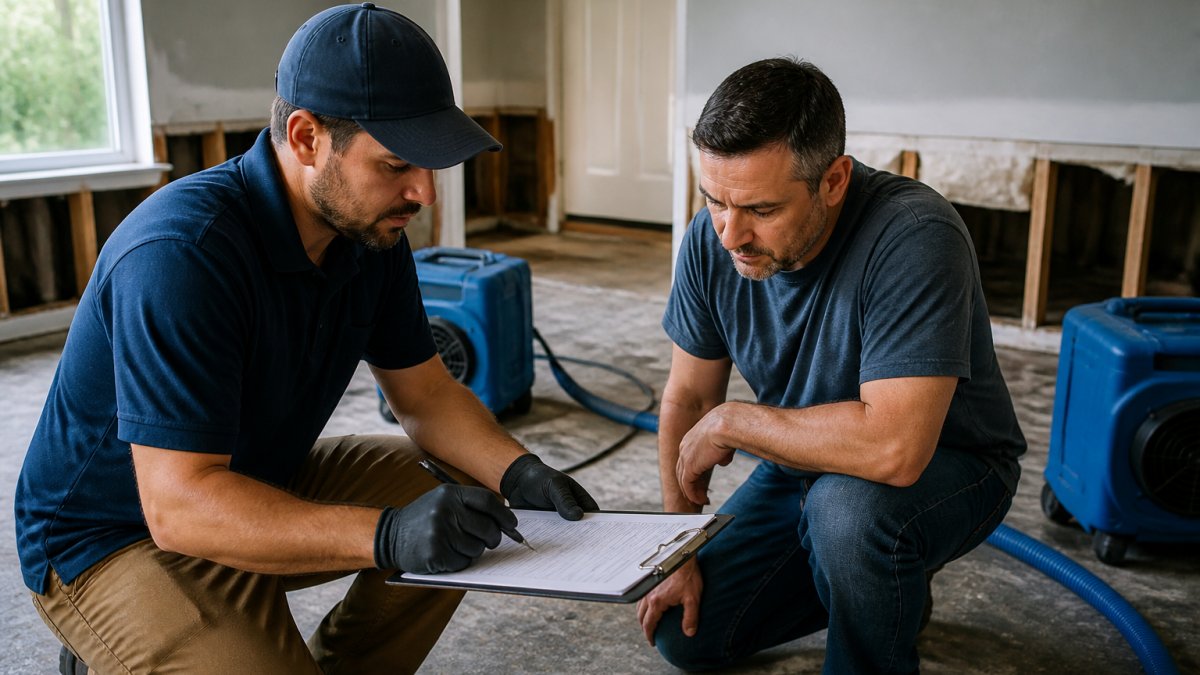
A real emergency line answers at 2 a.m. and dispatches a crew, not a voicemail. During the first visit, technicians assess the source, map moisture with meters and thermal imaging, and document conditions for the insurance file.
That initial site inspection does three things at once:
- Identifies the water category and contamination level
- Flags structural concerns before anyone re-enters the sales floor
- Creates the photo and moisture record your adjuster will ask for
Emergency Board-Up and Site Security
A damaged storefront is an open invitation. Emergency board-up secures broken glass, doors, and roof openings, while temporary fencing and lighting protect the site overnight. For retail, this step also protects merchandise and fixtures from theft and further weather exposure.
The Commercial Water Damage Restoration Process, Step by Step
The commercial water damage restoration process follows a fixed sequence: stop the source, extract standing water, dry the structure, control moisture, clean the air, and verify with documentation. Skipping or rushing any step is how mold comes back.
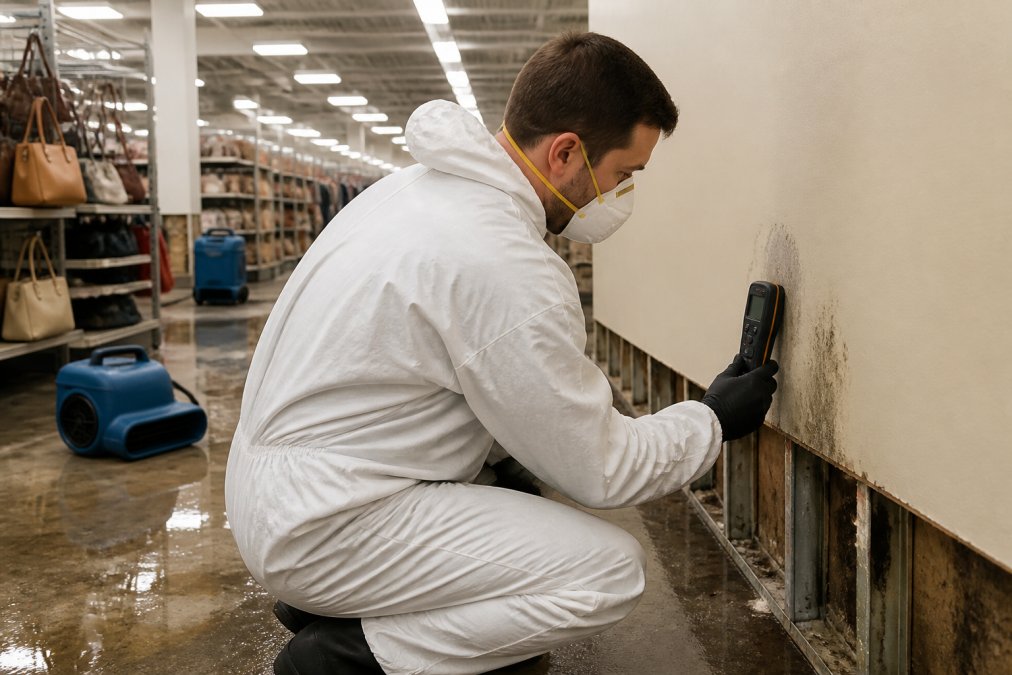
- Stop the source. Shut off supply lines, roof leaks, or sprinkler discharge.
- Extract standing water. Truck-mounted and portable extraction units remove bulk water.
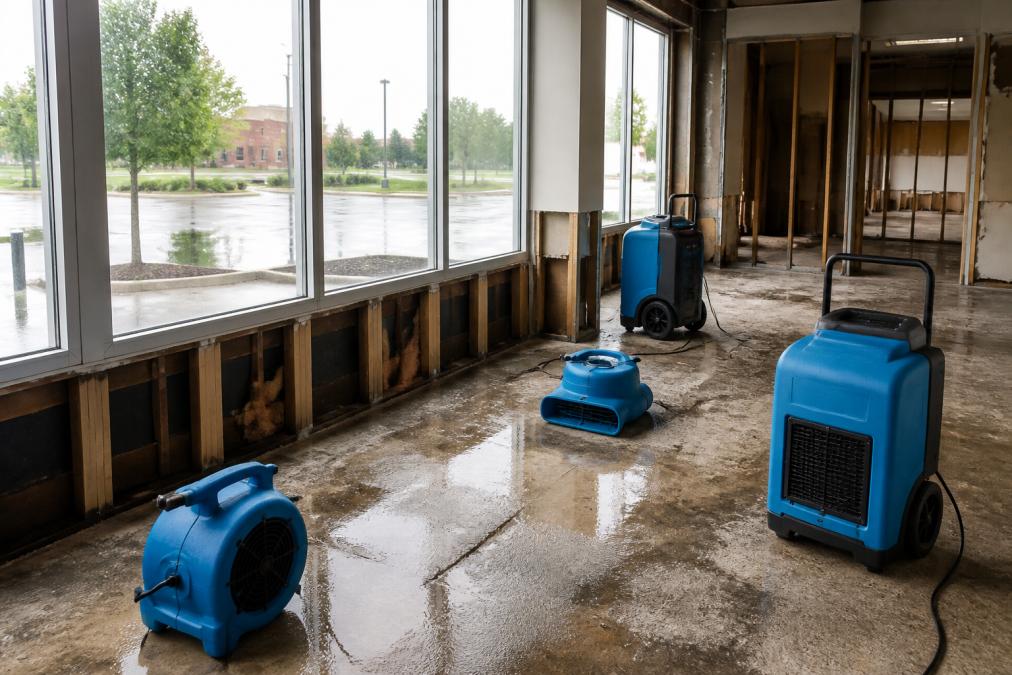
- Remove unsalvageable materials. Saturated drywall, insulation, and some flooring come out.
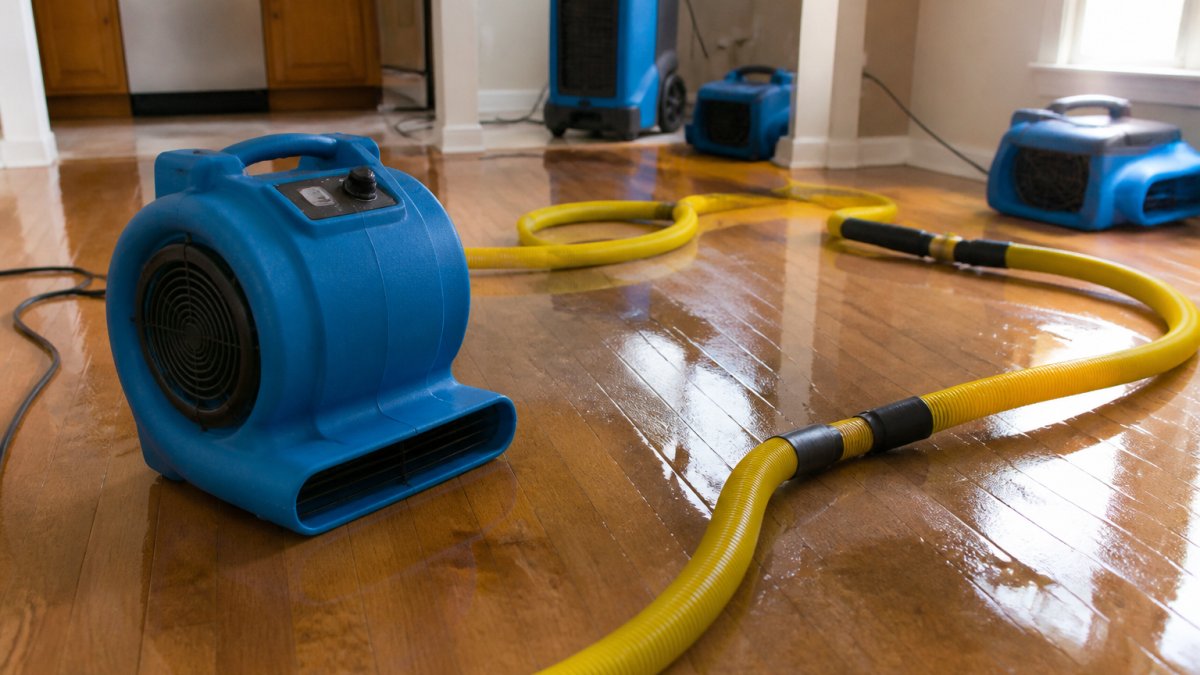
- Dry the structure. Air movers and dehumidifiers run in a calculated, monitored layout.
- Control moisture. Daily readings confirm walls and subfloor are trending dry.
- Clean the air. HEPA filtration and, where needed, HVAC cleaning remove particulates.
- Document and verify. Final moisture logs support the claim and confirm the building is dry.
Structural Drying, Moisture Control, and HVAC Cleaning
Structural drying is complete only when materials return to a documented dry standard, not when surfaces feel dry to the touch. Moisture control continues with dehumidification and air movement until readings stabilize.
Retail buildings add a wrinkle most homes do not have: large HVAC systems. If water or smoke entered the ductwork, HVAC cleaning and decontamination are part of the job. Contaminated air circulating through a sales floor spreads odor and particles across the entire store.
Minimizing Business Interruption During Restoration
Minimizing business interruption during restoration means sequencing the work so part of the store can reopen while the rest is still being dried or rebuilt. The building does not have to be fully restored for revenue to resume.
A common approach is to phase the project:
| Phase | Work Performed | Store Status |
|---|---|---|
| 1. Stabilize | Extraction, board-up, safety | Closed |
| 2. Isolate | Containment barriers, drying | Closed or partial |
| 3. Partial reopen | Safe zone cleaned and cleared | Limited hours |
| 4. Rebuild | Reconstruction, fixtures, paint | Full reopen |
Retail-specific continuity planning separates a two-week closure from a two-month one. Move salvageable inventory to a clean, dry area early, and keep a temporary checkout or pickup point running where local rules allow.
Inventory Salvage Protocols for Retail Stores
Inventory salvage protocols sort merchandise into three buckets: clean and resell, clean and discount, and dispose. The faster stock is triaged, the more value survives.
Content cleaning applies to far more than clothing. Hard goods, fixtures, shelving, and displays can often be decontaminated and returned to the floor. Soft goods exposed to contaminated water or smoke usually cannot.
- Photograph all affected inventory before moving anything
- Separate wet from dry stock immediately
- Identify items with porous materials or smoke odor
- Get adjuster approval before discarding anything
- Document disposal with counts and photos for the claim
Fire, Smoke, and Mold Remediation in Retail Environments
Fire, smoke, and mold rarely arrive alone in a retail building. A single sprinkler discharge or roof leak can seed mold inside 24 to 48 hours, and a kitchen fire in an anchor tenant can push acidic smoke residue through shared HVAC returns into every store on the same air handler. Treating these as three separate jobs is how odor comes back after the grand reopening.
How Smoke Residue Actually Moves Through a Store
Smoke follows pressure, not sightlines. It travels into stockrooms, fitting rooms, drop ceilings, and HVAC returns, then settles on the coolest surfaces first, which in most retail buildings means metal shelving, glass display cases, and electronics. The residue is acidic. Left on metal fixtures, it pits chrome and corrodes circuit boards within days. Left on porous goods, it becomes a permanent odor source.
A practical sequence for retail smoke damage:
- Stop the source and ventilate. Confirm the fire is out, then set negative air and HEPA filtration before anyone works the floor.
- Dry first, clean second. Wet smoke residue smears. Structural drying has to reach a documented dry standard before surface cleaning begins.
- Clean contents by material class. Hard goods, glass, and metal fixtures respond to dry-chemical sponges and wet cleaning. Porous soft goods, apparel, upholstered seating, plush, usually cannot be restored to resale condition.
- Treat HVAC as part of the building. Ductwork and coils that carried smoke need cleaning and decontamination, or the store re-odors every time the system runs.
- Seal and rebuild. After cleaning, odor-blocking sealants on framing and subfloor prevent residual smell from bleeding through new paint and flooring.
Mold Remediation in Retail Environments
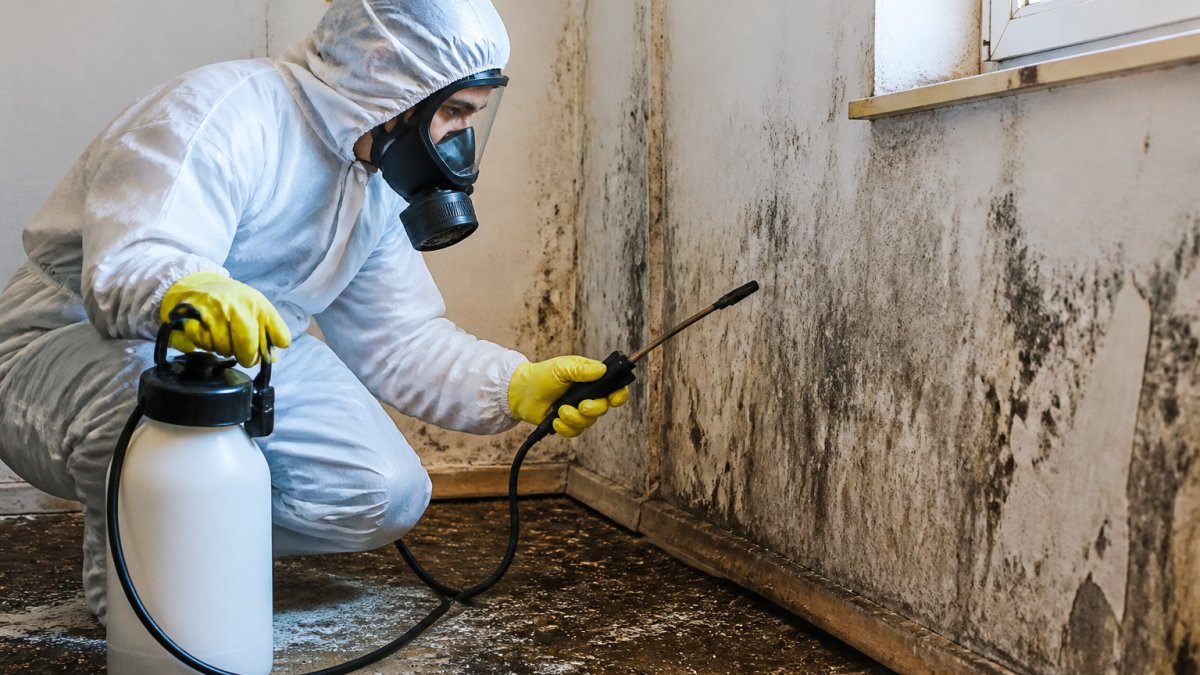
Mold remediation in retail environments starts within 24 to 48 hours of water exposure, because mold can begin colonizing wet materials in that window (the CDC). The scope follows a defined sequence: contain the work area with negative air and poly barriers, remove affected porous materials, clean and treat remaining surfaces, then verify with post-remediation checks, often third-party air sampling, before containment comes down.
Two retail-specific complications are worth planning for:
- Open floor plans defeat containment. Big-box layouts have few natural boundaries. Crews typically build temporary walls around the affected zone and route HEPA-filtered exhaust outdoors so spores do not migrate to clean merchandise.
- Merchandise is porous inventory. Cardboard packaging, paper tags, and fabric absorb spores. Anything within the containment zone should be treated as suspect until it is inspected and cleared.
Biohazard cleanup may also be required when sewage or category 3 water is involved, a common scenario when a backup floods a restroom or back-of-house drain.
The IICRC sets the industry standards most insurers expect restoration work to follow, and IICRC certification and standards information explains what certified firms commit to. AFC Cleaning & Restoration staff hold IICRC certifications, including WRT, ASD, and CCRN.
Cost Estimation and Insurance Navigation for Retail Claims
Cost estimation for retail restoration is not a flat rate and not a single number. It is a line-item scope built from the square footage affected, the materials in place, the category of water or type of residue, and how much inventory is in the loss zone. Understanding how that scope is assembled is the difference between a claim that moves and one that stalls for months.
What Actually Drives the Cost
Most retail restoration estimates are built from a handful of measurable drivers:
- Affected square footage. Mitigation is priced by area, extraction, air movers, dehumidifiers, and containment are all calculated per room or per square foot. A 4,000-square-foot sales floor with a 1,200-square-foot wet zone is scoped on the 1,200, not the 4,000.
- Water category. Category 1 (clean supply line) is the cheapest to remediate. Category 2 (appliance or toilet overflow) requires antimicrobial treatment. Category 3 (sewage, ground water, or long-standing water) requires removal of porous materials and often biohazard protocols, the most expensive tier.
- Material classes. Class 1 through Class 4 describe how far water has traveled. Class 4, deep saturation into subfloor, concrete, or cavity walls, can double drying time and equipment count versus a Class 1 surface loss.
- Contents and inventory. Content cleaning, pack-out, and disposal are separate line items. Retailers with dense inventory in the loss zone should expect this to be a meaningful share of the total.
- Reconstruction vs. mitigation. Mitigation stops the damage. Reconstruction, drywall, flooring, paint, fixtures, signage, is often a separate scope and a separate line on the estimate.
Because these variables move independently, two stores with the same square footage can receive estimates that differ by multiples. That is normal. What matters is that every line is documented and defensible.
How to Read a Retail Restoration Estimate
Ask for the scope in writing before work begins, and check that it includes:
- Room-by-room affected areas with square footage
- Equipment quantities and the number of drying days projected
- A contents/inventory section separate from the structural scope
- Clear labeling of what is mitigation versus what is reconstruction
- Any exclusions, items the contractor is not covering and why
If a number looks low, ask what was excluded. If it looks high, ask which line items are driven by category or class. A reputable contractor will walk through both.
Navigating the Insurance Claim
Insurance navigation is where retail claims stall. Most commercial property policies cover sudden and accidental water damage but dispute claims tied to long-term neglect, repeated leaks, or deferred maintenance. Documentation is your defense.
A complete claim file for a retail loss typically includes:
- Moisture readings with dates, taken before, during, and after drying
- Photos of the loss zone before any material was moved or removed
- Inventory counts and photos for every item discarded
- A clear cause-of-loss statement
- The contractor's line-item estimate and any change orders
Good restoration partners work directly with adjusters, provide line-item estimates in the format carriers expect, and flag covered versus non-covered work early. That coordination keeps the property manager out of the middle of paperwork they did not sign up for, and it keeps the store on a schedule instead of waiting on a back-and-forth.
Conclusion
A retail loss is a race between drying the building and losing the season. The stores that reopen fastest treat restoration as an operational project, not just a repair job.
AFC Cleaning & Restoration has served the greater Kansas City area since 2003 with IICRC-certified technicians available 24/7, 365 days a year. We handle emergency water removal, mold remediation, and full building reconstruction for commercial and residential properties, and we manage the documentation your insurance claim depends on.
Contact AFC Cleaning & Restoration and get your store back to pre-disaster condition.
Frequently Asked Questions
What does a commercial restoration service include for retail properties?
A commercial restoration service for retail properties covers water extraction, structural drying, mold remediation, fire and smoke damage repair, biohazard cleanup, and reconstruction. It also includes emergency board-up, content cleaning, and inventory salvage. IICRC-certified technicians handle the full scope from initial property assessment through final reconstruction, so you work with one team instead of coordinating multiple contractors during an already stressful situation.
How do restoration companies minimize downtime for retail businesses?
The fastest way to minimize business interruption during restoration is to isolate the damage zone and keep the rest of the store operational. Restoration crews set up containment barriers, run drying equipment overnight, and phase reconstruction so unaffected departments stay open. Property managers should also pre-arrange priority response agreements so crews arrive within hours, not days, which limits secondary damage and shortens the overall timeline.
How much does a restoration company cost?
Pricing depends on the scope of damage, building size, materials affected, and how long the project takes. Water mitigation for a small retail space costs far less than full reconstruction after a fire. Most restoration companies work on a project basis and provide a detailed estimate after a site inspection. Contact AFC Cleaning & Restoration for a quote specific to your property.
Why is IICRC certification important for commercial restoration?
IICRC certification means technicians have passed industry-standard training in water damage restoration, applied structural drying, and mold remediation. Certified crews follow documented protocols for moisture control, decontamination, and structural drying, which matters when your insurance adjuster reviews the claim. Certification also signals that the company meets recognized standards for professional equipment use and documentation, reducing the risk of mold returning after the job is done.