 how-to
Water Damage Restoration Services in Wyandotte County, KS
Table of Contents
- 24/7 Emergency Response for Water Damage Restoration
- The Water Damage Restoration Process: From Assessment to Structural Drying
- How Long Does Water Damage Restoration Take?
- Signs of Mold After Water Damage
- Water Damage Insurance Claim Tips
- Local Flood Risks and Cost Transparency in Wyandotte County
- DIY Immediate Mitigation Steps While You Wait
- Why Choose AFC Cleaning & Restoration
- Frequently Asked Questions
Last Updated: September 29, 2026
24/7 Emergency Response for Water Damage Restoration
Water damage restoration is the process of extracting standing water, drying structural materials, and returning a property to its pre-loss condition after a leak, flood, or plumbing failure. At AFC Cleaning & Restoration, we staff emergency crews around the clock because the first few hours decide how much of your home survives.
The Water Damage Restoration Process: From Assessment to Structural Drying
Every legitimate restoration job follows the same core sequence: assess, extract, dry, clean, and rebuild. The steps don't change based on the company you hire, only on how carefully they're performed.
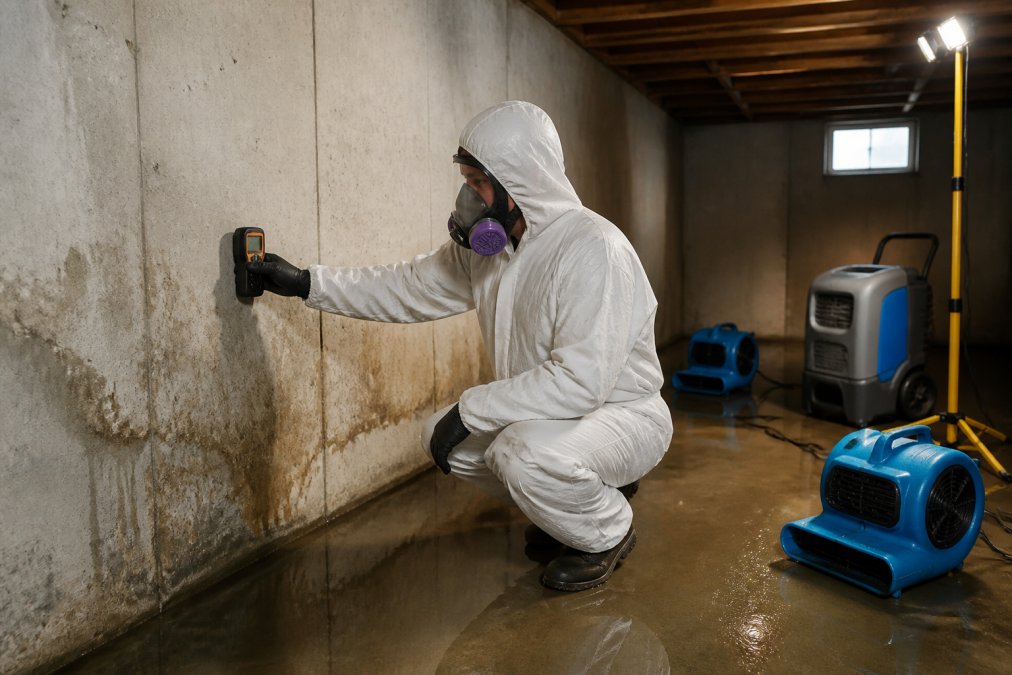
- Water damage assessment using thermal imaging and moisture mapping to find hidden saturation behind walls and under floors
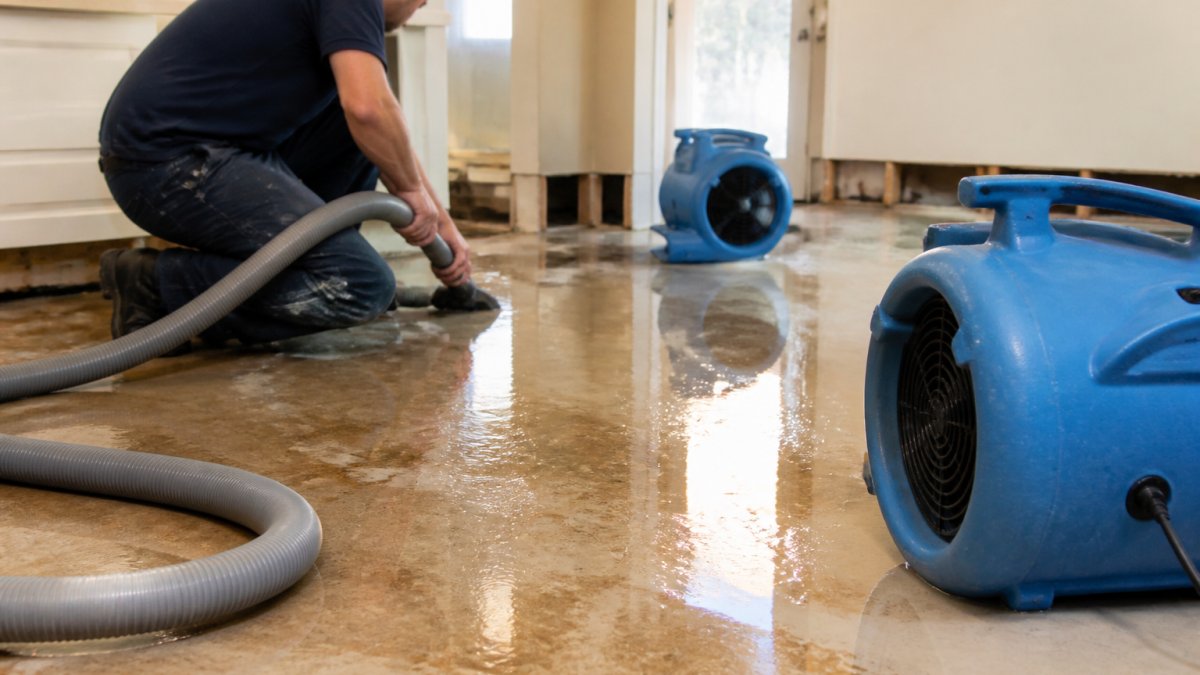
- Water extraction with truck-mounted and portable units to remove standing water
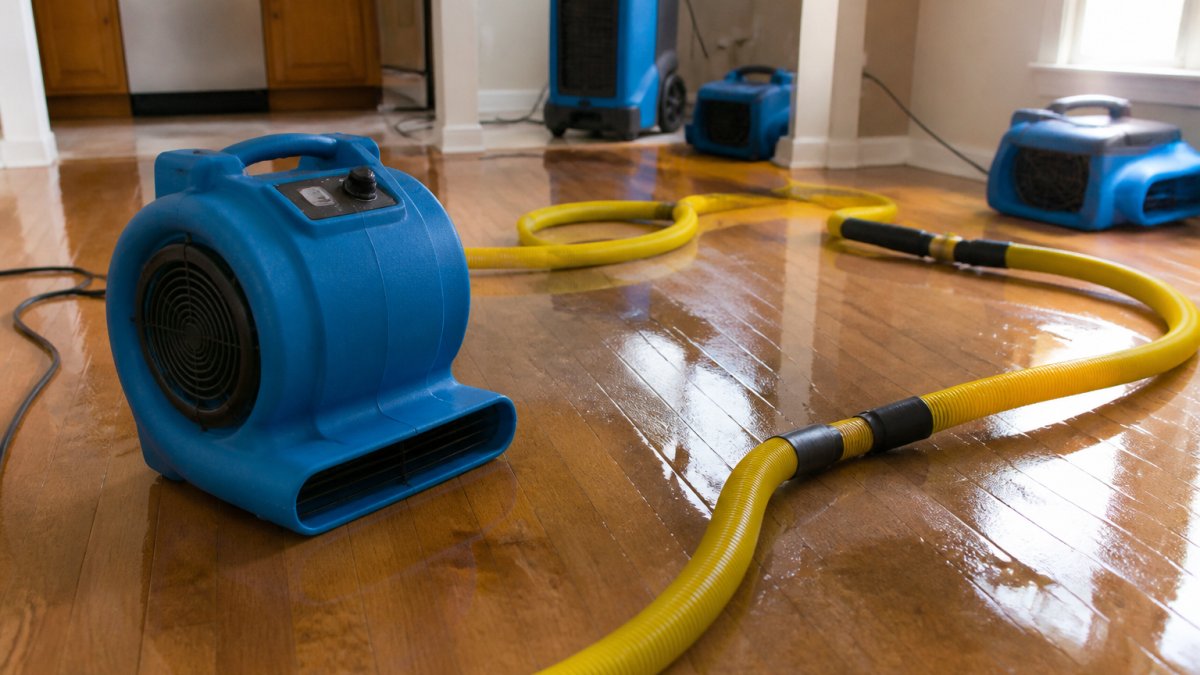
- Structural drying using air movers and dehumidification to pull moisture out of framing, drywall, and subfloor
- Sanitization and deodorization to address bacteria, sewage cleanup needs, and odors
- Moisture control checks with daily readings until materials hit dry standard
- Reconstruction of anything that could not be saved
How Long Does Water Damage Restoration Take?
Most residential water damage restoration takes three to five days of active drying, though the full process from emergency call to finished repairs commonly runs one to three weeks. Clean-water losses dry fastest; category 3 water, including sewage and floodwater, requires removal of contaminated materials and takes longer.
Factors That Affect the Timeline
- Water category: clean supply-line water versus contaminated groundwater
- How long the water sat: saturation depth increases hour by hour
- Materials affected: carpet drying is quick, subfloor and drywall replacement are not
- Property size: a commercial building with a large HVAC system takes longer to stabilize
- Weather and humidity: Midwest summers slow dehumidification
- Insurance approval speed: delays in authorization delay rebuild work
A burst pipe caught within an hour might be dry in three days; a basement flooded over a weekend is a different project entirely.
Signs of Mold After Water Damage
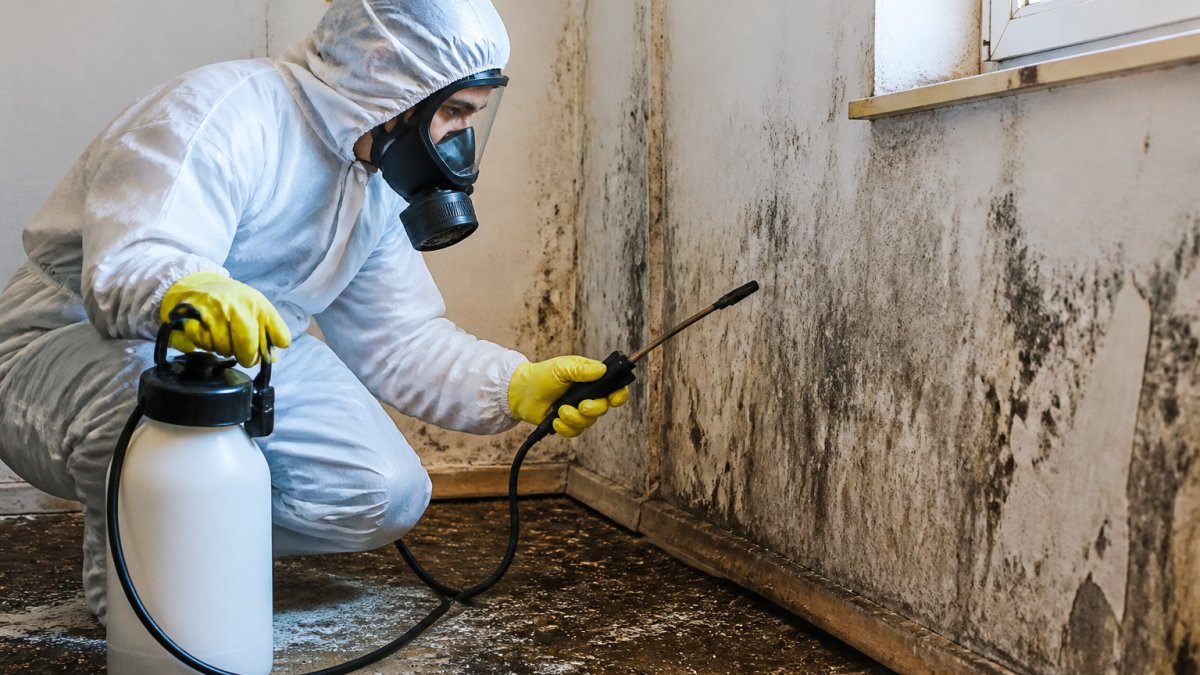
Mold typically appears within 24 to 48 hours of a water event, often sooner in humid conditions. If you smell mustiness before you see anything, trust your nose and get the area checked.
Watch for these signs:
- A persistent earthy or musty odor in one room
- Dark speckling along baseboards, drywall seams, or ceiling corners
- Warped or bubbling paint and soft drywall
- Visible discoloration on carpet edges or under padding
- Family members with new allergy-like symptoms indoors
Water Damage Insurance Claim Tips
Most homeowners policies cover sudden and accidental water damage but exclude damage from a leak that developed slowly over weeks or months. That sudden-versus-gradual distinction drives more claim denials than any other factor, so how you document the loss matters as much as the loss itself.
What Your Policy Actually Covers
Standard HO-3 homeowners policies typically cover:
- Burst supply lines and appliance failures (sudden discharge)
- Accidental overflow from a tub, sink, or toilet
- Storm-driven water intrusion through a damaged roof or broken window
- Water used to fight a fire (often covered under the fire peril)
What they usually exclude without separate coverage:
- Groundwater and surface flooding, this requires a separate flood policy, typically through the National Flood Insurance Program or a private flood carrier
- Sewer or drain backup, usually needs a backup endorsement added to the policy
- Long-term seepage, condensation, or repeated leaks the homeowner knew about
- Mold beyond a limited sublimit, often $10,000 or less unless a rider was purchased
That last point catches people off guard: a slow leak behind a refrigerator can produce mold that costs far more to remediate than the water damage itself, and the sublimit may not cover it.
Documenting the Damage for Your Claim
- Photograph and video every affected room before anything is moved
- Save damaged items until the adjuster sees them
- Keep receipts for hotels, meals, and emergency purchases
- Write down the date and time you discovered the damage
- Get a written scope of work from your restoration contractor
- Note the water source and category, clean supply line versus contaminated backup changes the scope
How Adjusters Actually Evaluate a Water Claim
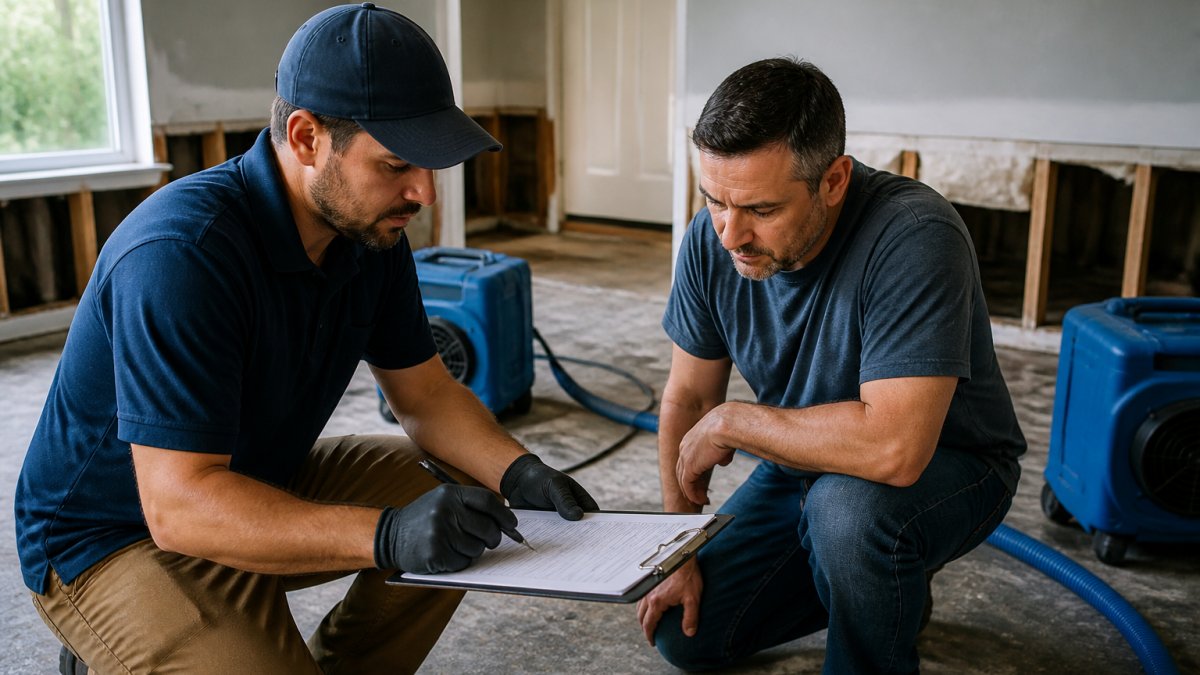
An adjuster compares three things: the cause of loss, the documented scope of damage, and the drying records that prove the work was necessary. A company that photographs moisture readings, logs equipment placement, and provides itemized estimates gives your adjuster a file that's hard to dispute.
What adjusters look for in a well-built file:
- Moisture mapping showing affected versus unaffected materials before work begins
- Daily drying logs with psychrometric readings (temperature, relative humidity, and material moisture content) that show a drying curve
- Equipment placement records documenting how many air movers and dehumidifiers ran and for how long
- Photo documentation at each stage, not just at the end
- An itemized estimate broken down by line item rather than a lump sum
When a Claim Gets Denied or Underpaid
If your claim comes back lower than expected, the usual causes are:
- The adjuster classified the loss as gradual rather than sudden
- The scope of work was not documented with moisture readings
- Mold was discovered and hit the policy sublimit
- The cause of loss falls under an exclusion (flood, backup, or maintenance neglect)
Working With Your Contractor and Adjuster Together
The smoothest claims happen when the contractor and adjuster work from the same scope:
- The contractor documents before mitigation begins, not after
- The adjuster gets access to drying logs as they are produced
- Any change in scope (a wall wetter than expected) is documented and communicated before the work is done
- The final invoice matches the approved scope line for line
Local Flood Risks and Cost Transparency in Wyandotte County
Wyandotte County sits at the confluence of the Kansas and Missouri rivers, and that geography shapes water damage risk here in ways generic Kansas City metro content never addresses.
The Specific Flood Risks Here
- River flooding along the Kansas River corridor, low-lying areas near the Kansas River, including parts of the Argentine and Armourdale neighborhoods, sit in mapped floodplain and have flooded repeatedly in the county's history.
- Missouri River flooding, the northeast corner near the Missouri River confluence carries its own flood risk, separate from the Kansas River side.
- Flash flooding from summer storms, the county's topography and impervious surfaces mean heavy convective storms can overwhelm storm sewers in hours, sending water into basements and low-lying streets.
- Combined sewer backups, older parts of the county have combined storm and sanitary sewers. During heavy rain, those systems surcharge, and sewage can back up into basements through floor drains and laundry standpipes. This is category 3 water and requires full removal of contaminated materials, not just drying.
- Freeze-thaw pipe failures, the county's older housing stock includes many homes with aging galvanized or copper supply lines and clay sewer laterals. A hard freeze followed by a thaw commonly triggers burst pipes and cracked laterals.
If your property is in or near a mapped floodplain, standard homeowners insurance won't cover the flood itself, that requires a separate flood policy. Sewer backup coverage is also a separate endorsement. Knowing which risk applies to your address before water arrives is worth more than any cleanup tip.
What Actually Drives the Cost of Restoration
There is no honest flat rate for water damage restoration. Anyone quoting a number over the phone before seeing the property is guessing. Here's what moves the estimate:
- Water category, clean supply-line water is cheapest. Category 2 (gray water from appliances or tubs) and category 3 (sewage, floodwater, or water that has sat long enough to grow bacteria) require removal of porous materials and antimicrobial treatment, adding labor and disposal costs.
- Square footage affected, extraction and drying are priced by area. A single room is a different job than a finished basement.
- How long the water sat, the longer it sat, the deeper it wicked into framing, drywall, and subfloor, and the more material must be removed rather than dried in place.
- Materials affected, carpet and pad are usually removed. Hardwood may be salvageable with specialized drying. Drywall that wicked water above the flood cut line must be cut out and replaced.
- Whether reconstruction is needed, mitigation (extraction, drying, cleaning) and reconstruction (drywall, flooring, paint, trim) are separate scopes. A mitigation-only job is a fraction of a full rebuild.
- Access and containment, a basement with a narrow stairwell or a crawlspace with limited access takes longer and costs more.
- After-hours and emergency premiums, some companies charge more for nights, weekends, and holidays. Ask before you book.
How the Estimate Should Be Structured
A reputable company inspects first, then gives you a written estimate you can compare and submit to your insurer. It should break out:
- Emergency response and water extraction
- Equipment setup, daily monitoring, and removal
- Antimicrobial and deodorization treatment
- Debris removal and disposal
- Any demolition required (flood cuts, carpet removal, cabinet removal)
- Reconstruction line items, if applicable
What You Can Expect to Pay Out of Pocket
If you file a claim, your out-of-pocket cost is typically your deductible plus any work exceeding policy limits or falling under an exclusion. If you don't file, say, a small supply-line leak you catch in an hour, you pay the full mitigation cost. The decision point is whether the damage justifies a claim that could affect your premium.
DIY Immediate Mitigation Steps While You Wait
You can slow the damage significantly before a crew arrives, often the difference between drying a room and replacing it. Safety first: if water is near outlets, a downed power line, or your electrical panel, leave the building and wait for professionals.
While you wait for your restoration team:
- Shut off the water source if you can reach the valve safely
- Cut power to affected rooms at the breaker only if the panel is dry
- Move furniture, rugs, and electronics off wet flooring
- Blot standing water with towels and wring them out outside
- Prop up wet upholstery and cushions so air reaches both sides
- Run a fan only in areas with no standing water and no electrical risk
- Do not use a household vacuum to remove water
Why Choose AFC Cleaning & Restoration
AFC Cleaning & Restoration has handled emergency water removal and property restoration across the Kansas City area since 2003, with IICRC-certified technicians holding WRT, ASD, and CCRN certifications. We serve families and businesses, from single-family basements to large commercial retail sites.
Here is what you get when you call:
- 24/7, 365 availability with a live dispatcher, not a voicemail box
- IICRC-certified crews trained in water damage restoration and mold remediation
- Full-service capability from emergency mitigation through reconstruction
- Insurance coordination so you are not stuck managing paperwork alone
- One contractor from first extraction to final walkthrough
Frequently Asked Questions
How much does water damage restoration cost?
Pricing depends on the severity of the damage, the size of the affected area, and the type of water involved. Most restoration companies, including AFC Cleaning & Restoration, provide a detailed estimate after an on-site assessment. Contact the company directly for a quote based on your specific situation.
How quickly should I call for water damage restoration services?
Call immediately. Mold can begin growing within 24 to 48 hours of water exposure. The faster you call, the less likely you are to deal with secondary damage like mold or structural weakening. AFC Cleaning & Restoration offers 24/7 emergency response to start mitigation right away.
Is water damage covered by homeowners insurance?
Most homeowners insurance policies cover sudden and accidental water damage, such as a burst pipe or appliance failure. Flood damage typically requires a separate policy. Review your coverage and contact your insurer promptly to start the claims process. AFC Cleaning & Restoration can help document the damage for your claim.
What are the signs of mold after water damage?
Look for a musty odor, visible dark spots on walls or ceilings, peeling paint, or warped flooring. Mold can also hide behind drywall and under carpets. If you notice any of these signs, call a professional for mold remediation. AFC Cleaning & Restoration can help address hidden mold.