 how-to
When to Replace Basement Flooring After Flooding
Table of Contents
- Assess the Extent of Basement Flooding and Flooring Damage
- Take Immediate Safety Steps Before Entering or Cleaning
- Remove Standing Water and Begin the Drying Process
- When to Remove Carpet After Basement Flood
- Can Flooded Basement Carpet Be Saved or Must It Be Replaced
- Inspect for Water Trapped Under Basement Flooring and Subfloor Damage
- Determine Whether to Replace Tile After Flood or Salvage
- Material-by-Material Replacement Timeline for Basement Flooring
- Frequently Asked Questions
Last Updated: October 9, 2026
Assess the Extent of Basement Flooding and Flooring Damage
When basement flooding occurs, your first step is understanding what you're dealing with. The extent of damage determines whether you can salvage your flooring or need to replace basement flooring entirely. This assessment guides every decision that follows.
Start by documenting the water level. Did water reach ankle-height, knee-height, or higher? Note how long the water sat before removal. Water that sits for 24-48 hours causes more damage than water removed within a few hours.
Check what type of water flooded your basement. Clean water from a burst pipe differs dramatically from contaminated floodwater. Contaminated water from sewage backups or external flooding poses serious health risks and typically requires complete flooring removal.
Examine your flooring material closely:
- Carpet shows visible saturation and odor
- Hardwood develops swelling, buckling, or cupping
- Laminate delaminates and warps
- Vinyl plank may separate at seams
- Tile typically survives but grout absorbs water
- Concrete develops staining and moisture issues
Look at the color and smell. Discoloration indicates water penetration. A musty odor signals moisture trapped in materials. These are signs that replacement may be necessary rather than salvage.
Most homeowners underestimate the damage hidden beneath finished flooring. What looks like surface-level water damage often extends deep into the subfloor, making replacement the safer choice.
Take Immediate Safety Steps Before Entering or Cleaning
Never enter a flooded basement without taking precautions first. Standing water creates multiple hazards beyond what's visible.
Turn off electrical power to the basement immediately. Water conducts electricity. A live circuit in standing water becomes a serious electrocution risk. Switch off the breaker for the entire basement if you're unsure which circuits are affected.
Check for structural damage. Look for cracks in foundation walls, bowing, or water seeping through walls. These indicate serious problems that require professional assessment before you proceed with cleanup.
Assume the water is contaminated. Floodwater often contains sewage, chemicals, and bacteria. Wear protective gear:
- Rubber gloves that extend past your wrists
- N95 mask or respirator
- Waterproof boots
- Long sleeves and pants
Ventilate the space. Open windows and doors. Use fans to push air out. Moisture trapped in a closed basement accelerates mold growth.
Document everything with photos and video. Take pictures of water levels marked on walls, damaged flooring, and affected areas. This documentation supports insurance claims and helps professionals understand the scope of water damage.
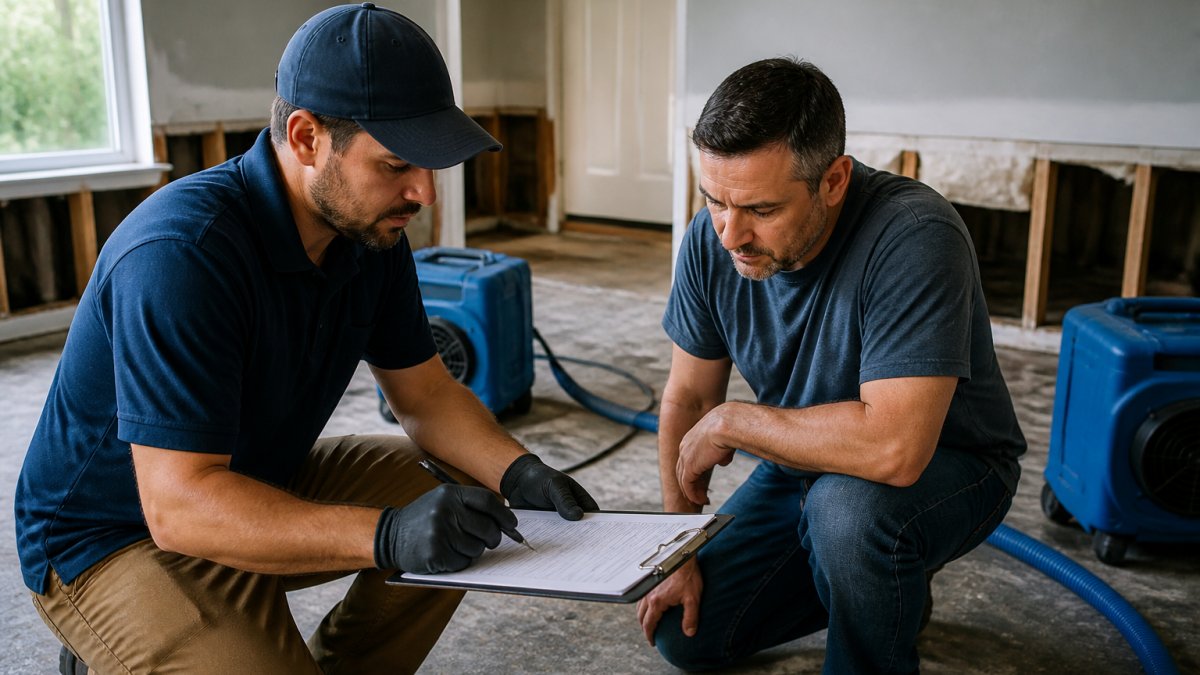
Call a professional for significant flooding. If water covers more than a few inches or sits in your basement for extended periods, professional water extraction and assessment prevents hidden damage from spreading.
Remove Standing Water and Begin the Drying Process
Standing water must be removed quickly. Every hour it sits increases damage to flooring, subfloor, and surrounding materials.
Use appropriate extraction methods:
- Wet vacuums for shallow water (under 2 inches)
- Submersible pumps for deeper water (2+ inches)
- Professional extraction equipment for large volumes
After water removal, the real work begins: drying the space completely.
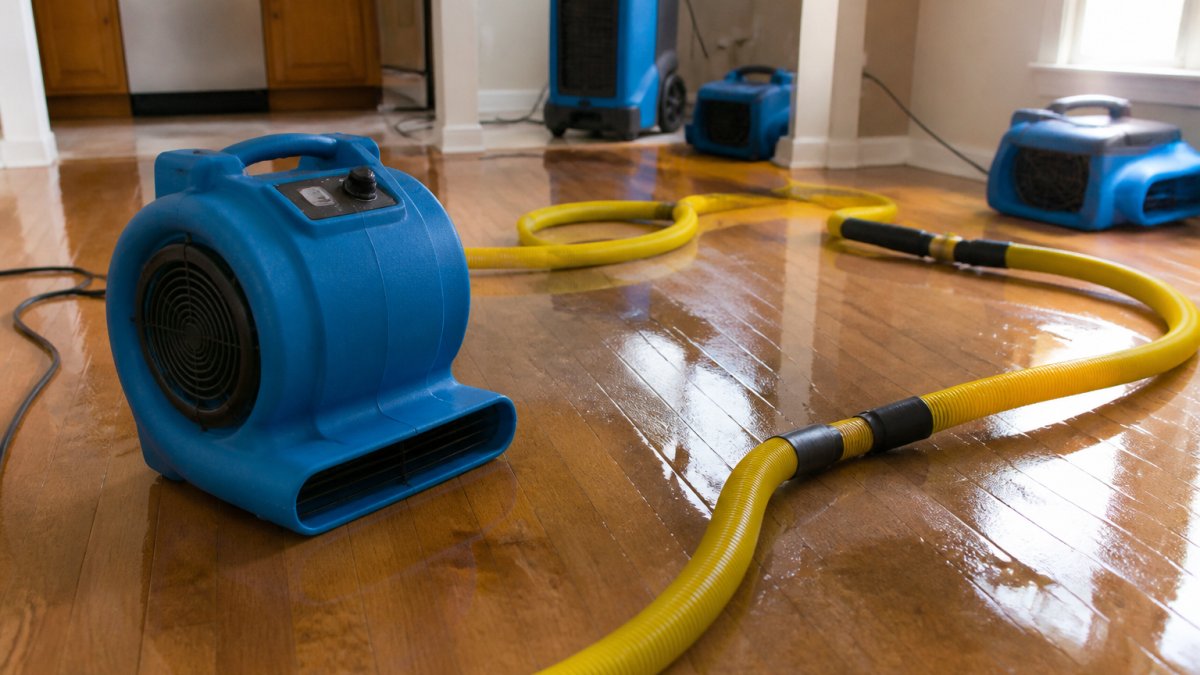
Set up air circulation. Position fans to move air across wet surfaces. Cross-ventilation works best. Open windows on opposite sides of the basement to create airflow. Point fans at wet flooring to accelerate evaporation.
Use dehumidifiers. Standing fans alone won't remove moisture trapped in materials. Dehumidifiers pull moisture from the air and materials. Run multiple units in a flooded basement.
Monitor moisture levels with a moisture meter. This device measures moisture content in materials. Take readings on flooring, subfloor, and walls. Most materials need to reach 15-20% moisture content before they're considered dry.
Expect the drying process to take time. Most basements require 3-7 days of continuous drying with fans and dehumidifiers running 24/7. Larger areas or deeper saturation may take 2-3 weeks.
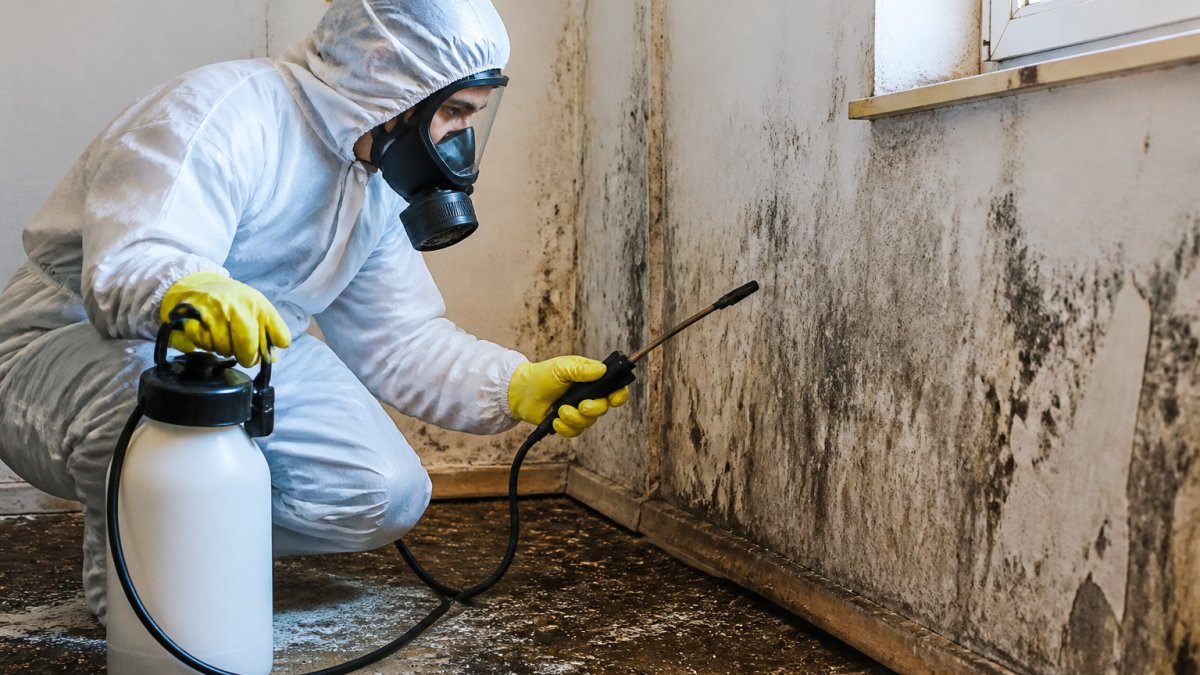
Disinfect all surfaces. After water removal, spray affected areas with a disinfectant solution. Floodwater carries bacteria and contaminants. Disinfection prevents mold growth and eliminates health hazards.
When to Remove Carpet After Basement Flood
Carpet is particularly vulnerable to water damage. The question isn't always whether carpet can be saved, it's whether it should be.
Remove carpet within 24-48 hours of flooding. This is the critical window. Carpet saturated for more than two days develops odor, mold, and mildew that cleaning cannot fully eliminate.
Carpet removal becomes necessary when:
- Water came from sewage or contaminated sources
- The carpet was underwater for more than 48 hours
- You notice persistent odor after initial drying attempts
- The subfloor shows signs of water damage or discoloration
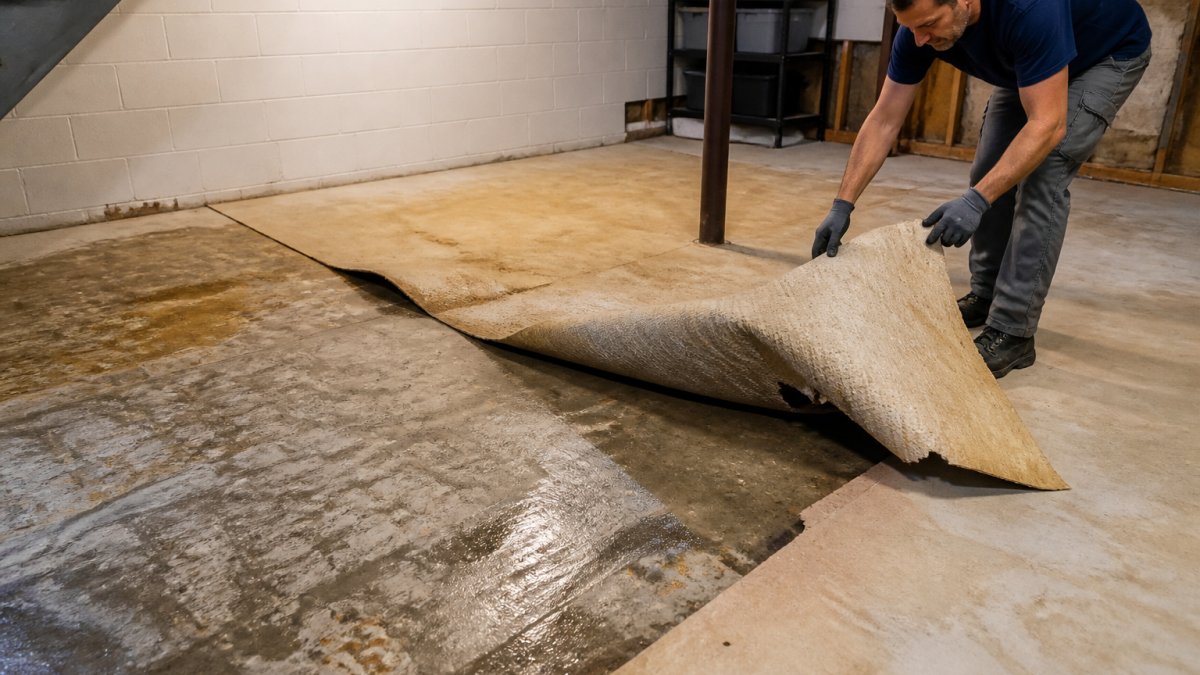
Pull up the carpet and padding immediately. Don't wait for the carpet to dry. Wet padding traps moisture against the subfloor, creating an ideal environment for mold growth. Removing it stops this process.
Inspect the subfloor underneath. Once carpet is removed, examine the concrete or wood subfloor. Look for discoloration, soft spots, or warping. These indicate water penetration that may require subfloor replacement.
Dispose of wet carpet properly. Wet carpet is heavy and difficult to handle. Most municipalities accept wet carpet at landfills. Some restoration companies haul it away as part of their service.
Consider replacement rather than cleaning. Professional carpet cleaning after flooding is possible but risky. Moisture trapped deep in the fibers often returns, bringing odor and mold with it. Replacement provides certainty that the problem is solved.
Can Flooded Basement Carpet Be Saved or Must It Be Replaced
The answer depends on water source, saturation time, and your tolerance for risk.
Clean water from pipes can sometimes be saved. If a water line burst and flooded your basement with clean water, and you removed the carpet within 24 hours, professional cleaning may work.
Contaminated water means replacement. Floodwater from external sources, sewage backups, or storm drains contaminates carpet beyond recovery. Replacement is the only safe option. Health risks from contaminated carpet are too high.
Carpet padding almost never survives. Even if the carpet dries successfully, the padding underneath rarely recovers. Padding absorbs water like a sponge and retains moisture for weeks. Mold grows in damp padding.
Persistent odor indicates replacement is necessary. If your carpet smells musty after drying, moisture and mold are present. Cleaning won't eliminate deep-seated odor. Replacement removes the problem permanently.
Mold visible on or under carpet means replacement. Any visible mold growth requires removal of the affected material. Mold can spread to adjacent areas and poses health risks.
The safest approach: when in doubt, replace the carpet.
Inspect for Water Trapped Under Basement Flooring and Subfloor Damage
This is where most homeowners miss critical damage. Water trapped beneath finished flooring causes problems that aren't visible until significant damage has occurred.
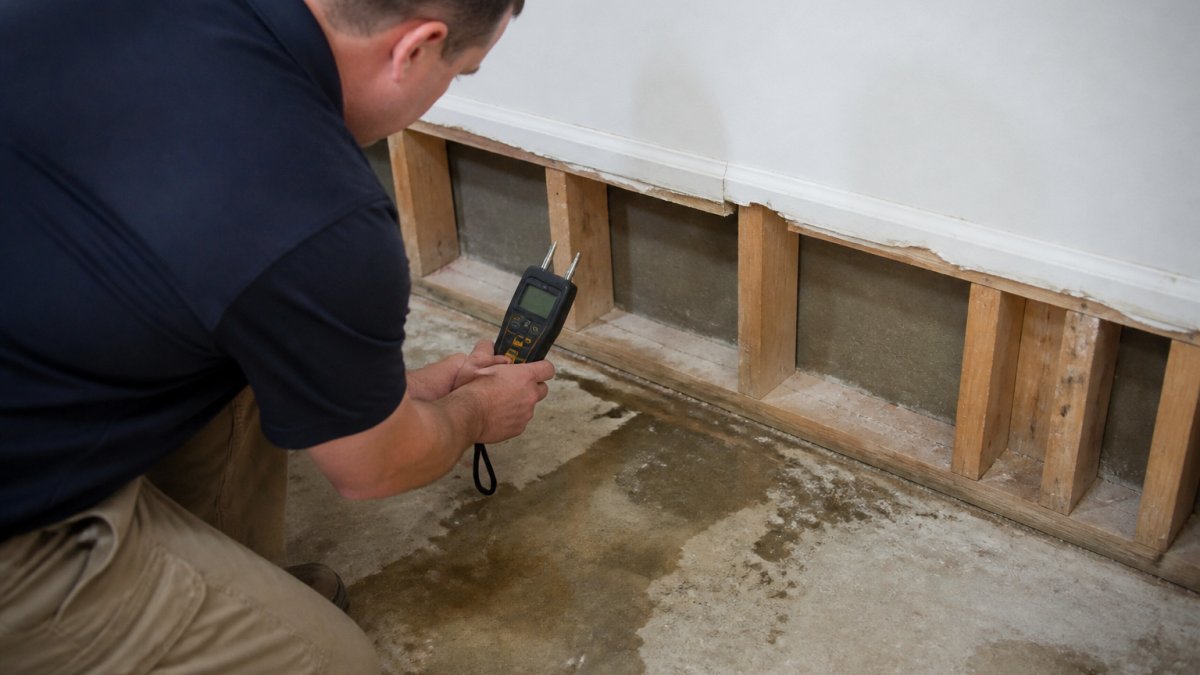
Lift the edges of flooring to check underneath. Peel back carpet or carefully lift laminate/vinyl planks at the edges.
Use a moisture meter to measure subfloor moisture. This tool gives you concrete data about whether the subfloor is truly dry. Press the meter pins into the subfloor material.
Check for soft or spongy subfloor areas. Press firmly on exposed subfloor sections. Soft spots indicate rot or decay from prolonged water exposure. These areas must be replaced.
Inspect wooden subfloors for buckling or cupping. Wood absorbs water and swells. Buckling (peaks and valleys across the surface) or cupping (edges higher than the center) indicates water damage.
Look for mold or mildew growth. Black or green spots on the subfloor signal mold colonization. Mold requires moisture to grow.
Verify complete drying before replacing flooring. Run fans and dehumidifiers until moisture meter readings stabilize in the safe range for at least 3 consecutive days.
Determine Whether to Replace Tile After Flood or Salvage
Tile itself is water-resistant, but the materials supporting it are not.
Tile surface usually survives flooding intact. Ceramic or porcelain tile doesn't absorb water. The tiles themselves rarely need replacement after flooding.
Grout and subfloor are the real concerns. Grout is porous and absorbs water readily. Moisture moves through grout into the subfloor beneath.
Check grout lines for discoloration. Dark staining or color changes in grout indicate water absorption. This means moisture has penetrated below the tile surface.
Press on the tile to feel for movement. If tiles feel loose or move slightly, the adhesive underneath has failed due to water. These tiles need replacement.
Inspect the subfloor under the tile. If you can access the underside, look for discoloration, soft spots, or mold. Water that travels through grout reaches the subfloor.
Determine if tile can stay or must be removed. If grout is heavily saturated and the subfloor shows damage, remove the tile.
Plan for subfloor replacement if necessary. If you remove the tile and find damaged subfloor, replace that section before installing new flooring.
Material-by-Material Replacement Timeline for Basement Flooring
Different flooring materials respond to water differently. This timeline guides your decisions when you replace basement flooring.
| Flooring Material | Water Survival Window | Replacement Decision | Timeline |
|---|---|---|---|
| Carpet & Padding | 24-48 hours | Remove if contaminated or beyond 48 hours | Immediate |
| Hardwood | 24-48 hours | Replace if buckling/cupping visible | 3-7 days after subfloor is dry |
| Laminate | 24-48 hours | Replace if delamination or swelling occurs | 3-7 days after subfloor is dry |
| Vinyl Plank | 48-72 hours | Can survive if removed promptly and dried | 5-10 days after subfloor is dry |
| Tile | 7+ days | Usually salvageable; replace if grout fails | After subfloor inspection and drying |
| Concrete | 7+ days | Survives but needs moisture barrier | After moisture readings normalize |
Carpet and padding: Remove within 24-48 hours. Replacement is usually necessary. New carpet installation can begin once the subfloor is completely dry.
Hardwood flooring: Hardwood absorbs water and swells. Buckling or cupping appears within 24-48 hours and is permanent. If you see these signs, replace the flooring.
Laminate flooring: Laminate delaminates when wet. Once the layers separate, the flooring is ruined. If laminate was underwater, replacement is necessary.
Vinyl plank flooring: Vinyl plank is more water-resistant than other materials. If removed promptly and the subfloor dries completely, vinyl plank can sometimes be reinstalled.
Tile flooring: Tile itself survives flooding. The question is whether the grout and subfloor survived. Inspect thoroughly before deciding.
Concrete subfloors: Concrete is porous and absorbs water. After flooding, allow concrete to dry completely. Moisture readings should be 3-5% or lower before installing finished flooring.
Installation timing matters. Don't rush to install new flooring. Premature installation over damp subfloor causes new flooring to fail. Wait until moisture meter readings confirm the subfloor is dry.
Basement flooding is stressful, but understanding your replacement options gives you control over the recovery process. We're available 24/7 to assess your specific situation and recommend the right path forward. Contact us for a professional evaluation of your basement water damage and a clear replacement plan tailored to your flooring type and subfloor condition.
Frequently Asked Questions
How soon should you remove flooring after a basement flood?
Begin water extraction within the first 24-48 hours of discovery. For carpet, remove it immediately if water depth exceeds a few inches or if the contamination source is unclear. For hard flooring like vinyl plank or laminate, remove it within 48 hours if moisture has penetrated underneath. The faster you extract standing water and remove saturated materials, the lower your risk of mold growth and permanent subfloor damage. Delaying removal can cause buckling, swelling, and delamination that makes salvage impossible.
Can carpet be saved after basement flooding?
Carpet can sometimes be saved if the water source is clean (like a burst pipe) and drying begins within 24 hours. However, most basement floods involve contaminated floodwater, which poses health risks and makes carpet unsalvageable. Even clean-water floods often result in permanent odor and mildew if the carpet backing and padding absorb moisture. Most professionals recommend removing flooded carpet and replacing it with water-resistant materials like vinyl plank flooring or tile, which are easier to dry and less prone to mold.
How can you tell if water is trapped under basement flooring?
Use a moisture meter to test the subfloor beneath lifted sections of flooring. Readings above 20% indicate trapped moisture. Look for swelling, buckling, or soft spots in the subfloor material. If the subfloor remains damp after 5-7 days of dehumidifier and air circulation use, it likely has absorbed water and may need replacement. Professional assessment with moisture mapping can identify moisture pockets you cannot see and confirm whether the subfloor is fully dry before you install new flooring.
Do you have to replace all basement flooring after a flood?
Not necessarily. The decision depends on water depth, contamination source, material type, and how quickly you act. Tile and concrete floors may be salvageable with thorough cleaning and disinfection if the subfloor is dry. Carpet and laminate are almost always replaced. Vinyl plank and hardwood require assessment: if water was shallow and drying is rapid, some planks may be saved; deep or prolonged saturation usually requires full replacement. A professional inspection with moisture readings can determine which sections are safe to keep.