 how-to
Does Business Insurance Cover Storm Damage? 7 Answers
Last Updated: October 28, 2026
Quick Summary
Does business insurance cover storm damage? Usually yes for wind, hail and lightning, but standard commercial policies typically exclude flooding, storm surge and rising water. Coverage depends on the specific perils, deductibles and exclusions in your policy, so check them before storm season.
- Standard commercial property policies usually cover wind and hail damage to buildings and business property.
- Flood and storm surge damage is typically excluded and generally requires a separate flood policy.
- NFIP flood policies typically carry a 30-day waiting period, so buy coverage before a storm.
- Wind or hail deductibles are often a percentage of insured building value, not a flat amount.
- Photograph and video all damage before cleanup, and keep receipts for emergency repairs.
Table of Contents
- What Counts as Storm Damage for a Business
- Does Business Insurance Cover Wind and Hail Damage?
- Business Flood Insurance: Why Flooding Is Usually Excluded
- Snow, Ice, Hurricanes, and Other Severe Weather Losses
- Business Interruption Insurance for Storm Damage
- How to File a Commercial Property Insurance Claim After a Storm
- Next Step: Review Your Policy Before the Next Storm Season
- Frequently Asked Questions
Storm damage can cost a business thousands of dollars in a single afternoon, and many owners don't learn until the claim is denied whether does business insurance cover storm damage for the losses they assumed were protected. Whether your property is hit by wind, hail, flooding or a winter storm, the answer depends on the specific coverage you carry. This guide explains what insurance may cover and where gaps can occur.
What Counts as Storm Damage for a Business
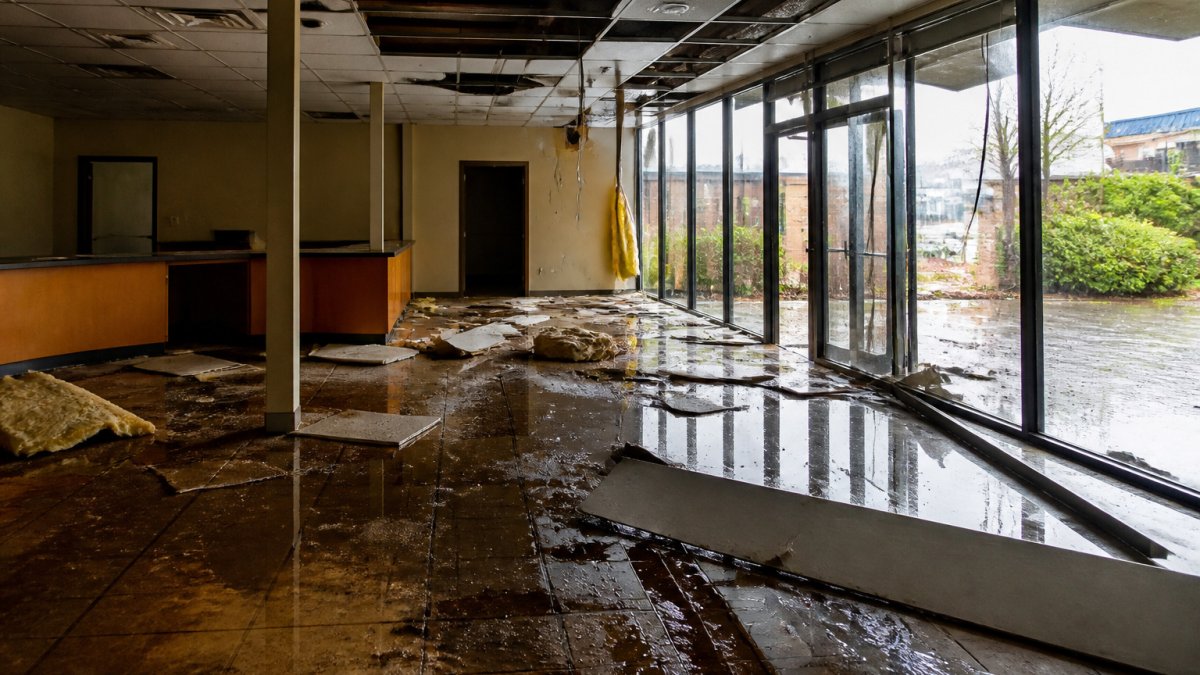
Storm damage is physical harm to a building, its contents or its equipment caused by severe weather, roof damage from wind, broken windows from hail, water entering through a damaged roof, and inventory ruined by flooding.
Many business owners use "storm damage" as a catch-all term. Insurers do not. They break storm losses into separate perils, each covered, limited or excluded on its own terms.
Common storm-related perils include:
- Windstorms and wind-driven rain
- Hail
- Lightning
Watch out: Water damage that comes in through a storm-damaged roof is often treated differently from water that rises from the ground. Keep photos of how the water entered.
Does Business Insurance Cover Wind and Hail Damage?
In most cases, a standard commercial property policy covers wind and hail damage to the building and business property. According to Insureon, wind and hail damage account for about 15% of small-business insurance claims, making them one of the more common storm losses businesses file (How Does Business Insurance Cover Windstorm and Hail Damage?).
Coverage still depends on the details. Check these items on your policy:
- Covered perils: Confirm that windstorm and hail are listed.
- Deductibles: Some policies use a separate, higher deductible for wind or hail.
- Limits: Know the maximum the policy will pay for each type of loss.
Many owners assume wind damage is always covered, so the question of does business insurance cover storm damage deserves a close look at the wind and hail section of the policy before the next storm season.
Business Flood Insurance: Why Flooding Is Usually Excluded
Flood damage is the storm loss that catches the most business owners off guard. The Insurance Information Institute reports that flood damage, including hurricane storm surge, typically is not covered under a standard commercial property policy, so a standard policy usually won't pay for water that rises from rivers, creeks, pooled heavy rain, or storm surge (Are there any disasters my property insurance won't cover?).
The reason is structural, not arbitrary. Commercial property forms generally cover water damage only when it comes from inside the building or from a covered peril such as wind-driven rain entering through a storm-damaged opening. Water that originates outside and rises or pools is treated as flood, which is excluded unless you buy it back.
Flood vs. Other Water Damage: A Decision Guide
Insurers draw a sharp line between flood and other water damage, and the line usually decides the claim. Use this guide before you call your insurer:
| What happened | How insurers usually treat it | What to check |
|---|---|---|
| Rain enters through a roof torn open by wind | Often covered as wind damage, including the water damage that follows | Confirm wind is a covered peril and that the policy does not exclude rain damage unless the roof was first damaged by a covered peril |
| Water rises from a river, creek, or street and enters the building | Usually excluded as flood | Separate flood policy or NFIP coverage |
| Heavy rain pools against the foundation and seeps in | Usually excluded as flood | Separate flood policy; some private policies define flood more narrowly than NFIP |
| Storm surge pushes water ashore | Usually excluded as flood | Separate flood policy; confirm the policy does not exclude surge separately |
| A pipe bursts or a sprinkler fails | Usually covered as accidental discharge | Confirm the policy does not exclude plumbing failures |
| Sewer backs up into the building | Often excluded or sublimited | Check for a sewer backup endorsement or sublimit |
Your Flood Coverage Options
Businesses facing flood risk generally need a separate policy. The main options:
- National Flood Insurance Program (NFIP) policies: Available to eligible properties in participating communities. NFIP policies typically carry a 30-day waiting period, so they are not a last-minute purchase before a named storm (Buy a Flood Insurance Policy). Statutory limits on building and contents coverage may be lower than the value of your building, equipment, and inventory.
- Private flood policies: Offered by some insurers with different limits, deductibles, and definitions of flood. They may offer higher limits or broader coverage than NFIP, but terms vary widely and some carry their own waiting periods.
- Flood endorsements or sublimits: Some commercial packages offer limited flood coverage as an endorsement. Read the sublimit carefully; a $25,000 flood sublimit will not rebuild a warehouse.
What a Flood Claim Requires
Flood claims are documented differently from wind claims. Expect to provide:
- Photos and video of the water line on walls, doors, and inventory, taken before cleanup
- A written inventory of damaged contents with age and replacement cost
- Proof of the date and cause of loss, such as weather reports or news coverage of the storm
NFIP claims follow a proof-of-loss process with specific deadlines, and missing them can reduce or void a payment. Private flood policies set their own notice and proof-of-loss requirements. Ask your agent for the claims contact and deadline in writing before storm season, not after.
Snow, Ice, Hurricanes, and Other Severe Weather Losses
Severe weather covers many events, and each one can be treated differently.
- Snow and ice: Roof collapse from heavy snow or ice dams may be covered under the building portion of a policy. Check for any snow-load exclusions.
- Hurricanes: Wind damage from a hurricane is often covered, but storm surge flooding usually is not.
- Lightning: Lightning damage to electrical equipment is commonly covered, though policies vary.
Some businesses assume that because a storm is named, it is fully covered. Policy terms and exclusions decide the outcome, not the storm's name.
Business Interruption Insurance for Storm Damage
Physical damage is only part of the cost. When a storm forces you to close, you may lose income for weeks.
Business interruption coverage typically requires direct physical damage from a covered peril.
Two related coverages matter here:
- Extra expense coverage: Pays for temporary costs to keep operating, such as renting another space.
- Lost income coverage: Replaces net income you would have earned if the storm had not occurred.
Ask your agent how long the coverage period lasts and whether there is a waiting period before payments begin. These terms can make a major difference in how much you recover.
How to File a Commercial Property Insurance Claim After a Storm
The sequence below is built around what adjusters actually ask for, plus the policy terms that decide how much you recover.
Before the Storm: Set Up the Claim File
The strongest claims start before damage occurs. Keep these items current and stored off-site or in the cloud:
- A video walkthrough of every room, plus exterior elevations, roof, signage, and outdoor equipment
- A contents inventory with purchase dates, serial numbers, and replacement cost estimates
- Copies of your policy declarations page, endorsements, and the agent's contact information
After the Storm: A Sequenced Claim Checklist
- Make the property safe and prevent further damage. Cover broken windows and roof openings, tarp the roof, and shut off utilities if needed. Insurers expect reasonable mitigation, and most policies reimburse it. Keep every receipt.
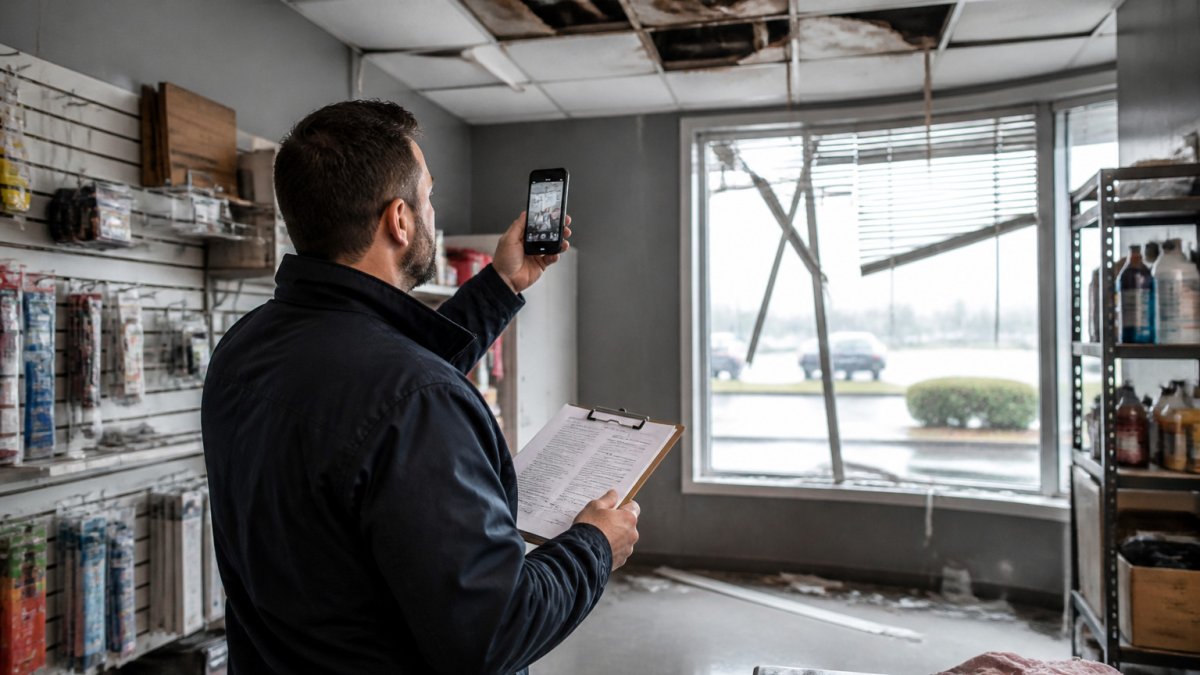
- Document before you clean. Photograph and video the damage from wide shots to close-ups, including the water line on walls, damaged inventory, and the point where water entered. Label photos by location and date.
- Separate damaged from undamaged property. Do not throw out damaged inventory or equipment before the adjuster sees it. If you must dispose of spoiled or hazardous items, photograph them first, keep samples where practical, and ask the adjuster before disposal.
- Report the claim promptly and in writing. Call your agent or insurer as soon as it is safe, then follow up in writing with a summary of the date, time, cause, and visible damage. Note the claim number and the adjuster's name.
- Track every expense. Keep a running log of emergency repairs, temporary space, equipment rental, and extra operating costs. These feed both the property claim and any business interruption or extra expense claim.
- Review the adjuster's estimate against your own. Get at least one contractor estimate of your own. Compare line items, quantities, and unit prices. Ask the adjuster to explain any line you believe is undervalued before you sign a proof of loss or release.
Policy Terms That Decide Your Payout
Two terms drive the dollar outcome more than any other:
- Replacement cost vs. actual cash value. Replacement cost pays to replace damaged property with new property of similar kind and quality, up to policy limits. Actual cash value pays replacement cost minus depreciation, which can leave a large gap on roofs, HVAC equipment, and older inventory. Check which basis your policy uses for buildings and for contents; some policies mix the two.
- Deductibles. A separate wind or named-storm deductible is often expressed as a percentage of the building's insured value rather than a flat dollar amount. On a $2,000,000 building, a 2% wind deductible is $40,000 out of pocket before the policy pays. Confirm the deductible type and percentage on your declarations page.
Also check sublimits for signs, outdoor equipment, fences, and spoilage, and confirm whether the policy has a waiting period before business interruption payments begin.
Business Interruption and Extra Expense Claims
If the storm forced you to close or relocate, the property claim is only part of the recovery. Business interruption coverage replaces lost net income during the period of restoration, and extra expense coverage pays the added cost of keeping operations going, such as renting temporary space or paying overtime. Both typically require direct physical damage from a covered peril, so if the storm itself is excluded, the lost income usually is too.
Get help with water and flood damage mitigation from AFC Cleaning & Restoration if you need experienced professionals to restore your property. Our team also covers the steps for minimizing business interruption after property damage and handling insurance water claims in more detail.
Next Step: Review Your Policy Before the Next Storm Season
Pull out your current commercial property policy this week and check four things: covered perils, deductibles, limits and exclusions. Ask your agent whether you need a separate flood policy, and confirm how business interruption coverage works. Clear answers now can save an unpleasant surprise later.
For help with storm-related restoration in the Kansas City area, reach out to AFC Cleaning & Restoration.
Frequently Asked Questions
Does commercial property insurance cover storm damage?
Commercial property insurance generally covers physical damage to your building, equipment, and inventory caused by covered perils such as windstorms, hail, and lightning. Whether a specific loss is paid depends on the policy form, the named perils or exclusions listed, your coverage limits, and your deductible. Flooding, including storm surge from a hurricane, is commonly excluded from standard commercial property policies and usually requires separate flood coverage. Review your declarations page and exclusions with your agent before a storm, and keep records of your property so claims are easier to document.
Does business insurance cover wind and hail damage?
Many commercial property policies cover wind and hail damage to a building and its contents, which is one of the most common storm-related business claims. Coverage is not identical across all policies, though, so terms such as wind or hail deductibles, percentage deductibles in some regions, and exclusions for certain roofing materials can change the outcome. Ask your agent to confirm in writing how wind and hail are treated under your policy, and photograph your roof and exterior regularly to document pre-storm condition.
Does business flood insurance cover storm surge?
Business flood insurance is typically purchased separately from a standard commercial property policy, and it is the coverage that addresses flood damage, including water from storm surge. Standard commercial policies commonly exclude flooding, so a business in a flood-prone area may have no protection for rising water unless it has a separate flood policy. Because flood policies often include a waiting period before coverage takes effect, purchase decisions should be made well before a storm forms.
What should I do immediately after storm damage to my business?
First, make sure people are safe and shut off utilities if there is a risk of electrical or gas hazards. Then notify your insurer as soon as possible, document the damage with dated photos and video, and make reasonable temporary repairs to prevent further loss, such as covering a broken window or tarping a damaged roof. Keep receipts for these steps, since many policies expect you to mitigate damage and may reimburse those costs. Avoid discarding damaged property until the adjuster has seen it.