 how-to
7 Things to Know Before Staying Home During Mold Remediation
Last Updated: October 25, 2026
Quick Summary
You can often stay in the house during mold remediation when the work area is small, fully sealed off with plastic sheeting and negative air pressure, and nobody in the home faces elevated health risk. People with asthma, COPD, allergies, or weakened immune systems should not be present during cleanup.
- Leave if the mold area is larger than roughly 10 square feet, about a 3-by-3-foot patch.
- Mold touching the HVAC system or air handler means you should leave the house.
- Most occupants can return once the work area passes clearance, typically a few days after active remediation ends.
- Ask for a written post-remediation verification report, moisture readings, and air sampling results before moving back in.
- Keep pets out of the work area and off plastic sheeting to avoid tracking spores through the home.
Table of Contents
- Can You Stay in the House During Mold Remediation?
- Mold Remediation Health Risks That Decide Whether You Stay
- How the Mold Remediation Containment Process Protects the Rest of the House
- How Long to Stay Out of the House After Mold Remediation
- Signs Mold Remediation Is Complete and Safe to Re-Enter
- Room-by-Room Logistics When You Stay Home
- Planning Your Stay-or-Go Decision With AFC Cleaning & Restoration
- Frequently Asked Questions
Can You Stay in the House During Mold Remediation?
Yes, you can often stay in the house during mold remediation, but only when the work area is small, fully sealed off, and nobody in the home faces elevated health risk.
Families want to keep their routine. They worry about hotel bills and pets and school runs. So here is a framework to help homeowners decide.
The short answer: staying depends on three things. How much mold there is. How well the crew contains it. And who lives in the house.
The Short Answer
Mold remediation is the process of removing mold growth, fixing the moisture source that caused it, and drying the space so it does not return.
But some people should not stay. The CDC mold cleanup guidance is direct on this: people with asthma, COPD, or weakened immune systems should not be in a moldy home or present during cleanup.
The Stay-or-Leave Decision Tree
Run through these questions in order. The first "leave" answer wins.
- Is the mold area larger than roughly 10 square feet? If yes, leave. That is about the size of a 3-by-3-foot patch, and it is the point where professional containment becomes essential.
- Does anyone in the home have asthma, COPD, allergies, or a weakened immune system? If yes, leave during the work.
- Are there infants, older adults, or pregnant occupants? If yes, plan a temporary relocation.
- Does the mold touch the HVAC system or air handler? If yes, leave. Air handlers spread spores through every room.
- Can the crew seal the work area completely with plastic sheeting and negative air pressure? If no, leave.
- Is there a working moisture source still active, like an unresolved leak? If yes, fix it first, then reassess.
If every answer lands on the "stay" side, you can likely remain in unaffected rooms. Keep the doors to the work zone closed and stay out of the crew's path.
Run through these questions in order, and the first "leave" answer decides it.
| Question | If yes |
|---|---|
| Is the mold area larger than roughly 10 square feet? | Leave |
| Does anyone have asthma, COPD, allergies, or a weakened immune system? | Leave during the work |
| Are there infants, older adults, or pregnant occupants? | Plan a temporary relocation |
| Does the mold touch the HVAC system or air handler? | Leave |
| Can the crew seal the work area with plastic sheeting and negative air pressure? | If no, leave |
| Is there a working moisture source still active, like an unresolved leak? | Fix it first, then reassess |
Mold Remediation Health Risks That Decide Whether You Stay
Mold exposure causes respiratory symptoms, allergic reactions, and asthma flare-ups in sensitive people (the EPA).
Here is what most guides miss: the danger is not the visible mold.
Some people face much higher risk:
- Children, whose lungs are still developing
- Older adults, who often have underlying conditions
- People with asthma or COPD, whose symptoms can spike fast
If your household includes any of these, treat relocation as the default. Not forever. Just for the duration of active work.
Worried the growth might be the toxic variety? Our guide on how to identify toxic black mold in homes walks through the warning signs.
How the Mold Remediation Containment Process Protects the Rest of the House
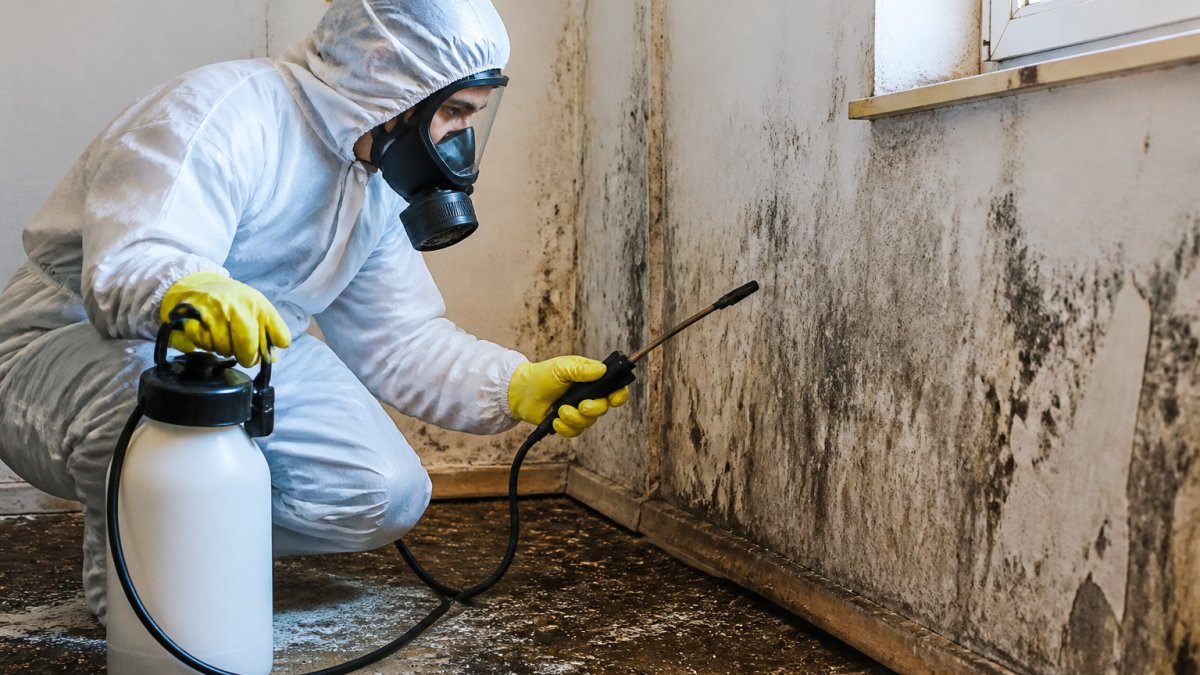
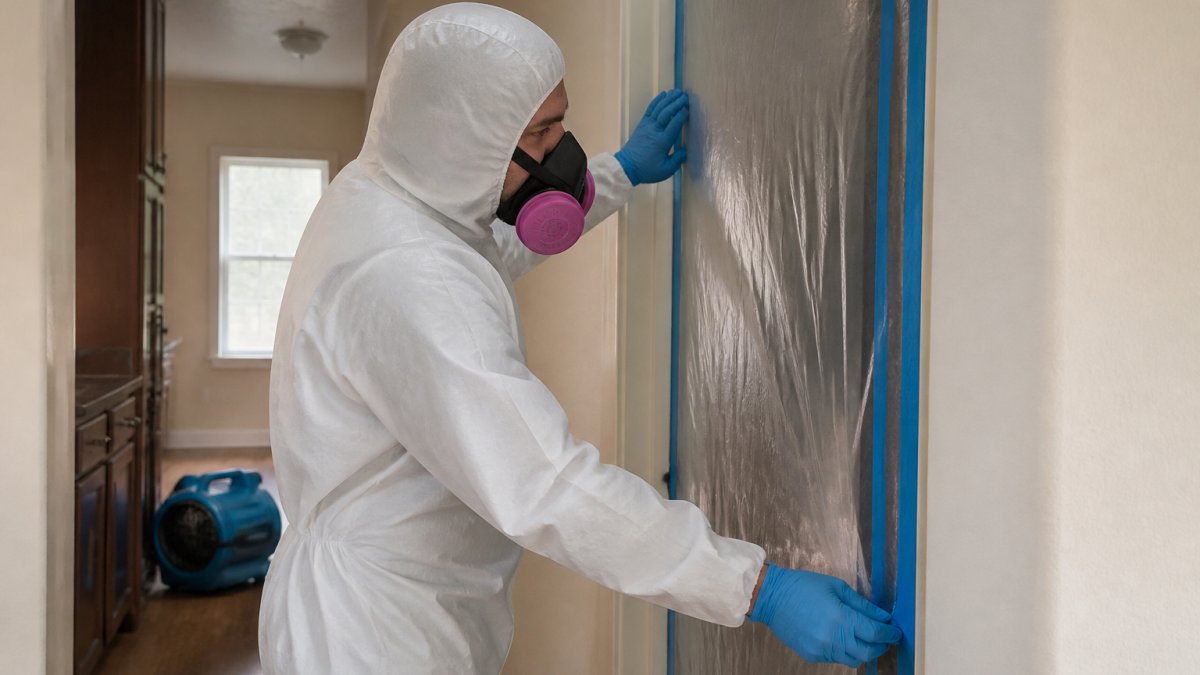
The containment process is what makes staying possible at all. A good crew builds a sealed work area before anyone starts tearing anything out.
Here is what that looks like in practice:
- Plastic sheeting seals doorways, vents, and openings
- Tape and zip walls close every gap where spores could escape
- Sealed work area keeps the contamination zone separate from living space
Negative Air Pressure and Air Scrubbers
Negative air pressure means the crew pulls more air out of the work zone than flows in.
An air scrubber with HEPA filtration catches spores before they leave the zone.
Watch out: crews that skip negative pressure and rely on plastic alone leave a gap. Spores find it.
Not sure whether hidden growth is behind your walls? Read our step-by-step guide on how to identify mold behind walls.
How Long to Stay Out of the House After Mold Remediation
Most occupants can return once the work area passes clearance, which typically takes a few days after active remediation ends. The timeline depends on scope, drying time, and whether the moisture source is fully fixed.
Small jobs with fast drying may clear in two to three days. Larger jobs with demolition, cabinet removal, or HVAC work can run a week or more. Dehumidification takes as long as it takes. Rushing it invites regrowth.
Plan for these phases:
- Containment setup (day one)
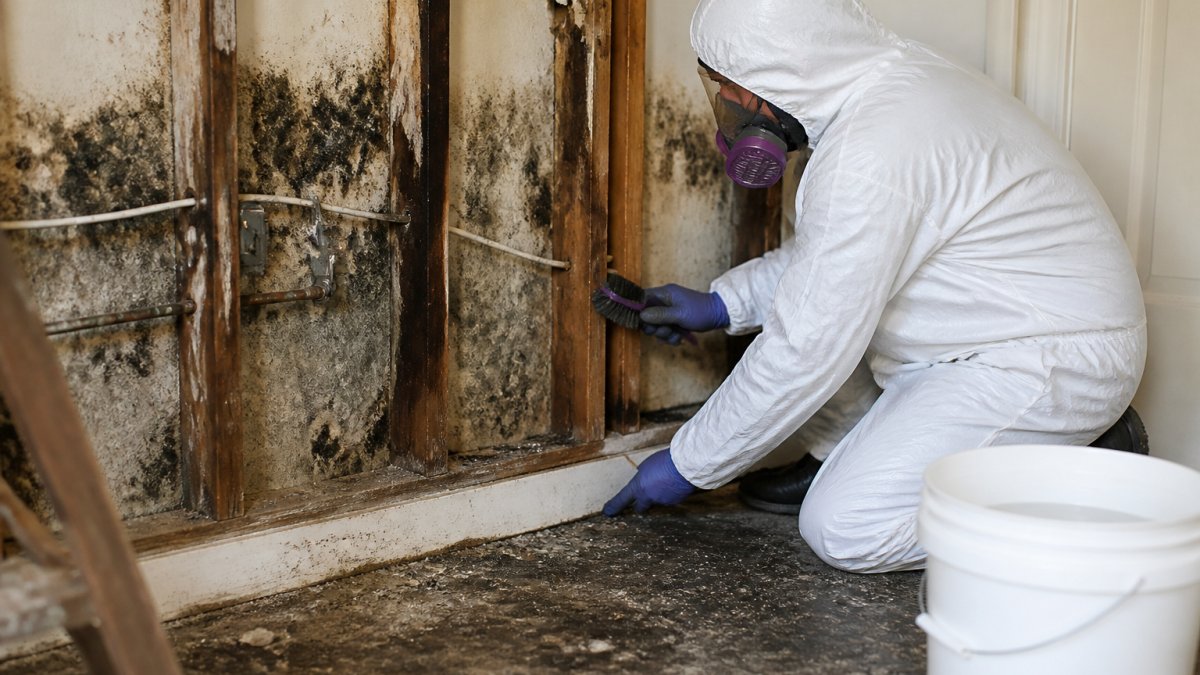
- Demolition and removal (one to several days)
- Cleaning and disinfection
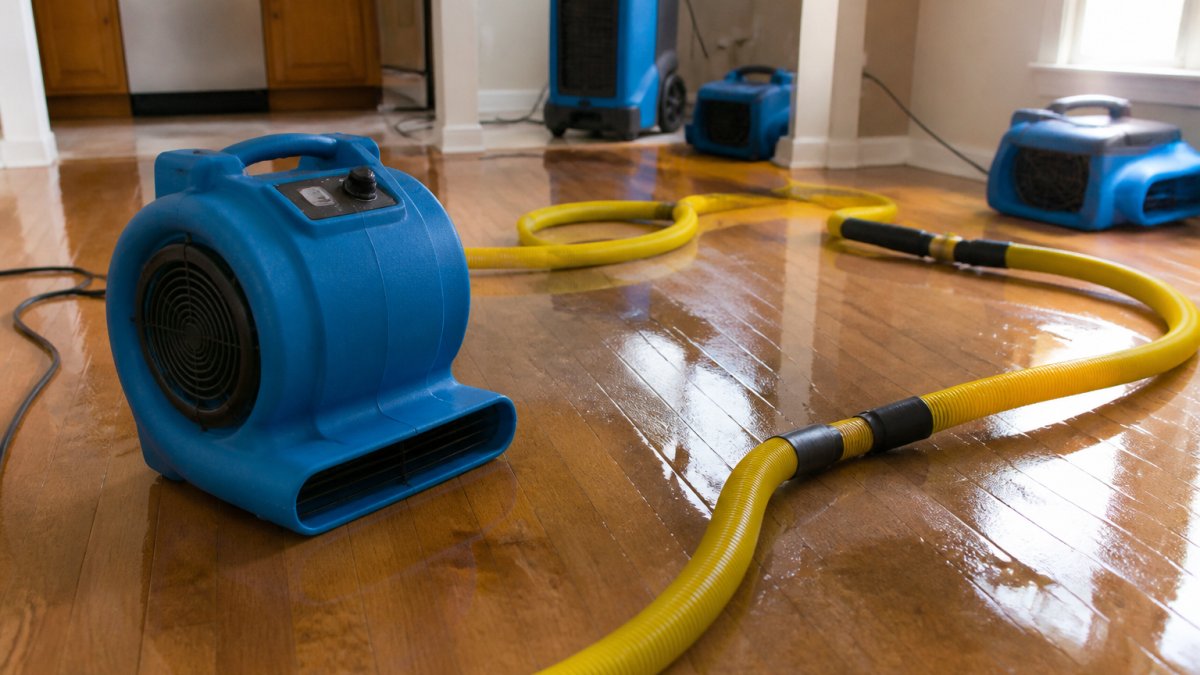
- Drying and dehumidification (several days)
- Post-remediation verification before re-entry
Signs Mold Remediation Is Complete and Safe to Re-Enter
Remediation is complete when three things are true at once: visible mold and contaminated materials are gone, building materials are dry to a documented baseline, and an independent verification step confirms the work area is fit for occupancy. "It looks fine" is not a clearance criterion, and neither is a contractor's verbal assurance.
Here is what each layer of verification actually establishes, and what it does not.
1. Visual inspection against a defined standard
A qualified inspector walks the work area and confirms no visible mold, no staining that suggests hidden growth, and no remaining porous materials that were supposed to be removed. Many practitioners reference the IICRC S520 standard for mold remediation, which describes conditions and verification principles (S520). Visual inspection is necessary but not sufficient, it cannot see inside wall cavities that were closed up.
2. Moisture readings compared to a dry baseline
Moisture meters and thermal imaging are used to confirm that framing, drywall, and subfloor have returned to normal moisture content for the home and climate. The key word is documented: ask for before-and-after readings, not just a final number. If a moisture source was not fully fixed, readings will drift back up within days or weeks, and regrowth follows.
3. Independent post-remediation verification
The strongest protection is a verification performed by someone who did not do the remediation work. That can be a licensed mold assessor, an industrial hygienist, or a qualified inspector retained by you. Independence matters because the crew that performed the work has an obvious interest in passing it.
4. Air sampling, useful, but not a guarantee
Air sampling (spore trap or culturable methods) can compare indoor spore levels to an outdoor baseline or to an unaffected room. It is most useful when results are interpreted by a qualified professional, because spore counts vary by season, weather, and sampling method. A "normal" result does not prove every cavity is clean, and an elevated result does not always mean the job failed.
No test can guarantee a home is mold-free. Clearance documentation establishes that the work area met defined visual, moisture, and (where used) air-quality criteria on the day of inspection. It is evidence of a job done to standard, not a warranty against future moisture problems.
What to ask for before you move back in
- A written post-remediation verification report, signed and dated
- Moisture readings for the affected assemblies, with the dry baseline noted
- Air sampling results with the outdoor or control baseline shown, if sampling was performed
If any of those are missing, ask why before you resume normal use of the space. A contractor who cannot produce documentation is asking you to take the clearance on faith.
What does professional testing cost and involve? Our breakdown of professional mold testing costs explains what to expect before you sign off.
Room-by-Room Logistics When You Stay Home
Staying home works only if the household is organized around the containment, not the other way around. The goal is a clean-route / dirty-route split: occupants use one path through the home, the crew uses another, and the two do not cross. Plan this before day one, because once plastic goes up, improvising gets expensive.
Map the house before work starts
Walk the home with the crew lead and agree on:
- Sleeping: keep bedrooms on the far side of the house from the work zone, with a door that closes between them and the containment.
- Bathrooms: designate one bathroom outside the zone for the household. If the only bathroom is inside the containment, staying is usually not practical.
- Kitchen: if containment blocks kitchen access, set up a temporary prep area (microwave, kettle, cooler) in an unaffected room. Plan meals that do not require the blocked kitchen.
Pets and belongings
- Pets: keep them out of the work area and off plastic sheeting. Cats and dogs shed and track spores; a pet that walks through the containment then onto a bed undoes the separation. If a pet is anxious about noise or strangers, boarding during demolition days is worth considering.
- Belongings: remove porous items (clothing, bedding, paper, upholstered furniture) from rooms adjacent to the work zone before demolition begins. Items that cannot be moved should be covered and, if they are in the work zone, treated as potentially contaminated.
- Medications and medical equipment: if anyone in the home uses a nebulizer, CPAP, or oxygen equipment, keep it in an unaffected room and confirm with the crew that it will not be exposed to dust.
HVAC and ventilation
Ask the crew to seal supply and return vents in the work zone and to confirm the air handler stays off during dust-generating work. If the HVAC system itself is contaminated, that changes the decision, see the decision tree above. In unaffected rooms, open windows when weather allows to improve ventilation, but do not open windows in a way that pulls air from the containment into living space.
Plan for containment failure
Containment is a barrier, not a force field. Ask the crew in advance:
- What happens if plastic tears or a zipper wall fails?
- Who do I call, and how quickly will they respond?
- If odors or symptoms appear in the living area, will work pause until the containment is repaired?
A crew that has a written answer is a crew that has done this before. A crew that shrugs is telling you something.
Communication and daily routine
Agree on work hours, quiet times, and how the crew will notify you before dust-generating steps like demolition. Keep a written log of any odors, headaches, or respiratory symptoms in the household and share it with the contractor.
A common mistake is treating the containment as a soft boundary. It is not. One open door undoes hours of setup.
Planning Your Stay-or-Go Decision With AFC Cleaning & Restoration
The decision comes down to scope, containment, and health. Get those three right and most families can stay put through the work. Get them wrong and you risk spreading spores through the whole house.
AFC Cleaning & Restoration has handled mold removal and water damage across the greater Kansas City area since 2003. Our IICRC-certified technicians are available 24/7 for emergencies.
For readers who want to know when a pro is truly required, our article on when to hire professional mold remediators covers the thresholds. And if you are ready to plan your next step, reach out to our restoration team for help.
Frequently Asked Questions
Can I stay in my house while mold is being removed?
Sometimes, but it depends on the scope of the work and who lives there. If the affected area is small and the mold remediation crew builds proper containment with plastic sheeting and negative air pressure, many people can remain in unaffected rooms. The CDC advises that people with asthma, COPD, or weakened immune systems should not stay in a moldy home or be present during cleanup. Ask your contractor to confirm containment before you decide.
What happens if you stay in a house during mold remediation?
Staying is only safe if the work area is fully sealed and air scrubbers with HEPA filtration are running. Without containment, demolition and removal can release mold spores into the rest of the home, raising exposure and cross-contamination risk. If you stay, keep out of the work area, run your HVAC system only as your contractor advises, and watch for new respiratory or allergic symptoms that mean you should leave.
How long should you stay out of house after mold remediation?
Most occupants can return once the work area has been cleaned, dried, and passed post-remediation verification, which often takes a few days after active work ends. If clearance testing is used, wait for those results before re-entry. The exact timeline depends on the size of the affected area, whether drying is still underway, and whether anyone in the home has asthma or a weakened immune system.
Should children, older adults, or people with asthma leave during mold remediation?
Yes, plan for them to leave while work is active. The CDC specifically names people with asthma, COPD, and compromised immune systems as groups who should not be in a moldy home during cleanup. Children and older adults are also more vulnerable to mold exposure and respiratory symptoms. Arrange temporary relocation for those household members even if healthy adults stay in unaffected rooms.
Mold does not wait, and neither should your decision. Get started with AFC Cleaning & Restoration and get a clear containment plan, certified technicians on site, and round-the-clock availability for the cleanup you need.