 how-to
How to Stop Water From Spreading in Your House
Last Updated: October 23, 2026
Quick Summary
To stop water spreading house, immediately turn off electricity to affected areas and shut off the main water supply at the meter. Block doorways with towels, sandbags, or plastic sheeting to redirect water away from dry rooms, then remove standing water using wet-dry vacuums or pumps within the first 4-6 hours to prevent mold growth.
- Mold begins growing within 24-48 hours, so remove standing water as quickly as possible.
- Use wet-dry vacuums for water under 1 inch deep and submersible pumps for water deeper than 3 inches.
- Block doorways with rolled towels, sandbags, or plastic sheeting before water reaches them.
- Turn off the main water supply by locating the shutoff valve near the meter and turning it clockwise.
- Call a professional immediately if water is black, covers multiple rooms, or is deeper than 3 inches.
Table of Contents
- Act Immediately: First Steps When Water Starts Spreading
- How to Contain Water Damage in a Home
- How to Remove Standing Water From a House
- What to Do After Basement Flooding
- Water Damage Cleanup Steps and Timeline
- Common Mistakes to Avoid During Water Emergencies
- When to Call a Professional Water Damage Restoration Service
- Frequently Asked Questions
Act Immediately: First Steps When Water Starts Spreading
When water starts to spread water spreading house damage moves fast. In the first few minutes, you can contain damage. After an hour, water has likely reached multiple rooms. The difference between quick action and delay is often thousands of dollars in repair costs.
Your first priority is safety. Your second is stopping the water. Everything else comes after.
Safety first: electrical hazards and water shutoff
Before anything else, turn off electricity to affected areas. If water has reached outlets, switches, or appliances, assume the power is dangerous.
Find your electrical panel and flip the main breaker if water is widespread.
Next, shut off the water supply.
Shutting off the main supply is critical for a burst pipe or active leak, and it also helps prevent additional water from entering through plumbing during external flooding.
Identify the water source and type
Not all water is the same. The source determines your next steps and your safety approach.
Clean water comes from burst pipes, roof leaks, or rain.
Gray water includes water from washing machines, dishwashers, or sinks.
Black water contains sewage or contaminated floodwater. Do not touch it. Call a professional immediately.
The water source also tells you whether the problem will stop on its own.
How to Contain Water Damage in a Home
Containment is your second priority. Your goal is to stop water spreading house into dry rooms and prevent damaging more of your home. Every room you keep dry saves money on restoration.
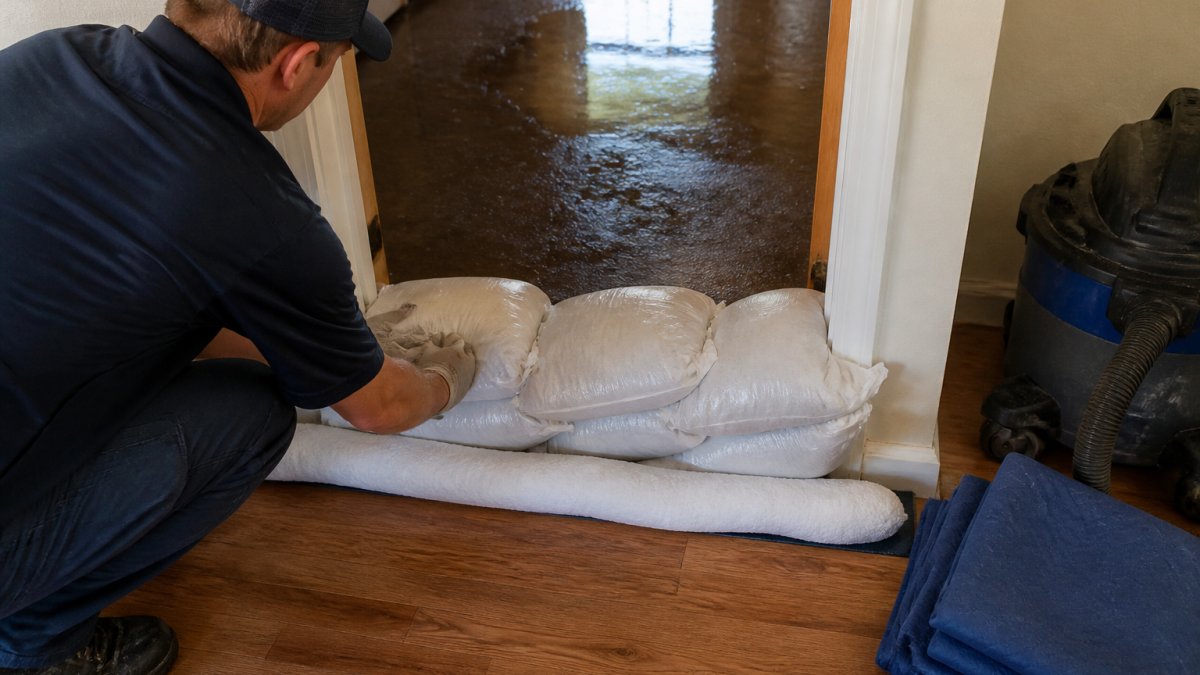
Block doorways and create barriers
Water flows downhill and spreads into every open space, so block doorways to redirect it away from unaffected rooms.
Use towels, blankets, or plastic sheeting as a temporary seal. Roll towels tightly and place them along the base of doorways.
For more serious water, use sandbags or flood barriers, placing them tightly against the doorframe with no gaps.
If you don't have sandbags, stack plastic bags filled with sand or dirt in a line across the doorway; the weight holds them in place and redirects water.
Use absorbent materials and sandbags
Water-absorbing mats pull moisture from the floor and hold it; place them where water is pooling or moving slowly.
Towels, blankets, and newspaper also absorb water.
Sandbags both block water from spreading into new areas and absorb water where placed.
Absorbent socks are long, tube-shaped barriers filled with absorbent material.
The key is layering: barriers to block flow and absorbent materials to reduce pooling.
How to Remove Standing Water From a House
Once contained, remove the water. Standing water causes damage every hour it sits, and mold begins growing within 24-48 hours, so the faster you remove it, the less damage occurs.
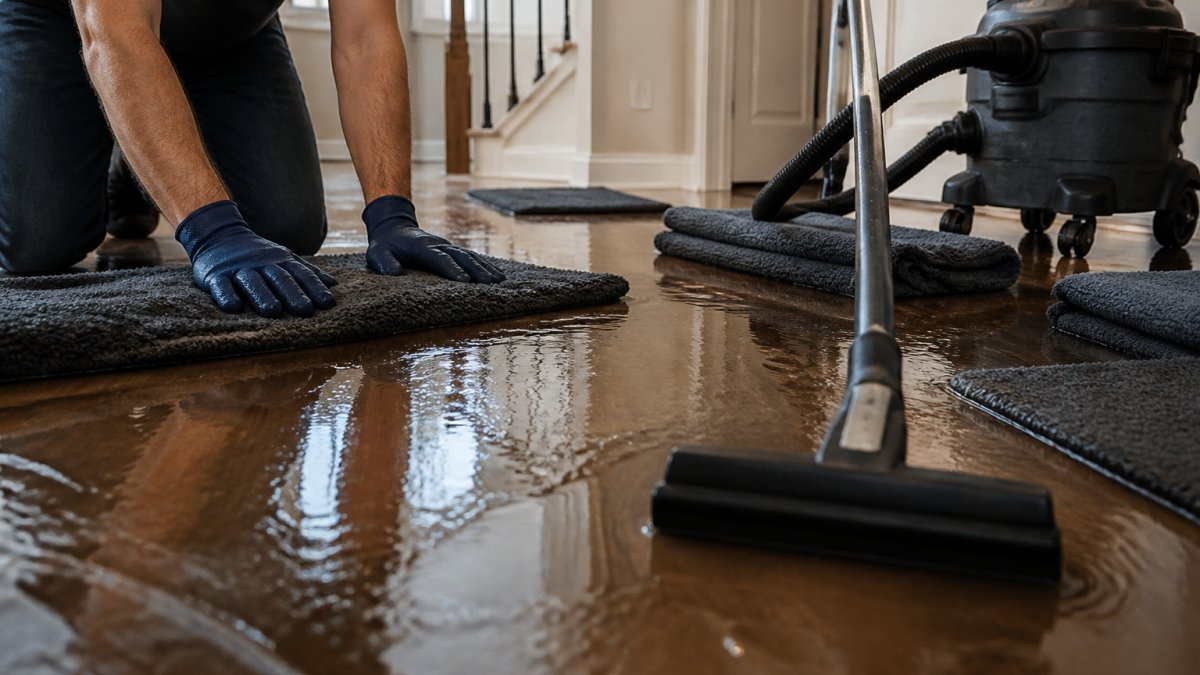
Manual removal and wet-dry vacuums
For small amounts, use mops, towels, and buckets to push water toward drains or doors.
Wet-dry vacuums (shop vacuums) handle both water and debris, sucking water off floors and out of carpets.
For carpet, extract as much water as possible, then place fans and dehumidifiers on it to finish drying.
Hard floors dry faster than carpet. Mop or vacuum the water, then use fans to dry the surface.
| Water Amount | Best Method | Time Required | Equipment |
|---|---|---|---|
| Small (under 1 inch) | Wet-dry vacuum + towels | 1-2 hours | Vacuum, mops, buckets |
| Medium (1-3 inches) | Wet-dry vacuum + pumps | 4-8 hours | Vacuum, submersible pump, hoses |
| Large (over 3 inches) | Professional extraction | 2-4 hours | Industrial pumps, dehumidifiers |
When to use pumps and professional extraction
If water is deeper than 3 inches or covers a large area, manual removal is too slow. How to Safely Remove Standing Water From a Basement provides detailed guidance on the specific technique of safely removing standing water from basements. Use a submersible pump to move water faster.
Submersible pumps sit in water and push it out through a hose. They move hundreds of gallons per hour.
Place the pump in the deepest part of the water. Run the discharge hose to a storm drain, street, or area away from your foundation.
For water deeper than 6 inches or covering multiple rooms, call a professional. AFC Cleaning & Restoration offers professional water extraction services with industrial-grade equipment. Professional extraction removes water in hours instead of days.
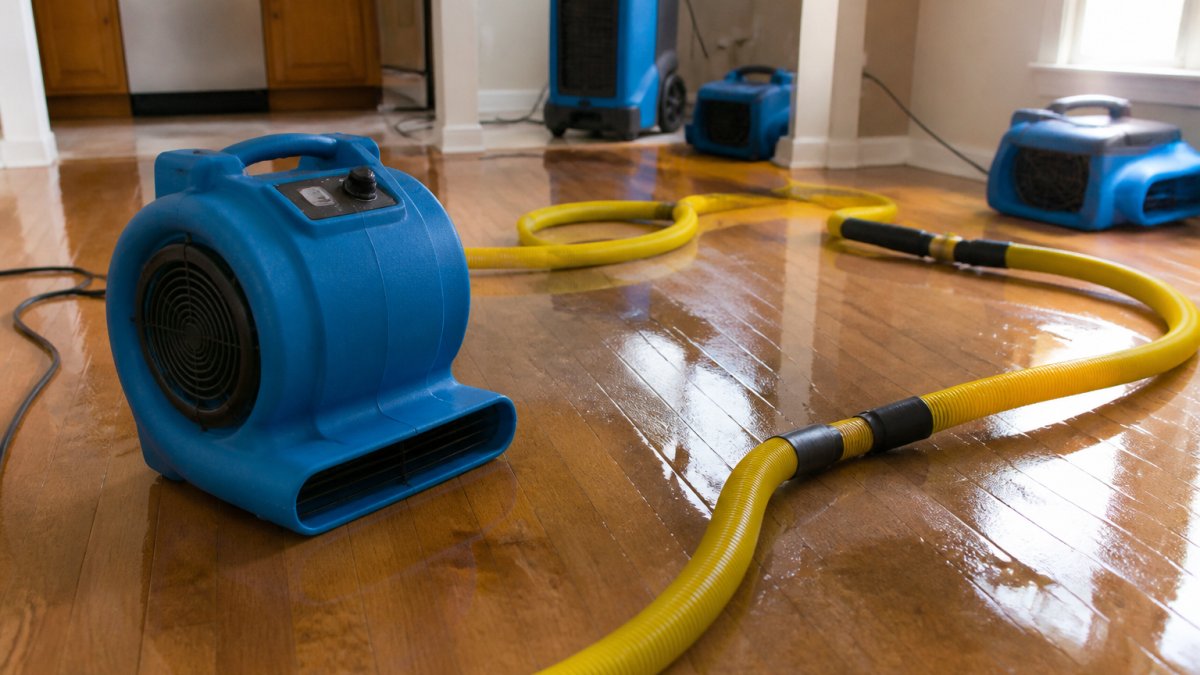
Professional teams also bring dehumidifiers and fans to start drying immediately. This prevents mold growth and reduces overall damage.
What to Do After Basement Flooding
Basement flooding is common but serious. Basements collect water from multiple sources: foundation cracks, window wells, heavy rainfall, and sump pump failure.
After water is removed, your next steps are documentation and damage control.
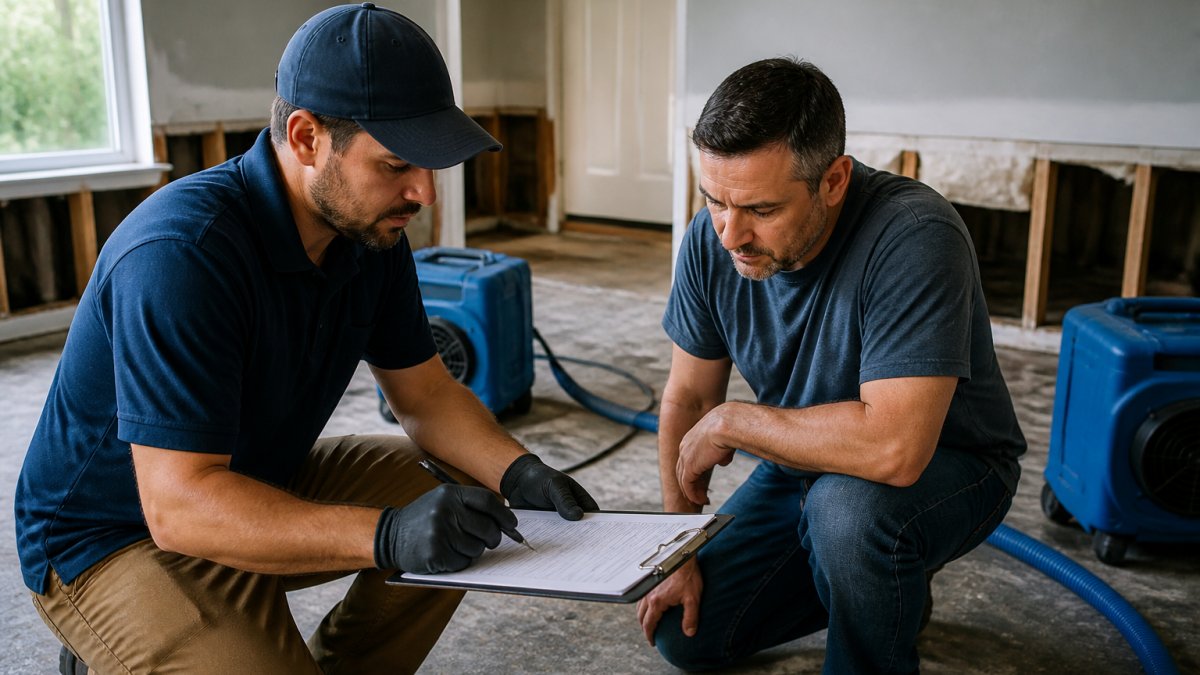
Document damage and contact your insurance
Take photos and videos of all damage before you clean or repair anything.
Make a list of damaged items with their approximate age and replacement cost.
Contact your insurance company as soon as possible. According to RubyHome's Water Damage Statistics, the average insurance payout for water damage is reported as $13,954.
Ask your insurance company if they recommend specific contractors. Some policies include preferred vendors.
How to File a Basement Flood Insurance Claim provides detailed guidance on the claims process and what documentation you'll need.
Prevent mold and secondary damage
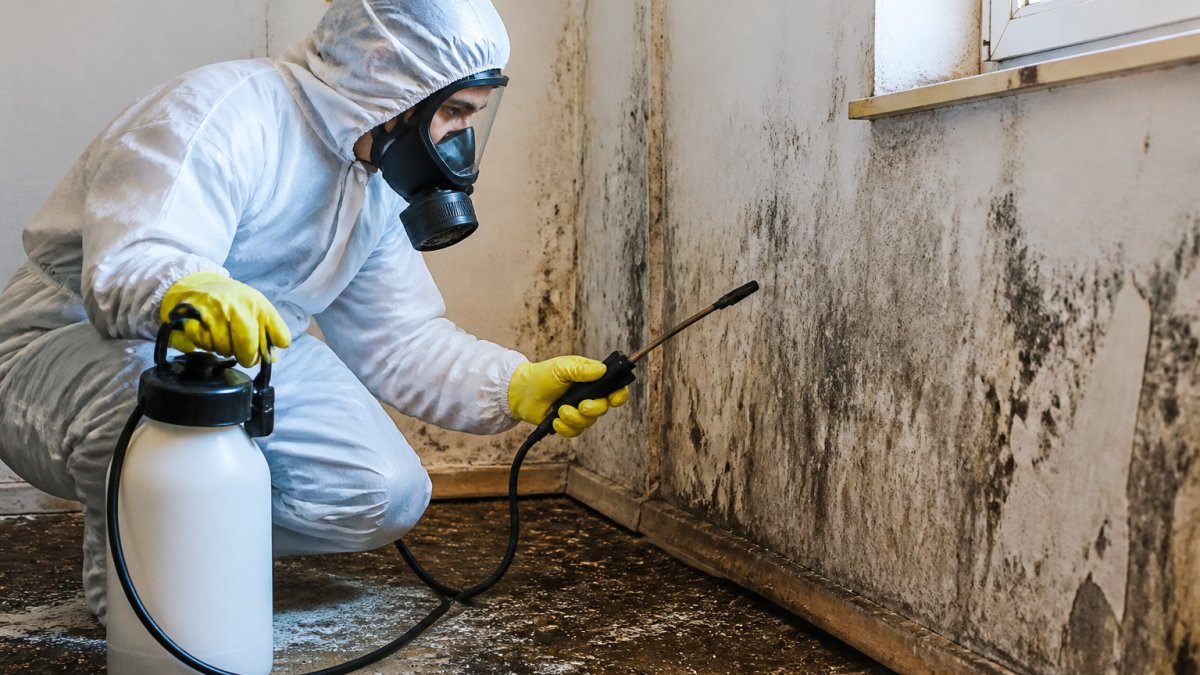
Mold grows in wet environments within 24-48 hours. Preventing mold is as important as removing water.
After water is removed, dry the affected area completely. Use fans, dehumidifiers, and open windows to circulate air.
Check for hidden moisture in walls, under flooring, and in crawl spaces.
Remove wet drywall, insulation, and flooring if they cannot dry within 48 hours.
How to Stop Basement Mold Growth for Good covers mold prevention in detail and explains what to do if mold appears.
Water Damage Cleanup Steps and Timeline
Water damage cleanup follows a specific sequence. Rushing steps or skipping stages leads to incomplete drying, hidden mold, and costly repairs later.
Hours 1-4: Containment and removal
Your first four hours determine the outcome. This is the critical window.
- Turn off electricity to affected areas
- Shut off the main water supply
- Block doorways and create barriers
Do not delay. Every hour increases damage and mold risk.
Hours 4-24: Drying and dehumidification
After water is removed, your focus shifts to drying.
- Place fans throughout affected areas to circulate air
- Run dehumidifiers continuously
- Open windows if weather permits (avoid this if humidity outside is high)
Drying is slow. Do not assume an area is dry because it looks dry. Use a moisture meter to verify dryness before you move to the next step.
Days 2-7: Inspection, restoration, and mold prevention
By day two, drying should be well underway. This is when you inspect for hidden damage and begin restoration.
- Continue running dehumidifiers and fans
- Inspect walls, ceilings, and crawl spaces for moisture
- Test for mold growth
Most homes take 5-7 days to dry completely. Some take longer depending on humidity, temperature, and damage extent.
Common Mistakes to Avoid During Water Emergencies
Mistakes made in the first hours often cause more damage than the water itself.
Waiting to call for help. Many homeowners try to handle large water damage alone.
Ignoring electrical hazards. Water and electricity are dangerous.
Failing to document damage. Take photos before you clean or repair anything.
Not addressing humidity. Visible water is obvious. Hidden moisture in walls is not.
When to Call a Professional Water Damage Restoration Service
Some water damage requires professional help. Knowing when to call saves time and money.
Call a professional immediately if:
- Water is black (contains sewage)
- Water covers more than one room
- Water is deeper than 3 inches
Professional restoration teams bring industrial equipment, expertise, and speed. Benefits of Professional Flood Damage Cleanup explains why professional services are beneficial when deciding whether to hire help.
Home and Business Water Damage Mitigation in Kansas City explains what professional mitigation includes and how the process works.
Professional teams also work directly with insurance companies. They handle documentation and claims coordination.
The cost of professional help is often less than the cost of damage caused by delayed action or incomplete drying.
Frequently Asked Questions
What should I do first when water starts spreading through my house?
Turn off the water at the main shutoff valve immediately if the water is from a plumbing leak or burst pipe. If the water is from flooding or heavy rainfall, move to higher ground and ensure everyone in the home is safe. Turn off electricity to affected areas if water is near outlets or appliances. Once safety is secured, begin moving valuables out of the affected area and start containing the water with towels, sandbags, or absorbent barriers to prevent it from spreading to other rooms. Call a professional water damage restoration service if the volume is large or if you cannot safely manage the situation.
How do I stop water from spreading from one room to another?
Use towels, sandbags, or absorbent socks to block doorways and seal gaps where water can flow. For larger volumes, deploy flood barriers or water-absorbing mats along the threshold. Close doors to unaffected rooms and seal them with towels if needed. If water is pooling, use a wet-dry vacuum or pump to remove standing water before it creeps under doors or through adjacent spaces. Redirect any active water flow away from doorways using towels or temporary channels. For basement flooding, this containment approach buys time while you arrange professional extraction and drying.
When should I shut off the water or electricity after a leak?
Shut off the water immediately at the main shutoff valve if the water is coming from a plumbing leak, burst pipe, or water line. Do not wait. If you cannot locate the main shutoff, turn off the water supply at the meter. Shut off electricity to the affected area right away if water is near outlets, light switches, appliances, or electrical panels, or if water is actively spreading toward them. If you are unsure whether it is safe to touch the shutoff, leave the area and call a professional. For floodwater from external sources, focus on shutting off electricity first and avoiding contact with the water.
What materials work best to absorb and stop water from spreading?
Sandbags and absorbent socks are the most effective for blocking doorways and directing water flow. Water-absorbing mats and towels work for smaller leaks and spills. For standing water, use a wet-dry vacuum or submersible pump to remove it entirely rather than relying on absorbent materials alone. Plastic sheeting can redirect water flow in combination with sandbags. For ongoing drainage, set up sump pumps in basements or crawl spaces to remove water automatically. The choice depends on the water volume, source, and the area affected, small residential leaks respond to towels and mats, while basement flooding or heavy rainfall requires pumps and professional-grade barriers.
Water spreading through your home is stressful. But quick action stops most damage. Turn off power and water, contain the spread, remove standing water, and dry thoroughly. If you're overwhelmed or the damage is extensive, contact AFC Cleaning & Restoration for immediate professional help. Our team responds 24/7 with the equipment and expertise to stop water damage and restore your home to pre-disaster condition.