 comparison
DIY Cleanup vs Professional Water Damage Repair
Last Updated: October 24, 2026
Quick Summary
Water damage repair depends on the scope and contamination level. DIY cleanup works only for clean water affecting less than 100 square feet of hard surfaces within 24 hours, while contaminated water, porous materials, larger areas, or delays require professional restoration to prevent hidden moisture, mold growth, and insurance complications.
- DIY cleanup is limited to clean water on hard surfaces under 100 square feet stopped within 24 hours
- Mold can begin growing within 48 to 72 hours if moisture remains in walls, carpet, or insulation
- Professional restoration includes moisture meters, industrial drying equipment, and documented verification that DIY work typically lacks
- Equipment rental, supplies, and disposal costs for DIY can be comparable to professional mitigation on small jobs
- Contaminated water from toilets, sewage, or floodwater requires immediate professional handling and poses serious health risks
Table of Contents
- When DIY Water Damage Cleanup Makes Sense
- Water Damage Cleanup Steps for Minor Incidents
- When Professional Water Damage Repair Is Required
- Water Damage Restoration Cost: DIY vs Professional
- Water Damage Restoration Timeline and Drying
- Water Damage Insurance Claim and Documentation
- Getting Professional Help After Water Damage
- Frequently Asked Questions
When DIY Water Damage Cleanup Makes Sense
DIY cleanup can work for specific, limited water damage scenarios, but only when conditions are right. The distinction between what homeowners can safely handle and what requires professional restoration often determines whether you'll face hidden damage and mold growth later.
Clean water damage affecting less than 100 square feet of hard surfaces (tile, concrete, laminate) is where DIY cleanup fits. According to Roto-Rooter's water damage guidance, this narrow scenario involves water from a burst pipe or supply line that you've stopped within 24 hours. The water hasn't touched drywall, carpet, insulation, or porous materials.
The catch: "narrow" is the operative word. Most water damage doesn't fit these conditions. Contaminated water (from toilets, sewage, or floodwater) requires professional handling from the start. Carpet, drywall, and insulation absorb moisture that a household dehumidifier can't fully extract. Missed moisture hiding in walls or beneath flooring becomes mold within 48 to 72 hours.
The real cost of DIY isn't the initial cleanup, it's the secondary damage you don't see until it's too late.
Water Damage Cleanup Steps for Minor Incidents
If your situation meets the DIY threshold, follow these steps in order. Timing matters: the first 24 hours are critical.
Step 1: Stop the water source. Locate the shut-off valve for the affected pipe and close it. If the water is from an external source like a burst hose, move it or cap it.
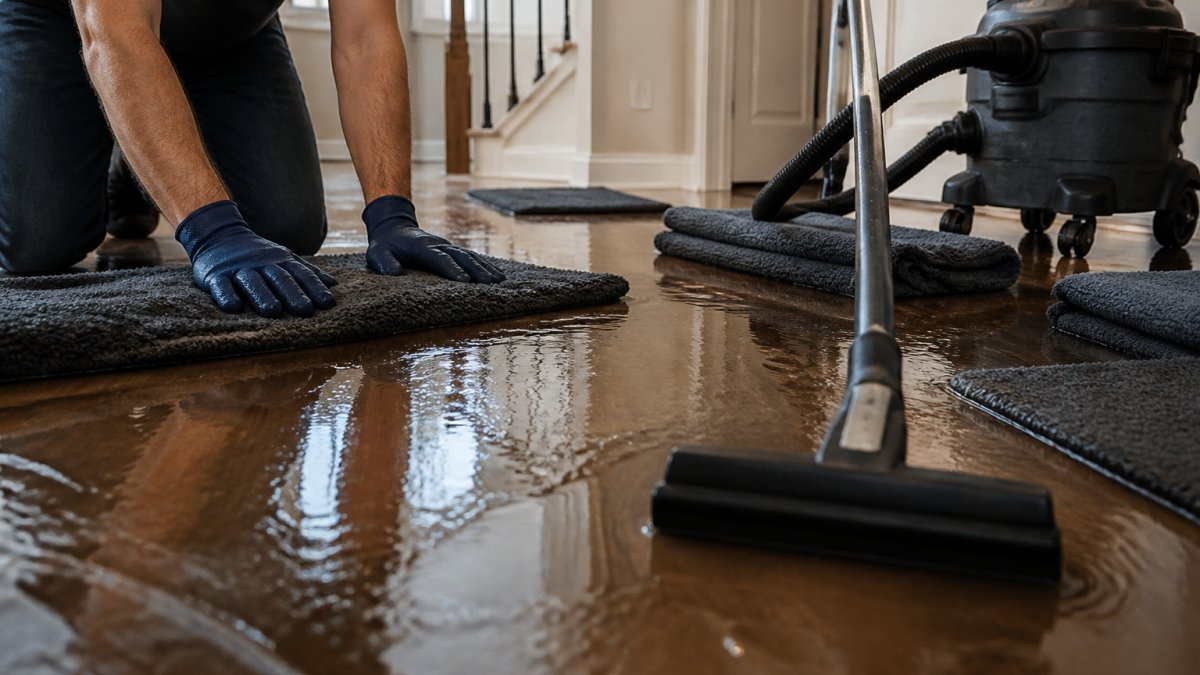
Step 2: Extract standing water. Use a wet vacuum (not a household vacuum) to remove pooled water. Work from the highest point downward. This step typically takes 2 to 4 hours depending on volume.
Step 3: Remove wet materials if safe. Pull up wet carpet edges and move furniture to allow airflow underneath.
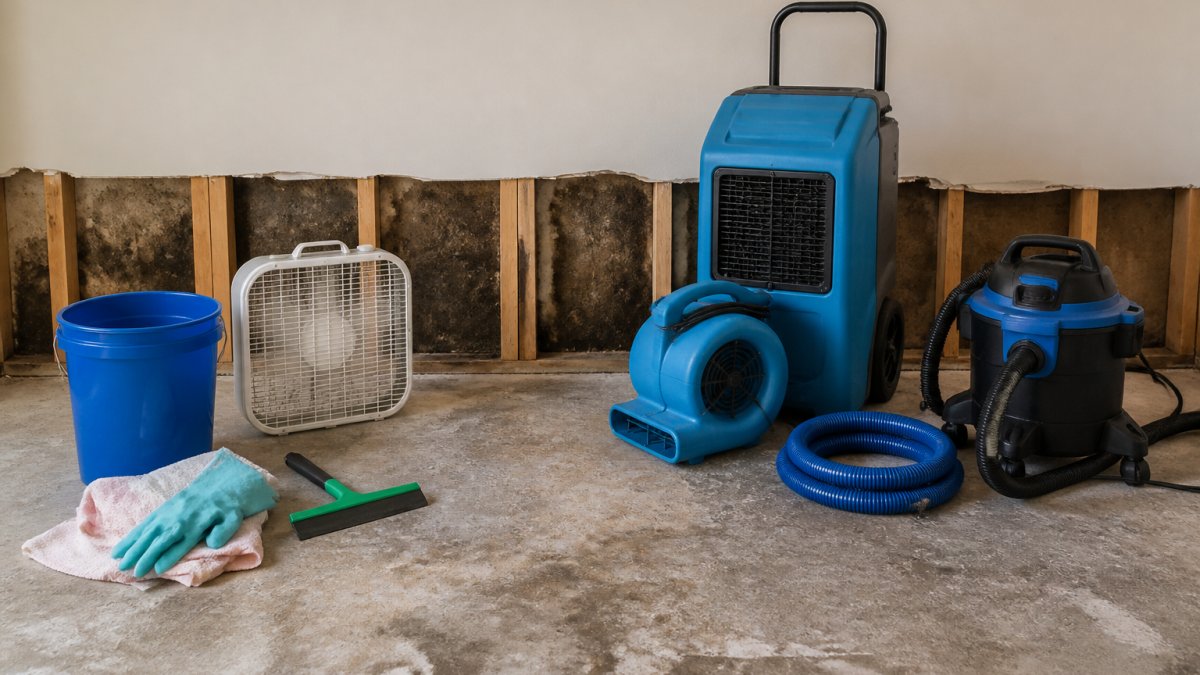
Step 4: Dry everything thoroughly. Open windows for ventilation. Position box fans to push air across wet surfaces. Rent a commercial dehumidifier if humidity stays above 50% after 24 hours.
Step 5: Monitor for mold. Check the affected area daily for visible mold (black or green spots) or musty odors.
When Professional Water Damage Repair Is Required
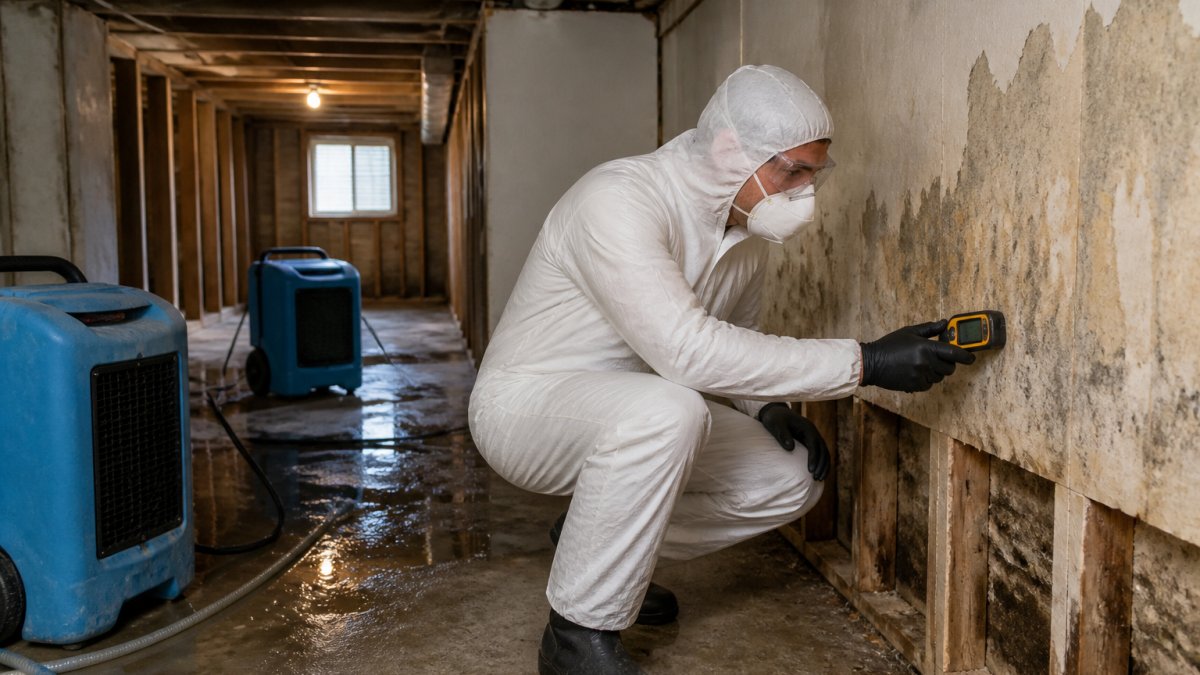
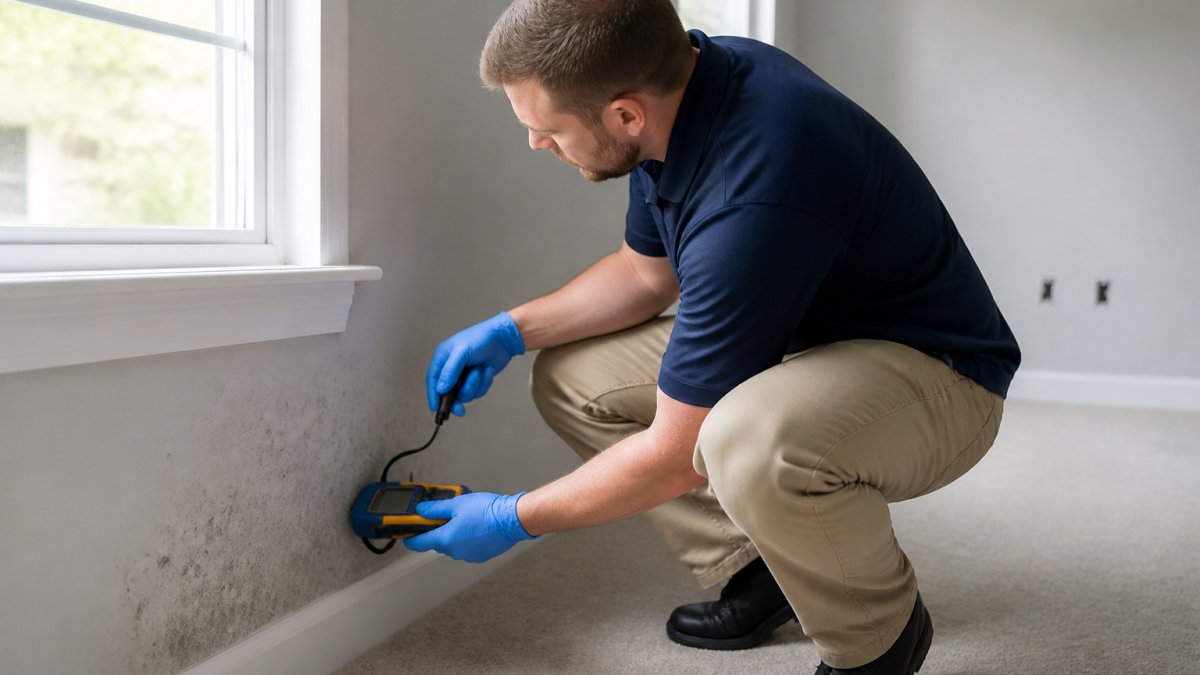
According to The Home Depot's water damage restoration guide, professional restoration involves water extraction, structural drying, moisture measurement, and mold prevention, not just removing standing water. Professionals use moisture meters to detect hidden moisture in walls and floors that homeowners can't see.
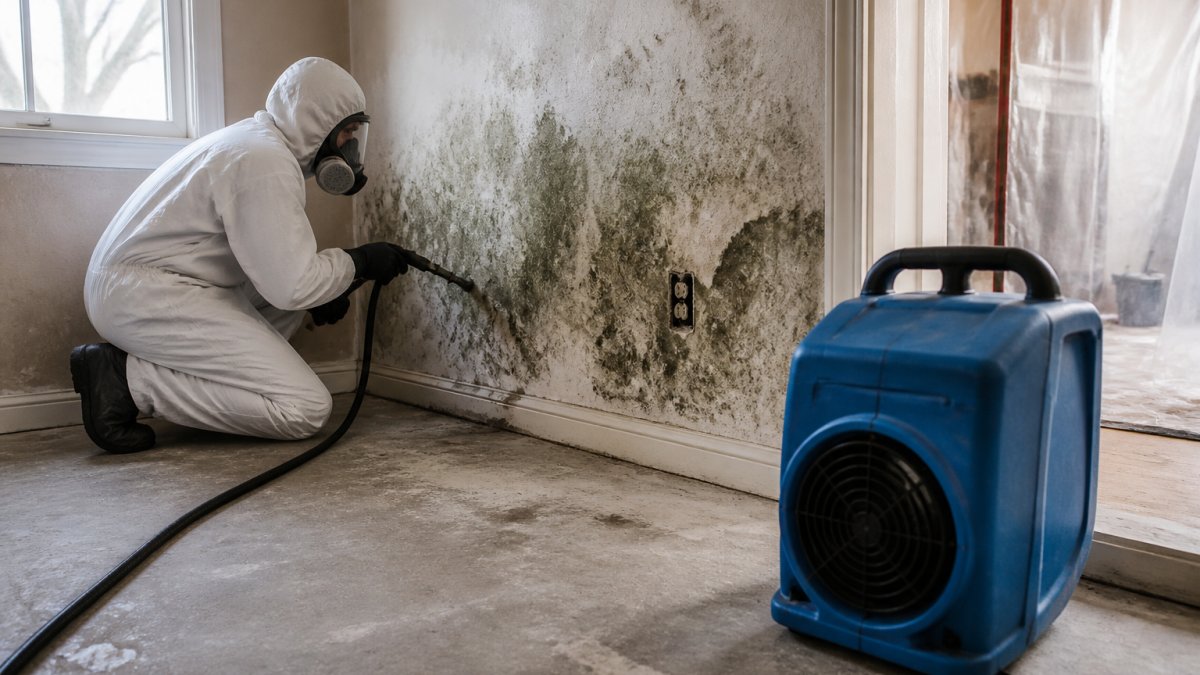
Contaminated water (Category 2 and 3 damage) requires containment, personal protective equipment, and sanitization. Sewage backup or floodwater poses serious health risks and must be handled by certified technicians. Even if you remove the visible water, bacteria and pathogens remain in materials and soil.
At AFC Cleaning & Restoration, our IICRC-certified technicians arrive with moisture detection equipment, industrial drying gear, and the expertise to identify damage you'd otherwise miss. We document everything for insurance claims and ensure drying is complete before you occupy the space again.
Water Damage Restoration Cost: DIY vs Professional
Cost is the single biggest reason homeowners attempt DIY cleanup, and it's also where the comparison is most often done dishonestly. A fair comparison has to line up the same scope of work on both sides: extraction, drying, moisture verification, material disposal, and any follow-up repair.
Start with the professional benchmark. Full water damage restoration can vary significantly in cost depending on the extent of the damage and the scope of work required. Water mitigation alone, extraction plus initial drying, before any rebuild, also varies.
A like-for-like breakdown looks more like this: Learn the detailed cost breakdown of professional water damage repair to understand how professional pricing compares to DIY expenses.
| Line Item | DIY (7-day small clean-water job) | Professional Restoration |
|---|---|---|
| Wet/dry vacuum rental | $30-$50 per day, often $150-$300 for the week | Included in service price |
| Commercial dehumidifier rental | $40-$80 per day, roughly $280-$560 for the week | Included |
| Air movers (2-4 units) | $20-$40 per day each, $280-$560 for the week | Included |
| Moisture meter (purchase or rental) | $40-$150 to buy, or $20-$40 per day to rent | Included; readings documented |
| Cleaning supplies, PPE, bags | $75-$200 | Included |
| Replacement materials (drywall, baseboard, insulation) | $150-$600 for a small area | Billed as part of rebuild scope |
| Disposal / dumpster | $100-$400 | Included or billed |
| Labor | Your time, often 15-30 hours over a week | Crew labor included |
| Moisture verification and drying report | Usually not performed | Included |
| Follow-up mold remediation if drying fails | $2,000-$6,000+ depending on area | Reduced by verified drying |
Add the DIY column up honestly and a week of rental gear plus supplies plus disposal can be a significant expense before you count your own labor or any replacement materials.
The bigger asymmetry is risk transfer. When a pro dries a wall cavity and signs off on moisture content, the liability for a missed wet stud sits with them.
Before renting anything, get one written professional estimate for the same scope. Even if you plan to DIY, the estimate tells you the real market price you're trying to beat and gives you a baseline for an insurance conversation.
Water Damage Restoration Timeline and Drying
Drying time depends on the extent of damage, materials affected, and environmental conditions. For a small clean-water incident on hard surfaces, structural drying typically takes 3 to 7 days with proper equipment. For carpet and drywall, expect 7 to 14 days. Extensive damage affecting multiple rooms or materials can take 2 to 4 weeks.
Professional restoration companies use moisture meters to verify when materials have dried to safe levels (typically 12% to 15% moisture content). This objective measurement prevents premature occupancy and ensures mold prevention. DIY drying often relies on guesswork, you assume it's dry because it feels dry on the surface, but moisture can remain deep in drywall or subflooring.
The timeline also depends on environmental factors. High humidity, cold temperatures, and poor ventilation slow drying significantly. Industrial dehumidifiers and air movers maintain optimal conditions and accelerate the process. Without them, a wet basement might take weeks to dry naturally, increasing mold risk.
Water Damage Insurance Claim and Documentation
Insurance is where DIY cleanup most often goes wrong, not because the work was bad, but because the evidence was destroyed before the adjuster saw it. Follow step-by-step guidance on handling your water damage insurance claim to protect your documentation and ensure proper reimbursement.
Document before you remove anything. The order matters:
- Photograph and video the scene before extraction. Wide shots of each affected room, close-ups of the water line on walls and baseboards, and shots of the source (the burst pipe, the failed connector, the appliance). Include a photo of a clock or phone showing the date and time.
- Preserve the failed component. Keep the burst hose, cracked fitting, or failed valve. Adjusters and contractors use it to confirm the cause was sudden rather than gradual. Do not throw it away during cleanup.
- Record moisture readings if you have a meter. Note the readings, the locations, and the dates. If you don't have a meter, note where water was visibly standing and for how long.
- Keep every receipt. Equipment rental, supplies, replacement materials, disposal, and any emergency mitigation you paid for. Insurers reimburse documented mitigation costs that prevent further damage, even before a claim is approved.
- Log the timeline. When the water was discovered, when the source was shut off, when extraction began, and when drying started. Mold timelines and mitigation reasonableness are judged against these dates.
A common pattern is for homeowners to rip out wet carpet the same day, then discover the adjuster wanted to see the water line and the pad condition. Once the carpet is at the curb, that evidence is gone.
DIY work does not automatically void a claim, but it changes the burden of proof. When you handle cleanup yourself, you become responsible for showing that the damage was sudden, that mitigation was reasonable, and that drying was complete.
If you plan to DIY, call your insurer before you start major removal. Ask three questions: Is this loss likely covered? What documentation do you need from me? Will you send an adjuster before I remove materials?
Preserve the failed part, photograph the water line before extraction, keep every receipt, and log the timeline. DIY cleanup is allowed under most policies, but the documentation burden shifts to you, and missing evidence is the most common reason a legitimate claim gets reduced.
Getting Professional Help After Water Damage
When you decide professional help is needed, the response time matters. Water damage worsens by the hour, mold can begin growing within 48 to 72 hours. Companies offering 24/7 emergency response can arrive quickly and prevent secondary damage.
Learn how to choose a qualified restoration company to ensure you're working with certified professionals. Look for IICRC certification (Institute of Inspection, Cleaning and Restoration Certification), which requires training and ongoing education.
For residents in the Kansas City area, AFC Cleaning & Restoration offers water and flood damage mitigation with IICRC-certified technicians available 24/7, 365 days a year. We arrive with moisture detection equipment, industrial drying gear, and the documentation your insurance claim requires.
The difference between calling immediately and waiting a few hours can be thousands of dollars in damage prevention.
Water damage decisions come down to one question: can you afford to get it wrong? For small, clean-water incidents on hard surfaces, DIY cleanup is feasible if you act fast and monitor closely.
Frequently Asked Questions
Can I clean up water damage myself?
DIY water damage cleanup is appropriate only for clean water affecting less than 100 square feet of hard surfaces, extracted within 24 hours of the incident. If the water is contaminated, the affected area is larger, or drying takes longer, professional restoration is necessary. Hidden moisture in walls, insulation, and flooring often requires professional equipment like moisture meters and dehumidifiers to prevent mold growth and structural damage.
How much does professional water damage restoration cost?
Professional water damage restoration costs vary significantly. Pricing depends on factors such as the water category, the affected area, the extent of structural damage, and whether contaminated water or mold remediation is involved. Contact AFC Cleaning & Restoration for a detailed assessment and quote specific to your situation.
How long does water damage restoration take?
Water damage restoration timelines vary based on severity and water category. Clean-water incidents affecting small areas may dry within 24-48 hours with proper equipment. Larger projects or contaminated water typically require 5-7 days or longer. Structural drying using professional air movers and dehumidifiers is critical to prevent secondary damage and mold growth. IICRC-certified technicians use moisture meters to verify drying is complete before finishing repairs.
Does homeowners insurance cover water damage cleanup?
Most homeowners insurance policies cover sudden, accidental water damage from burst pipes or storms, but exclude gradual leaks and flooding. Proper documentation and professional assessment strengthen your claim. AFC Cleaning & Restoration can help document damage and coordinate with your insurance company throughout the restoration process.
Can water damage cause mold if I clean it up myself?
Yes. Incomplete drying and hidden moisture are the primary causes of mold growth after water damage. DIY cleanup often misses moisture trapped in walls, insulation, and flooring, creating conditions for mold and mildew within 24-48 hours. Professional restoration uses structural drying techniques, moisture measurement, and proper ventilation to eliminate hidden moisture. Mold remediation is more expensive and disruptive than preventing it during initial restoration.