 blog
Is Professional Mold Inspection Worth It for New Homes?
Last Updated: October 22, 2026
Quick Summary
Is professional mold inspection worth it for new homes because hidden moisture damage often goes undetected until it becomes expensive to fix. A professional assessment catches these problems early, when remediation is simpler and cheaper, and gives you leverage to negotiate repairs with the builder before closing.
- Professional mold inspections cost $300-$700 for visual assessment alone, or $400-$800 when laboratory sampling is added.
- The best time to inspect is before closing, giving you leverage to negotiate repairs with the builder rather than owning the problem afterward.
- New homes built during rainy periods or in humid climates carry elevated mold risk even though builders' final walkthroughs focus on cosmetics, not moisture intrusion.
- An inspection can identify visible mold and moisture problems but cannot prove a home is completely mold-free or guarantee mold won't develop in the future.
- Schedule inspection within 30 days of closing if you missed the pre-closing window, before moving belongings in for easier access to all areas.
Table of Contents
- Why New Homes Still Need Mold Inspection
- Mold Inspection When Buying a House: Timing and Triggers
- What Does a Mold Inspection Include
- Professional Mold Inspection vs. DIY Testing
- Mold Inspection Cost and What You'll Pay
- The Real Value: What an Inspection Can and Cannot Establish
- Making the Decision: A Practical Framework for New-Home Buyers
- Frequently Asked Questions
Why New Homes Still Need Mold Inspection
When you're asking is professional mold inspection worth it for new homes, remember that new construction doesn't guarantee a mold-free home. Builders work on tight schedules, and moisture problems can develop during the building process itself. Water leaks during framing, improper grading that channels water toward the foundation, and inadequate ventilation in new HVAC systems all create conditions where mold thrives before you ever move in.
The reality is straightforward: is professional mold inspection worth it for new homes because hidden moisture damage often goes undetected until it becomes expensive to fix.
Most homeowners assume the builder's final walkthrough covers mold risk. It doesn't. Builders focus on cosmetic issues and code compliance, not moisture intrusion patterns or air quality. That's where a professional inspection adds real value.
Mold Inspection When Buying a House: Timing and Triggers
The best time to get a mold inspection is before you close on a new home purchase. That gives you leverage to negotiate repairs with the builder.
Timing matters more in new construction than in resale. There are three windows worth knowing:
- During framing, before drywall goes up. This is the highest-value window because wall cavities are open. An inspector can see wet framing, stained sheathing, and poorly detailed flashing that will be hidden within days. If your contract allows a pre-drywall walkthrough, ask the builder to schedule it and bring an inspector.
- After the final walkthrough, before closing. This is the standard window most buyers use. Request the inspection as soon as the walkthrough is scheduled so you have 3-7 days to act on findings before the closing date.
- Within the first 30 days after closing. If you missed the pre-closing window, inspect before you move belongings in. Empty rooms give the inspector clear access to baseboards, closets, and the HVAC system, and you still have time to file a warranty claim while the paper trail is fresh.
Specific triggers that warrant immediate inspection include:
- Visible water stains on ceilings, walls, or subflooring
- A musty odor anywhere in the home
- Evidence of recent water intrusion or flooding
Even without these signs, a new home in a humid climate or one built after heavy rain deserves professional assessment. According to GPI Services guidance on professional mold inspections, a full professional inspection typically takes one to two hours, depending on property size and whether visible mold or complex moisture issues are present.
One practical note on contingencies: most new-home contracts do not include a mold-specific inspection contingency the way resale contracts include a general inspection contingency. Read your contract before you schedule.
What Does a Mold Inspection Include
A professional mold inspection is not the same as mold testing. An inspection is a visual assessment combined with moisture detection. Testing involves collecting samples for laboratory analysis.
Visual Assessment and Moisture Detection
The inspector examines all accessible areas: attics, basements, crawl spaces, HVAC systems, and interior walls.
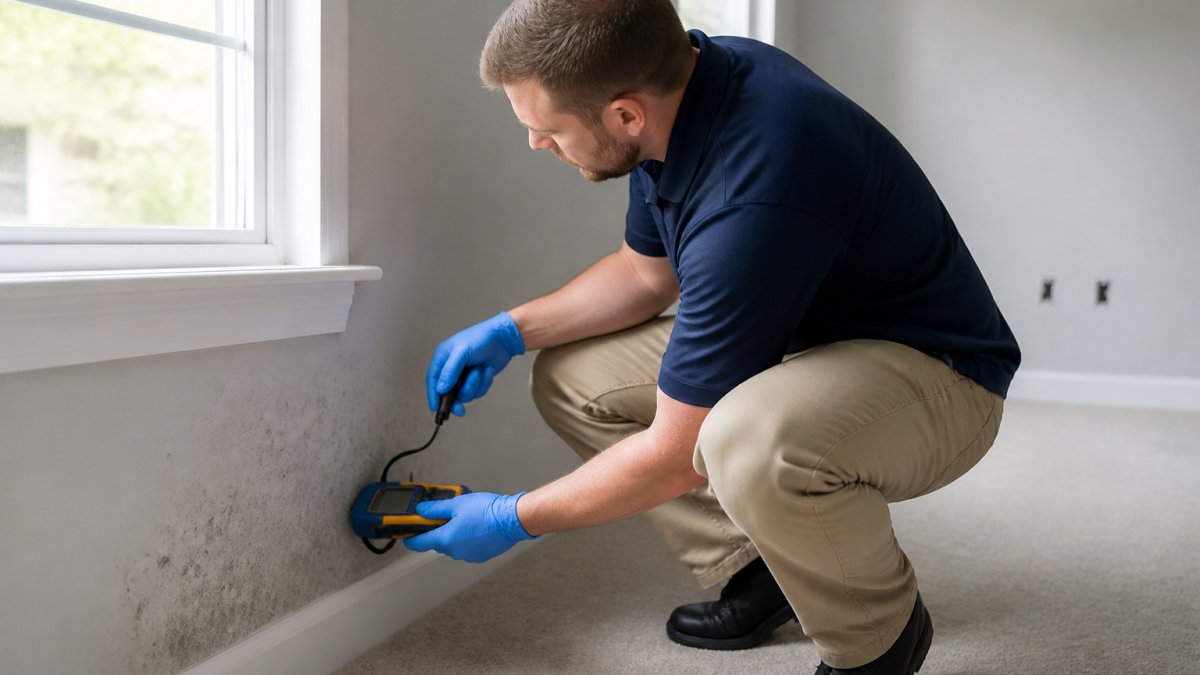
Moisture detection is the critical part. Inspectors use moisture meters to measure water content in building materials.
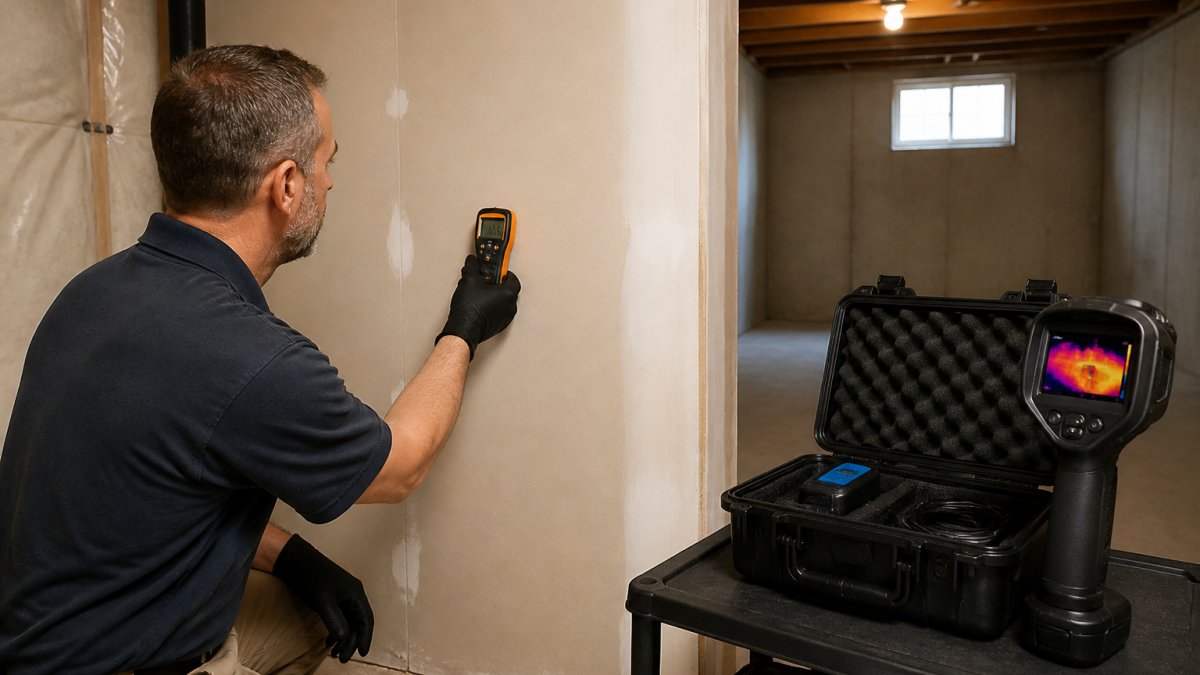
The inspector documents findings with photos and notes. A detailed report explains what they found, where, and what it means for your home.
Air Sampling and Surface Sampling
Air sampling collects mold spores from the air. Surface sampling uses swabs or tape lifts to test materials directly. These tests identify mold species and spore counts.
Here's the catch: air sampling has real limitations. Spore counts vary hour to hour.
According to RestoreAdvisor's analysis of mold inspection costs, adding laboratory sampling to a standard inspection raises the total cost to $400-$800 for a single-family home, compared to $300-$700 for inspection alone.
Surface sampling is more useful. If the inspector sees something suspicious, a swab test confirms whether it's actually mold.
Professional Mold Inspection vs. DIY Testing
DIY mold test kits cost $15-$50 and are available online. They seem convenient. They're also unreliable.
A DIY kit typically includes a petri dish you expose to air, then mail to a lab.
Professional inspection differs fundamentally. The inspector has training in building science.
A professional inspection costs more upfront but saves money later by identifying real problems versus false alarms.
DIY tests frequently produce false positives. A positive result without professional context often leads homeowners to spend thousands on unnecessary remediation. Always follow a positive DIY result with a professional assessment before making decisions.
Mold Inspection Cost and What You'll Pay
Most homeowners pay $300-$700 for a professional mold inspection, with a national average around $650, according to Molekule's 2026 mold inspection cost guide.
Factors that increase cost:
- Larger homes (more square footage to inspect)
- Difficult-to-access areas (crawl spaces, attics requiring special equipment)
- Multiple moisture problems requiring detailed investigation
For a new home inspection, budget $300-$700 for a visual inspection alone. If you add air or surface sampling, expect $400-$800 total.
This is an investment that typically pays for itself. Catching mold before closing lets you negotiate repairs with the builder.
The Real Value: What an Inspection Can and Cannot Establish
Here's what a professional inspection CAN do:
- Identify visible mold and moisture problems
- Locate areas where conditions favor mold growth
- Measure moisture levels in building materials
Here's what it CANNOT do:
- Prove your home is completely mold-free (mold exists everywhere in nature)
- Guarantee mold won't develop in the future
- Determine whether past mold was fully remediated
An inspection answers whether your new home has moisture problems. It doesn't promise perfect conditions forever.
Making the Decision: A Practical Framework for New-Home Buyers
Use this framework to decide whether a professional mold inspection makes sense for your situation, and what to do with the results once you have them.
| Situation | Recommendation | Why |
|---|---|---|
| New home in a humid climate | Get inspection | High moisture risk; builder walkthroughs don't assess air quality or hidden moisture |
| New home framed during heavy rain | Get inspection, ideally pre-drywall | Wet framing and sheathing are commonly closed up before they dry |
| Visible water stains, musty odor, or recurring condensation | Get inspection with targeted sampling | Clear warning signs; sampling confirms whether a specific area is actively growing mold |
| New home, dry climate, no visible issues, strong builder warranty | Consider a visual inspection only | Lower risk, but a visual inspection is the cheapest way to document baseline conditions |
| Closing in under a week | Get a visual inspection; skip lab sampling unless problems are found | Faster and cheaper; sampling without a visible problem rarely changes the decision |
| Builder refuses access before closing | Inspect within 30 days of closing, before move-in | Preserves warranty leverage and gives you an empty home for access |
Three questions decide most cases:
- Is there any sign of moisture right now? Visible staining, a musty smell, soft drywall, or humidity that stays above 50% means yes. Get an inspection.
- Was the home exposed to moisture during construction? A rainy framing period, a roof that went on late, or a slab that stayed wet are all reasons to inspect even without visible signs.
- What does the builder's warranty actually cover? Most new-home warranties cover workmanship and structural defects for a defined period, but they typically exclude conditions the buyer could have discovered before closing and often require written notice within a set window. An inspection report created before closing is the cleanest way to put the builder on notice.
What to do with the findings
An inspection report is only useful if it changes what happens next. A practical sequence:
- Document before you negotiate. Ask the inspector for photos, moisture readings with locations, and a written scope that distinguishes active moisture from historical staining. A report that says "moisture present in northwest bedroom wall cavity" is actionable; "possible mold" is not.
- Put the request in writing to the builder. Reference the specific findings and ask for corrective work, a re-inspection, or a credit. Keep the request inside the inspection contingency or warranty notice window in your contract.
- Arrange follow-up verification. After the builder's crew dries or replaces materials, have the same inspector re-check the area. A clearance check on the specific location is usually far cheaper than a full second inspection.
Cost versus consequences
A visual inspection typically runs $300-$700, and adding laboratory sampling brings the total to roughly $400-$800 for a single-family home, per RestoreAdvisor's analysis of mold inspection costs. Put that next to the disruption of concealed moisture damage: opening and replacing drywall, treating framing, drying a wall cavity, and repainting a room can each run into the thousands, and the work is far more disruptive after you've moved in than before closing.
A professional assessment isn't just about finding problems, it's about knowing your home's actual condition so you can make informed decisions about repairs or remediation before you sign the final paperwork.
New homeowners in humid regions or those who want concrete answers about moisture conditions before closing. An inspection costs $300-$700 and can save thousands in undetected water damage.
Frequently Asked Questions
Should you get a mold inspection when buying a new house?
A professional mold inspection when buying a house makes sense if the home has visible water stains, a musty odor, or signs of moisture intrusion. New construction can still harbor hidden mold in crawl spaces, attics, or HVAC systems if the builder didn't manage moisture properly during framing or if water damage occurred before closing. An inspection takes one to two hours and costs $300-$700 for a standard single-family home. The real question is whether the property shows risk factors, not whether it's new.
What does a professional mold inspection include?
A professional mold inspection includes a visual assessment of all accessible areas (attic, basement, crawl space, HVAC system) using moisture meters and thermal imaging to spot damp building materials. The inspector documents visible mold, water damage, and conditions that favor mold growth. Optional laboratory analysis, air sampling or surface swab samples, adds $100-$150 and identifies mold species and spore counts. The inspection report outlines findings and recommends remediation if needed. Most inspections do not include remediation, only assessment.
How much does a mold inspection cost?
Most homeowners pay $300-$700 for a professional mold inspection of a standard single-family home, with a national average around $650. Adding laboratory sampling raises the total to $400-$800. Cost depends on property size, accessibility, and whether the inspector collects samples for analysis. Get a quote from a qualified, independent inspector in your area; pricing varies by region and inspector credentials.
Is professional mold inspection better than DIY testing?
Professional mold inspection is far more reliable than DIY testing. A certified inspector uses calibrated moisture meters, thermal imaging, and visual expertise to identify conditions where mold thrives, even if no mold is yet visible. DIY air-quality test kits often produce unreliable results and can create unnecessary concern without actionable guidance. A professional inspection report is also defensible in a real estate transaction and gives you leverage to negotiate repairs or credits with the builder or seller.
A professional mold inspection for a new home is worth it when moisture risk exists. The inspection itself costs between $300 and $700, but catching water damage or mold early prevents expensive remediation later. AFC Cleaning & Restoration's IICRC-certified technicians can assess your new home's moisture conditions, identify hidden problems, and recommend specific solutions. Contact us for a professional inspection that gives you the confidence your new home is truly move-in ready.