 how-to
Improving Indoor Air Quality in Kansas City Offices: A Step-by-Step Guide
Quick Summary
Improve indoor air quality in Kansas City offices by controlling pollutant sources first, then strengthening ventilation, upgrading filtration, and preventing moisture that feeds mold. Test the air to set a baseline so you can verify each change worked.
- Move printers and copiers away from desks and switch to low-VOC cleaning products where possible.
- Fix leaks and dry wet materials within 24 to 48 hours to prevent mold growth.
- Confirm outdoor air dampers open during occupied hours and run fans continuously if your system allows.
- Replace HVAC filters every one to three months, depending on filter type and building conditions.
- Keep indoor humidity below roughly 60 percent in closed spaces to limit moisture-related problems.
Table of Contents
- Why Office Indoor Air Quality Slips Over Time
- Step 1: Identify and Control Pollutant Sources
- Step 2: Run Office Air Quality Testing to Set a Baseline
- Step 3: Apply Office Ventilation Best Practices
- Step 4: Upgrade Filtration and Maintain the HVAC System
- Step 5: Prevent Moisture and Commercial Mold Growth
- Improving Air Quality Without Relying on an Air Purifier
- Booking a Kansas City Indoor Air Assessment for Your Office
- Frequently Asked Questions
Why Office Indoor Air Quality Slips Over Time
Last Updated: November 5, 2026
Most offices don't start with bad air. Air quality usually slips gradually, as occupants change, equipment ages, and filters clog. Facility teams in commercial buildings often see this pattern.
Indoor air can carry dust, allergens, chemical fumes, carbon dioxide, and moisture. Several things push these pollutants up over time:
- Aging HVAC equipment that moves less air and filters less of it
- Worn or skipped filter changes that let dust pass into the workspace
- New furniture, carpet, and cleaning products that release volatile organic compounds
The problem is that none of these changes feel dramatic. A stuffy afternoon or a few sneezes get brushed off. Over months, though, the effect adds up.
The Johns Hopkins Bloomberg School of Public Health notes that indoor air quality is often poorly regulated, which means many buildings only get checked after a complaint. How States Can Better Regulate Indoor Air Quality
Step 1: Identify and Control Pollutant Sources
The fastest way to improve office air is to stop pollution at the source. Filtration helps, but removing the problem works better than trying to catch it.
Start with a walk-through of the space. Look for:
- Copiers, printers, and break-room appliances that run hot or emit fumes
- Cleaning products stored in occupied areas
- Standing water, damp carpet, or staining on ceilings
Once you find the sources, take action:
- Move printers and copiers to a ventilated room or away from desks
- Switch to low-odor, low-VOC cleaning products where possible
- Fix leaks and dry wet materials within 24 to 48 hours
- Keep loading dock doors closed while trucks idle outside
- Store chemicals in sealed containers in a dedicated area
Watch out: Mold often grows behind walls or under flooring, where a visual check will miss it. Our detailed guide to preventing mold in commercial buildings covers moisture control in practical steps. If a room smells musty or has a history of water intrusion, call a professional before assuming the problem is solved.
Step 2: Run Office Air Quality Testing to Set a Baseline
You can't improve what you haven't measured. Office air quality testing gives you a starting point, shows which problems are real, and proves whether your changes worked. But testing is easy to do badly: a single meter waved around a lobby produces a number, not an answer. A useful baseline is planned around where people actually work and complain.
What to measure and where
A basic testing plan usually includes:
- Carbon dioxide as a rough measure of ventilation
- Temperature and relative humidity, with humidity ideally kept in a moderate range
- Particulate matter to track dust and smoke
Measure in several spots rather than one: near the HVAC return, in a high-occupancy conference room, in a space with complaints, and in a representative open office area. Our commercial building mold inspection guide explains how a full inspection is carried out and what it covers. Take readings at different times of day, since a conference room measured empty at 7 a.m. tells you almost nothing about the same room at 2 p.m. with twelve people in it.
How to read the results
Interpret results carefully. A single high reading is a clue, not a diagnosis. Look for patterns, CO2 spikes in meetings, humidity jumps after rain, particulate spikes when the loading dock is active, and compare occupied versus unoccupied periods and complaint areas against areas with no complaints.
- Rising CO2 during occupancy points to insufficient outdoor air for the number of people in the room.
- Sustained high humidity points to moisture control problems and warrants a closer look at the HVAC and building envelope.
- Particulate spikes tied to activity point to source control and housekeeping; sustained levels point to filtration and intake issues.
These indicators are screening tools. They help you prioritize and verify, but they are not a compliance determination. The U.S. Environmental Protection Agency offers general guidance on indoor air measurement and interpretation that facility managers can use as a starting frame. EPA indoor air quality guidance
When testing is useful, and when it isn't
Testing earns its cost when there is a specific question to answer: a cluster of complaints, a musty odor, a recent water event, a renovation, or a plan to verify that a fix worked.
A professional assessment may include a walk-through, occupant interviews, spot measurements, moisture mapping, and, where warranted, sampling for mold or other contaminants.
Watch out: Home-style test kits and one-off meter readings are not a substitute for an office assessment, they can miss room-to-room variation and seasonal patterns that drive most office complaints.
Step 3: Apply Office Ventilation Best Practices
Ventilation brings fresh outdoor air in and pushes stale indoor air out. It's one of the most reliable ways to dilute pollutants, but in offices it's also the step most often left on autopilot.
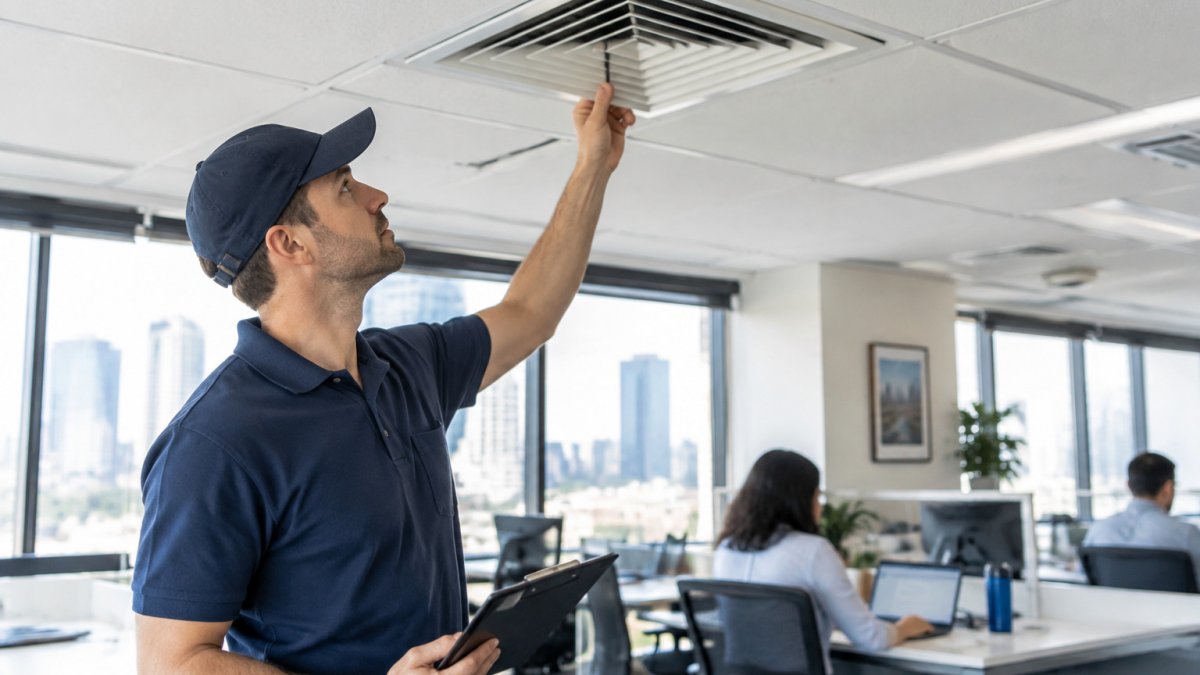
Apply these office ventilation best practices:
- Confirm outdoor air dampers open when the system runs occupied hours
- Balance supply and return airflow so rooms don't feel stuffy or drafty
- Run fans continuously during occupied hours if your system allows it
Balance matters. Pulling in more outdoor air is not always better, on days with high outdoor pollution or heavy smoke, more ventilation can bring problems inside.
Seasonal ventilation choices for offices in this region
Outdoor conditions here swing widely across the year, and the right ventilation strategy changes with them. A single set-and-forget schedule rarely serves a building well through all four seasons.
- Spring: Tree and grass pollen peaks, and windy days lift dust. Keep outdoor air intakes clean and confirm filters are seated properly; opening windows during high-pollen periods can trade one irritant for another. If the building has economizer controls, verify they are not pulling in large volumes of unfiltered pollen-laden air.
- Summer: Heat and humidity dominate. Bringing in large volumes of humid outdoor air raises the cooling load and can push indoor relative humidity above the moderate range. Watch for condensation on supply diffusers and cold surfaces, and confirm drain pans and condensate lines are clear.
- Fall: Ragweed pollen and the first heating startup overlap. The first heating run can release dust and odors accumulated in ducts and on coils over the cooling season; schedule coil and drain pan inspection before the switchover.
Target ranges worth watching
You do not need a laboratory to know whether ventilation is working. A few indicators tell most of the story, and they are best read as trends rather than single snapshots.
- Carbon dioxide: Often used as a rough proxy for ventilation. Readings that climb steadily in an occupied room and stay elevated suggest outdoor air delivery is inadequate for the occupancy. Conference rooms are the usual culprit.
- Relative humidity: A moderate indoor range is the goal. Persistent high humidity invites mold and musty odors; very low humidity in winter causes irritation and static. Watch for seasonal drift rather than a single reading.
- Particulate matter: Tracks dust, smoke, and outdoor particles. Spikes during occupancy point to activity-related sources; sustained levels point to filtration or intake problems.
These indicators are screening tools, not compliance determinations. Environmental Protection Agency and the General Services Administration both publish general guidance on ventilation and indoor air quality that facility managers can use to frame the conversation. Indoor Air Quality Ventilation Guidance
Watch out: Turning up outdoor air without checking filter condition, coil cleanliness, and humidity control can raise energy costs and introduce new problems, review ventilation changes with your contractor rather than adjusting dampers ad hoc.
The article's ventilation indicators are worth tracking as trends, and the table below summarises what each one suggests.
| Indicator | What it suggests | Note |
|---|---|---|
| Carbon dioxide | Ventilation may be inadequate for occupancy | Rising steadily in occupied rooms; conference rooms are the usual culprit |
| Relative humidity | Moisture control problem or very dry air | Watch seasonal drift; moderate range is the goal |
| Particulate matter | Activity-related sources or filtration issues | Spikes during occupancy vs. sustained levels |
| Volatile organic compounds | Chemical sources such as furniture or cleaning products | Readings often fall as materials off-gas |
Step 4: Upgrade Filtration and Maintain the HVAC System
Filters are the first line of defense inside the HVAC system. For local guidance on cleaning and addressing mold in commercial HVAC equipment, see our Kansas City commercial HVAC mold removal guide. GSA guidance on enhancing health with indoor air
Put this maintenance plan in place:
- Replace filters on schedule. Most office systems need changes every one to three months, depending on the filter and building conditions.
- Upgrade the filter rating if your system can handle the added airflow resistance.
- Inspect ducts and coils for dust buildup at least once a year.
Watch the pressure drop across the filter. A filter that is hard to push air through is overdue for replacement, and it will also strain your system.
Step 5: Prevent Moisture and Commercial Mold Growth
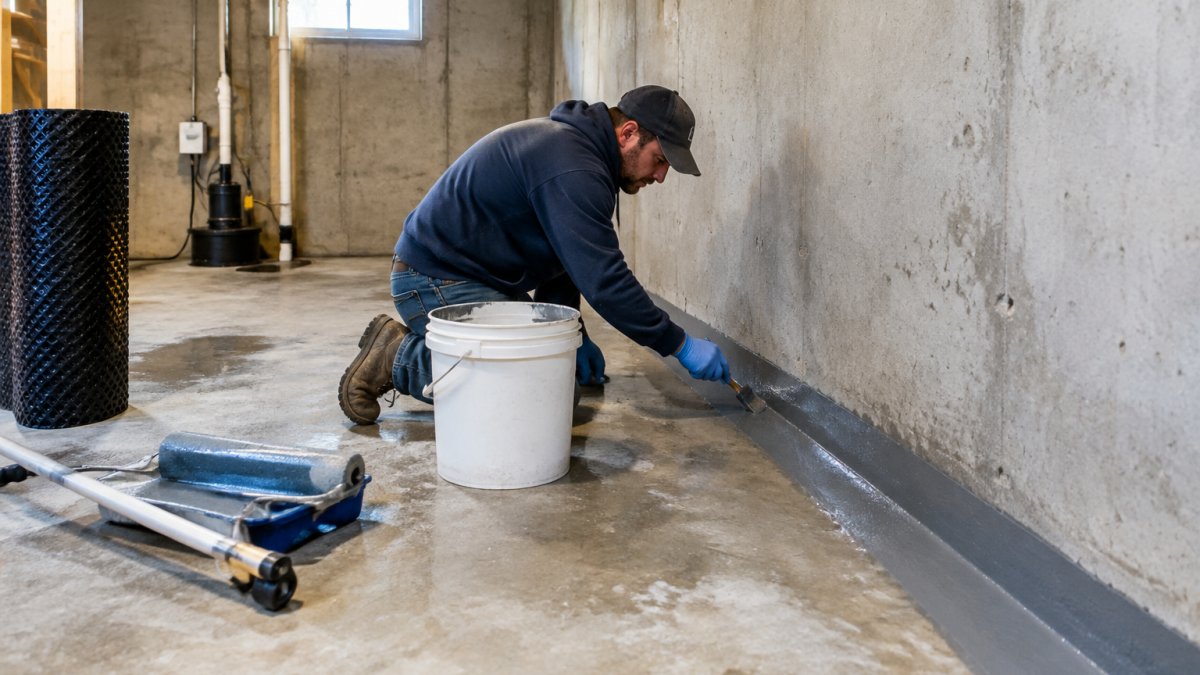
Moisture is the root cause of most commercial mold problems. Mold needs water, and even small leaks can feed it for weeks before anyone notices.
Focus on these areas:
- Roof and window leaks that stain ceilings or walls
- Restrooms and break rooms, where water use is high
- HVAC drain pans and condensate lines
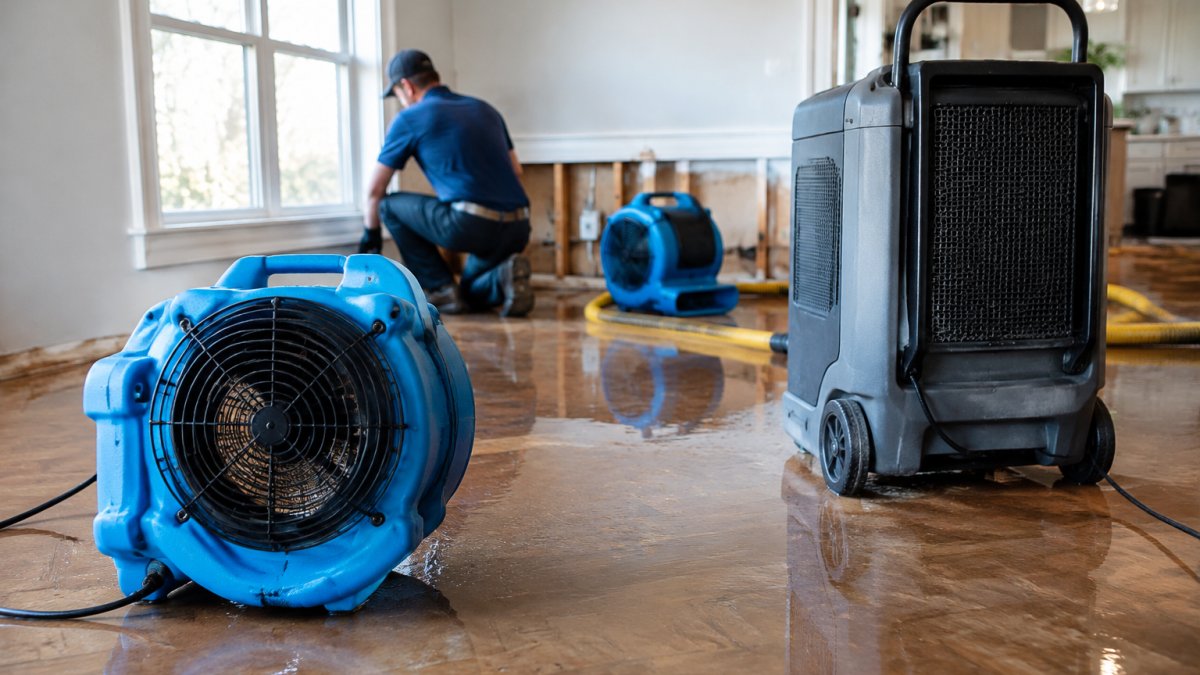
Respond quickly when water appears. Dry wet materials within 24 to 48 hours and repair the source before closing up walls.
Watch out: Painting over a stain without fixing the leak only hides the problem, and it will likely return.
Improving Air Quality Without Relying on an Air Purifier
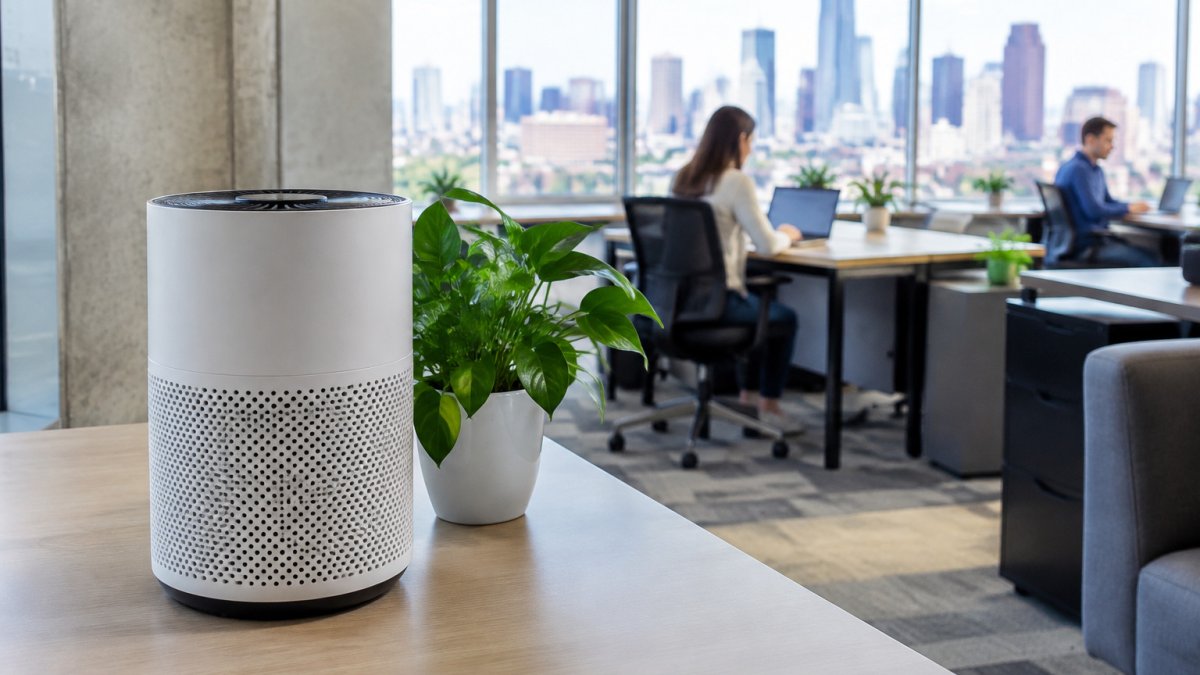
Portable air cleaners can help in a single room, but they don't fix the building. A purifier running in one office does nothing for the air handler pulling dust across the whole floor.
Better results often come from:
- Fixing pollutant sources before adding filtration
- Improving ventilation and outdoor air delivery
- Keeping HVAC filters and ducts clean
Think of an air purifier as a supplement. The core strategy is still source control, ventilation, and building maintenance.
Booking a Kansas City Indoor Air Assessment for Your Office
If your team reports headaches, stuffiness, or recurring allergy symptoms, or if you've found signs of moisture or mold, a professional assessment can save time and guesswork. A qualified team can test the space, trace the source, and recommend the right fixes.
AFC Cleaning & Restoration serves commercial and residential properties across the Kansas City area and can help with floor maintenance, cleaning, and restoration work tied to indoor air concerns. Explore our floor maintenance and cleaning services to see how we support facilities that need consistent, professional upkeep.
Frequently Asked Questions
How do you fix poor indoor air quality in an office?
Start by removing or controlling pollutant sources such as cleaning chemicals, printers and standing moisture. Then improve ventilation so outdoor air is delivered to occupied spaces, replace HVAC filters on schedule, and inspect ducts and vents for dust buildup. Testing before and after changes shows whether the fixes worked. Many facilities also bring in an indoor air quality professional when complaints persist, because hidden problems such as moisture or mold need specialized assessment and remediation.
Is there a way to test air quality in an office?
Yes. Office air quality testing typically measures carbon dioxide as an indicator of ventilation, plus particulate matter, humidity, temperature and volatile organic compounds. Low-cost monitors can track trends across the day, while a professional assessment can identify mold, moisture or contaminant sources. Results are most useful when compared against a baseline taken before any changes are made, and when readings are logged across several seasons.
Do air purifiers work in an office?
Portable air purifiers can reduce particulate matter in a single room, but they do not replace ventilation or source control. They also do nothing about gases or odors unless they include activated carbon. Units should be sized for the room, placed away from walls, and maintained according to the manufacturer's instructions. Pairing a purifier with better HVAC filtration and outdoor air delivery usually gives more reliable results.
When should a business hire an indoor air quality professional?
Consider calling a professional when occupants report recurring headaches, irritation or odors, when visible mold or water staining appears, or after a flood or leak. Facility managers should also call when in-house testing shows high carbon dioxide levels that ventilation adjustments do not resolve. A qualified assessment can locate hidden moisture, test for mold and recommend a remediation plan with clear scope and documentation.