 how-to
7 DIY Basement Waterproofing Tips for Homeowners
Last Updated: November 5, 2026
Quick Summary
Effective basement waterproofing starts with spotting water damage signs like efflorescence and musty odors, then sealing small vertical cracks and managing water at the surface. Clean gutters twice a year, extend downspouts several feet from the house, and grade soil to slope away from the foundation. Keep basement humidity below roughly 50 percent with a dehumidifier.
- Check for efflorescence, dark patches after rain, rust, and musty smells before buying any sealant.
- Seal hairline vertical cracks with hydraulic cement, but never fill wide, horizontal, or actively leaking cracks.
- Aim for roughly six inches of soil fall over the first ten feet away from the foundation.
- Test the sump pump with a bucket of water and confirm the discharge line carries water away.
- Call a professional for standing water, bowing walls, or water that returns after every storm.
Table of Contents
- Start with the Signs of Water Damage in Basement
- How to Fix Basement Wall Cracks
- The Best Basement Waterproofing Sealants for DIY Projects
- 7 DIY Basement Waterproofing Tips for Homeowners
- When DIY Basement Waterproofing Is Not Enough
- How to Keep Moisture from Coming Back
- Schedule a Basement Inspection with AFC Cleaning & Restoration
- Frequently Asked Questions
Start with the Signs of Water Damage in Basement
Water finds a way in. That is the first lesson of basement waterproofing, and it is why every DIY project should start with a careful look at what the water has already done.
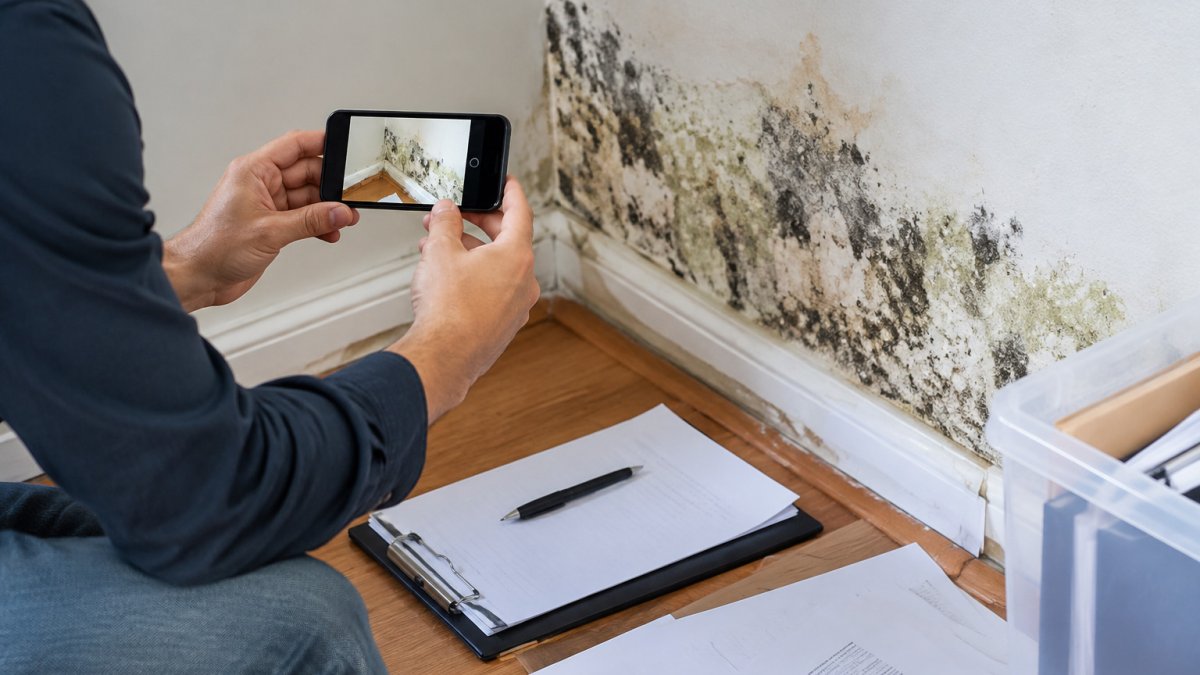
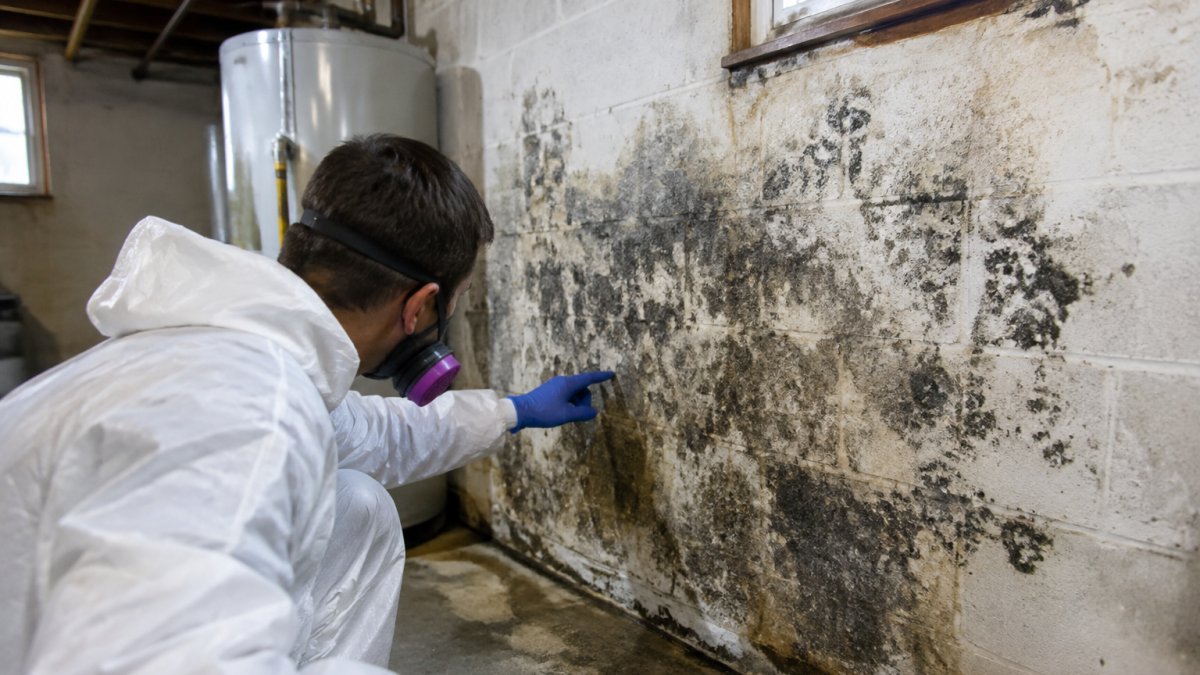
Before you buy a single tube of sealant, check for these signs of water damage in basement walls and floors:
- White chalky stains on concrete, called efflorescence
- Dark patches that grow after rain
- Bubbling or peeling paint on walls
Basement waterproofing is the work of stopping water from entering and managing the moisture that already sits inside. It is not just about plugging leaks.
Find one or two of the signs above and you likely have a fixable moisture problem.
How to Fix Basement Wall Cracks
Small hairline cracks are the most common basement defect, and they are usually a good DIY candidate.
Here is the basic process:
- Widen the crack slightly with a cold chisel so the filler can grip.
- Clean out dust and loose material with a stiff brush.
- Mix hydraulic cement to a peanut butter consistency.
- Press it firmly into the crack, working from the bottom up.
- Smooth the surface and let it cure.
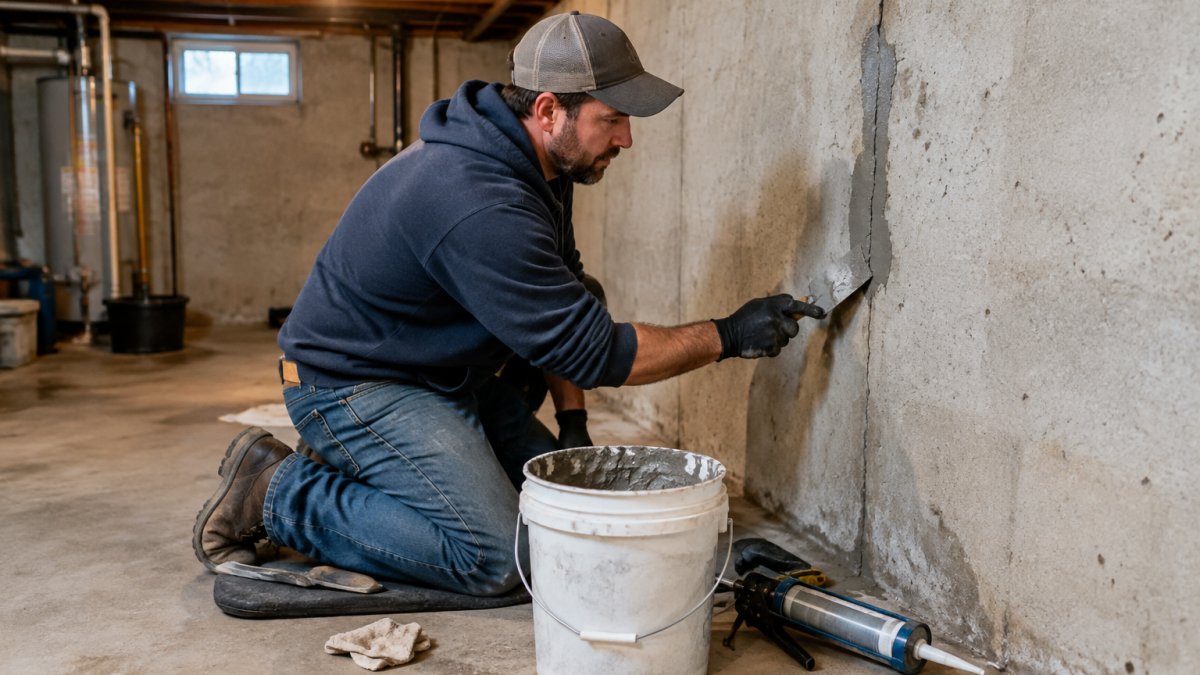
Watch out: never seal a wide, horizontal, or actively leaking crack with surface filler. That traps water inside the wall and pushes it into the surrounding concrete, which can worsen the damage.
The Best Basement Waterproofing Sealants for DIY Projects
Choosing the right sealant matters more than the brand on the label. The best basement waterproofing sealants fall into three families, and each one suits a different job.
| Sealant Type | Best For | Where It Falls Short |
|---|---|---|
| Hydraulic cement | Filling active leaks and cracks | Rigid, can crack again with movement |
| Polyurethane injection | Sealing wet cracks from inside | Needs a kit and some practice |
| Masonry waterproofer | Damp walls and minor seepage | Not a fix for structural cracks |
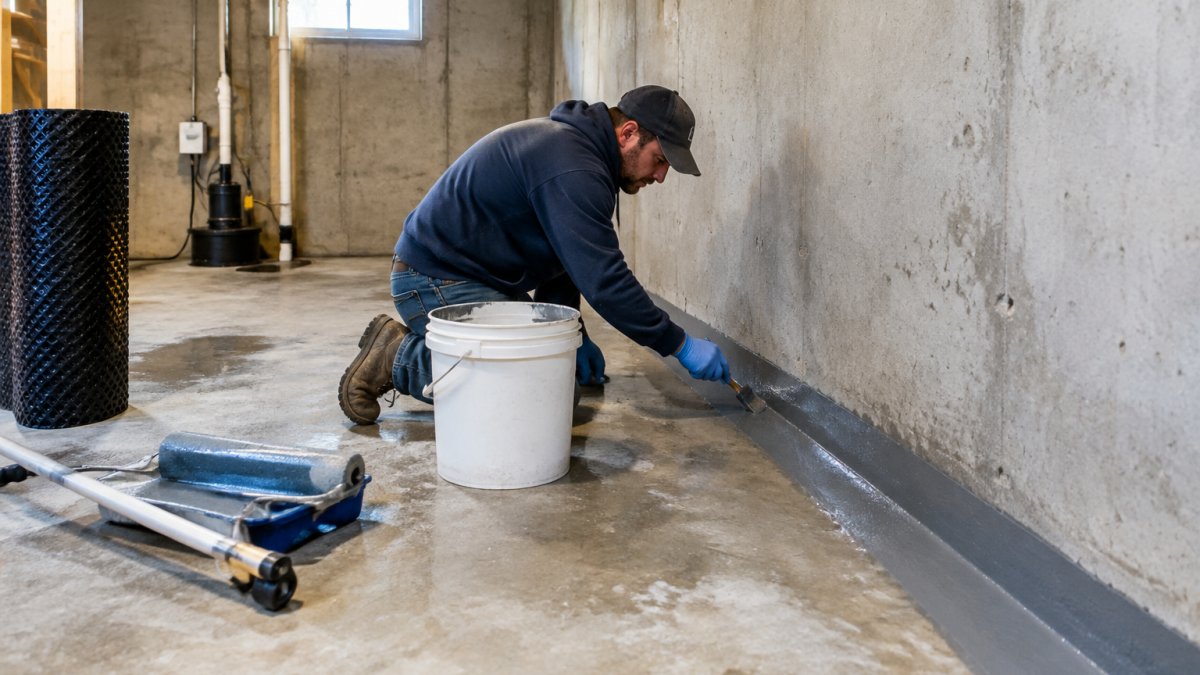
Masonry waterproofers, the thick brush-on coatings sold at hardware stores, work well on damp concrete that seeps during heavy rain. They form a barrier on the surface.
If you are choosing between sealant products and want a closer look at which one actually stops mold as well as leaks, our guide on which basement wall sealant actually stops mold breaks down the options.
7 DIY Basement Waterproofing Tips for Homeowners
- Clean your gutters twice a year, and after every heavy leaf drop. A clogged gutter sends roof water down the face of the house and deposits it at the foundation, which is the single most common source of recurring seepage. Clear them in late spring and again after the fall leaf drop, and flush the downspouts with a hose to confirm flow.
- Extend downspouts several feet from the house. Water should land well away from the wall, not at its base. A splash block helps, but a rigid or flexible extension that carries water onto a slope or into a dry well does far more. Check that the extension still points downhill after the ground settles.
- Grade the soil away from the foundation. A gentle slope, roughly six inches of fall over the first ten feet, carries surface water off the property instead of letting it pool against the wall. Backfill that has settled over time is a frequent culprit; add compacted soil and re-slope rather than piling mulch against the siding.
- Seal small cracks early. A hairline crack today becomes a wet wall next spring. Vertical shrinkage cracks in poured concrete are usually a reasonable DIY candidate, but horizontal cracks, stair-step cracks in block walls, and any crack that is actively leaking need an assessment before you fill them.
- Run a dehumidifier in humid months, and set it, don't guess. Keeping indoor humidity in check slows mold and dampness. A common target is to hold basement relative humidity below roughly 50 percent; a cheap hygrometer tells you whether the unit is actually keeping up, and a dehumidifier that runs constantly without lowering the reading usually points to an air leak or a wet wall behind it.
- Keep vents and windows open when weather allows. Better ventilation moves moist air out, but only when outdoor air is drier than indoor air. Opening windows on a humid summer day can make the problem worse, so ventilate on cool, dry days and rely on the dehumidifier the rest of the time.
- Check the sump pump before storm season. Test it with a bucket of water and confirm it kicks on, that the float moves freely, and that the discharge line actually carries water away from the foundation. A pump that runs but sends water back to the same corner is doing nothing.
Most of these cost little and take an afternoon. Together they handle the majority of minor moisture problems, and they make any professional repair easier later.
Watch out: these tips manage water at the surface and at the wall. They do not fix a high water table, a failed drain tile, or hydrostatic pressure pushing water through the slab, and no amount of sealant or grading will stop those.
Basement-specific exposure pathways worth checking
Moisture control is also exposure control. Dampness, a musty odor, and visible staining are the obvious signals, but a few basement-specific pathways are easy to miss:
- HVAC and return air. A basement air handler or duct run that pulls from a damp corner can distribute musty air through the whole house. Check for disconnected ducts, damp insulation, and returns located near a wet wall.
- Stored belongings. Cardboard boxes, paper, fabric, and upholstered furniture absorb moisture and hold it against the wall or floor, creating a pocket where mold can grow even when the room reads dry. Keep items on shelves or pallets and a few inches off the concrete.
- Time spent in the space. A finished basement used as a bedroom, office, or playroom means more hours of exposure than a storage-only basement, which is worth factoring into how aggressively you dry the space.
If you notice a persistent musty odor, see staining, or find fuzz on framing or stored items, our guide on how to stop basement mold growth for good covers cleanup and prevention in more depth. If anyone in the home has asthma or mold allergies and symptoms worsen after time in the basement, treat the moisture problem as a health issue, not just a cosmetic one, and get a professional assessment.
When DIY Basement Waterproofing Is Not Enough
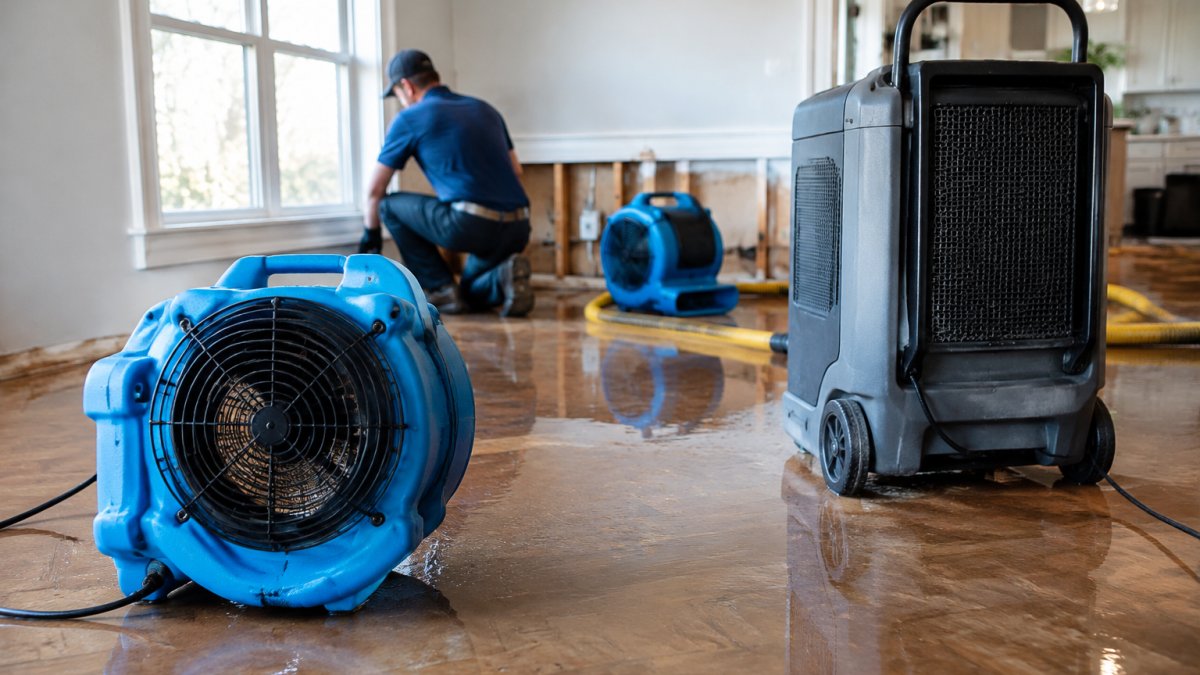
Some problems sit beyond what a homeowner should tackle. Standing water, bowing walls, recurring mold, and water that returns after every storm are signs you need a professional assessment.
If you are weighing your options, our comparison of DIY cleanup vs professional water damage repair lays out the trade-offs side by side.
The cost question comes up fast. For a realistic picture of what a pro job involves, see our cost of professional basement restoration guide.
How to Keep Moisture from Coming Back
Waterproofing is not a one-time event. Moisture returns whenever the conditions that let it in come back, so the fix has to be maintained, and the maintenance routine doubles as your early-warning system for mold exposure.
A simple routine keeps most basements dry:
- Recheck gutters and downspouts each season, and after any storm that overflows them
- Watch for new cracks after freeze and thaw cycles
- Keep stored items off the floor on shelves or pallets
A practical symptom-tracking and exposure-check process
If you suspect the basement is affecting how you feel, a simple record can help you and a clinician see patterns. This is not a diagnostic test, it is a way to organize observations.
- Record symptoms and timing. Note what you feel (sneezing, congestion, itchy eyes, cough, headache, skin irritation), when it starts, and how long it lasts.
- Record location. Note whether symptoms begin or worsen after time in the basement, and whether they ease after you leave and spend time upstairs or outdoors.
- Record conditions. Log recent rain, visible dampness, a musty odor, or a dehumidifier that has been struggling. Exposure often tracks moisture events rather than steady conditions.
- Record changes. Note whether symptoms improve during a dry stretch or after cleanup, and whether they return when you spend time in the space again.
- Bring the record to a clinician. A pattern is more useful to a medical professional than a single bad day, and it helps rule out other causes.
Distinguishing mold-related symptoms from other causes
Symptom-based diagnosis has real limits. Mold exposure commonly produces allergy-like and irritant effects, sneezing, runny or stuffy nose, itchy eyes, cough, and throat irritation, and people with asthma or mold allergies may notice worsening breathing (the CDC). But the same symptoms can come from dust mites, pet dander, pollen tracked indoors, volatile organic compounds from stored chemicals, or an ordinary respiratory infection.
Treat dramatic claims with caution and focus on moisture control and medical evaluation.
When symptoms require urgent care
Separate emergency breathing symptoms from routine allergy symptoms. Seek urgent medical care for trouble breathing, wheezing that does not respond to usual medication, chest tightness, swelling of the face or throat, or a sudden severe reaction. Routine allergy-like symptoms that persist or worsen are a reason to see a clinician, not an emergency, but do not wait on breathing problems.
Mold is the quiet risk here. Spores need moisture to grow, so cutting the moisture cuts the risk (the EPA).
Schedule a Basement Inspection with AFC Cleaning & Restoration
A dry basement starts with knowing exactly where the water is coming from. Our IICRC-certified technicians have served the Kansas City area since 2003, and we are available 24/7 for emergencies.
Before you hire anyone, read our guide on how to choose a restoration company. It walks you through the questions that separate a careful contractor from a rushed one.
Frequently Asked Questions
Can I waterproof my basement from the inside myself?
You can handle minor interior work: sealing hairline cracks with hydraulic cement, applying a masonry waterproofing product to damp walls, and improving ventilation. These steps address surface seepage and dampness. They do not fix structural cracks, bowing walls, or active water flow. If water pushes through the floor or wall joints during rain, call a professional. Interior sealants trap moisture behind the wall when the source is not corrected, which can lead to hidden mold growth.
What are the first signs that a basement needs waterproofing?
Watch for a musty smell, white chalky deposits on walls, dark stains near the floor line, and paint that bubbles or peels. Dampness on the lower blocks after heavy rain is an early warning. So is a sticky or soft feeling on wood framing. Check the signs of water damage in basement areas monthly, especially after storms. Catching seepage early keeps a small repair from turning into a full drainage project.
How do I know if my basement moisture is causing mold growth?
A musty odor is the most reliable first clue. Visible fuzz or dark spotting on joists, drywall, or stored items confirms it. Mold needs moisture, so any recurring dampness raises the risk. Fix the water source first, then clean and dry the area. If mold covers more than a small patch or returns after cleaning, have it assessed. AFC Cleaning & Restoration handles mold removal for homeowners across the Kansas City area.
When should I call a professional for basement water issues?
Call a professional when water enters during every heavy rain, when cracks are wider than a hairline, when walls bow or tilt, or when mold returns after cleanup. Standing water and sewage backups need immediate help. AFC Cleaning & Restoration offers 24/7 emergency response with IICRC-certified technicians. Pricing depends on the scope of the work. Contact AFC Cleaning & Restoration for current pricing or a quote.
Water damage rarely fixes itself, and the longer moisture sits, the more it costs to correct. If your basement has standing water, recurring dampness, or a musty smell you cannot trace, let AFC Cleaning & Restoration take a look. We offer 24/7 emergency response, IICRC-certified mold and water damage work, and full restoration that returns your property to its pre-loss condition. Get started with AFC Cleaning & Restoration and get a clear plan for a dry, healthy basement.