 how-to
How to Estimate Professional Water Drying Time
Last Updated: November 4, 2026
Quick Summary
Professional water drying usually takes 3 to 5 days for structural drying, but severe or hidden moisture can extend the timeline. The full restoration may take longer if repairs are needed, and the calendar alone cannot confirm that affected materials are dry.
- Many residential restoration projects take 3 to 7 days overall.
- Drywall typically takes 1 to 3 days to dry.
- Dense materials such as hardwood, plaster, or concrete may take 7 to 10 days.
- Ask the restoration team what moisture readings they track and how they confirm materials are dry.
Table of Contents
- How Long Does Professional Water Drying Take?
- How Long Does It Take to Dry Out a House After Water Damage?
- What Affects the Water Damage Drying Process?
- Step 1: Set Up Structural Drying Equipment
- Step 2: Track Moisture Monitoring After Water Damage
- Step 3: Confirm Drying and Plan Repairs
- Arrange Professional Water Drying With AFC Cleaning & Restoration
- Frequently Asked Questions
How Long Does Professional Water Drying Take?
Professional water drying usually takes 3 to 5 days for structural drying, though severe or hidden moisture can extend the work. According to Bingham Restoration’s residential drying timeline, professional equipment is used to dry building materials over that period. The calendar alone cannot confirm a home is dry.
Water drying is the removal of moisture from building materials after a leak or flood. The goal is to dry affected areas safely, not simply to make surfaces feel dry. The timeline depends on several factors, and crews can check progress.
A common mistake is treating 72 hours as a firm deadline. The EPA guidance summarized by Upper Restoration’s EPA mold-prevention guidance points to drying materials within 24 to 48 hours as a target, not a guarantee against mold. The sooner water is removed, the better, but each building dries at its own pace.
How Long Does It Take to Dry Out a House After Water Damage?
A house often needs 3 to 5 days for structural drying, while the full restoration can take longer if repairs are needed. Hydro Heroes’ water damage restoration estimate puts many residential projects at 3 to 7 days overall. Those ranges are guides, not promises for a specific home.
The water damage drying process can involve several steps. A dry-looking floor does not prove that the subfloor or wall cavity is dry.
| Stage | Typical timing | What happens |
|---|---|---|
| Structural drying | 3 to 5 days | Air movers and dehumidifiers run |
| Drywall drying | 1 to 3 days | Damp areas are checked |
| Dense materials | 7 to 10 days | Hardwood, plaster, or concrete dry |
| Restoration work | 3 to 7 days | Repairs may extend the project |
These material estimates come from Belfor’s material drying-time guide. If you’re estimating the full recovery, see our water damage repair cost breakdown.
What Affects the Water Damage Drying Process?
Drying time depends on more than the amount of water visible on the floor. Drying time depends on the water source, how long materials were wet, which materials absorbed moisture, how far water traveled, and whether the leak has been stopped. Two rooms affected by the same leak may dry at different rates.
Water source and exposure: Water from a clean supply line is different from water that has contacted sewage, ground contaminants, or other unsanitary materials. The source affects what can be safely cleaned and whether porous materials may need removal rather than drying in place. Longer exposure also gives water more time to move into seams, wall cavities, insulation, and subfloors.
Material and construction: Carpet and its padding, drywall, wood flooring, plaster, and concrete do not absorb or release moisture at the same rate. A surface can feel dry while moisture remains beneath a floor covering or inside a wall. Dense or layered assemblies may need more time and more measurement points than an exposed surface.
Extent and airflow: Water can travel beyond the room where the leak began, including under flooring and through wall openings. Closed rooms, blocked airflow, and tightly packed contents can make it harder for drying equipment to reach damp surfaces.
A useful way to follow the work is to ask about three checks:
- Source: Has the leak been repaired, and is there any continuing water entry?
- Spread: Which rooms, materials, and concealed areas were inspected or found wet?
- Proof: What readings are being tracked, and how will the team determine that affected materials have dried sufficiently?
The unique point many timeline summaries miss is that the calendar is an outcome, not a drying test. A 3-to-5-day estimate can be a useful planning range, but hidden moisture, wet insulation, or a leak that was not fully stopped can change the schedule. Ask the restoration team what is still wet. For wet hardwood, read our drying wet hardwood floors guide.
Step 1: Set Up Structural Drying Equipment
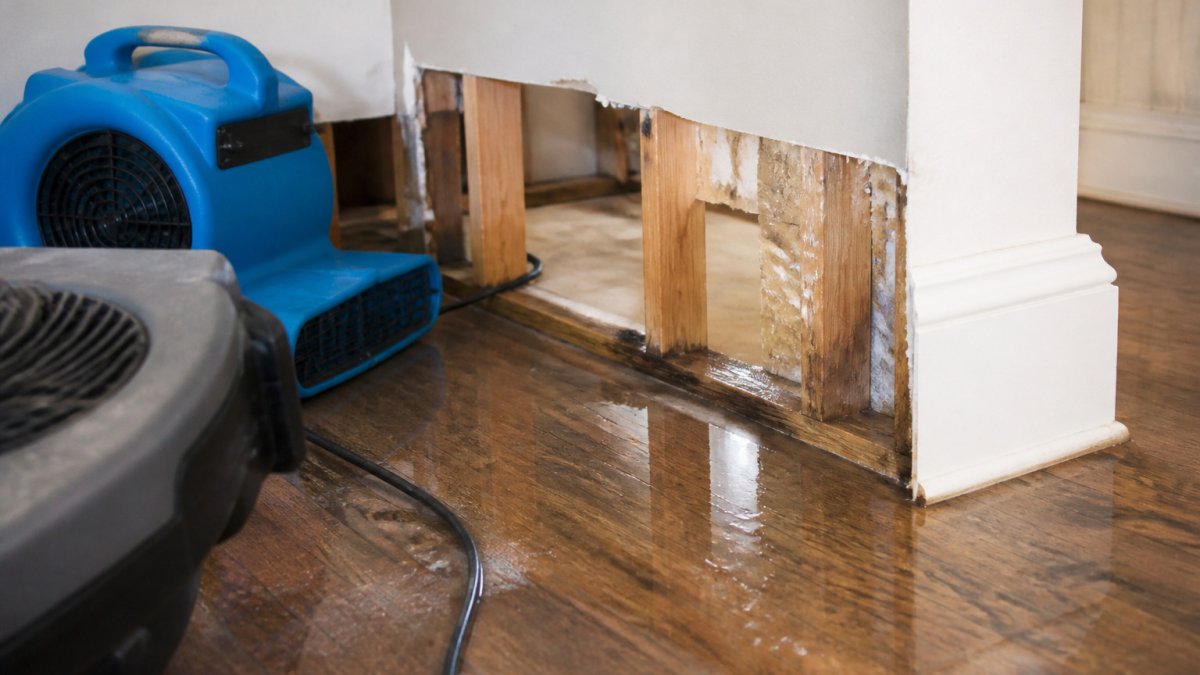
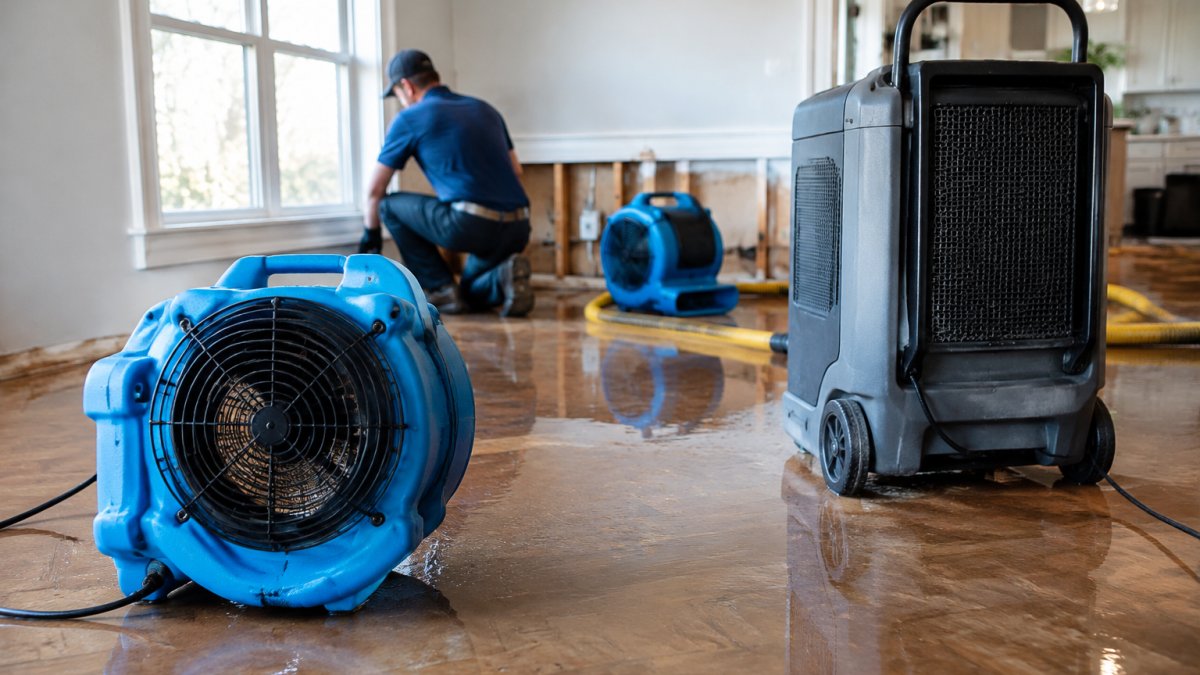
Structural drying equipment and setup can vary with the affected area and materials.
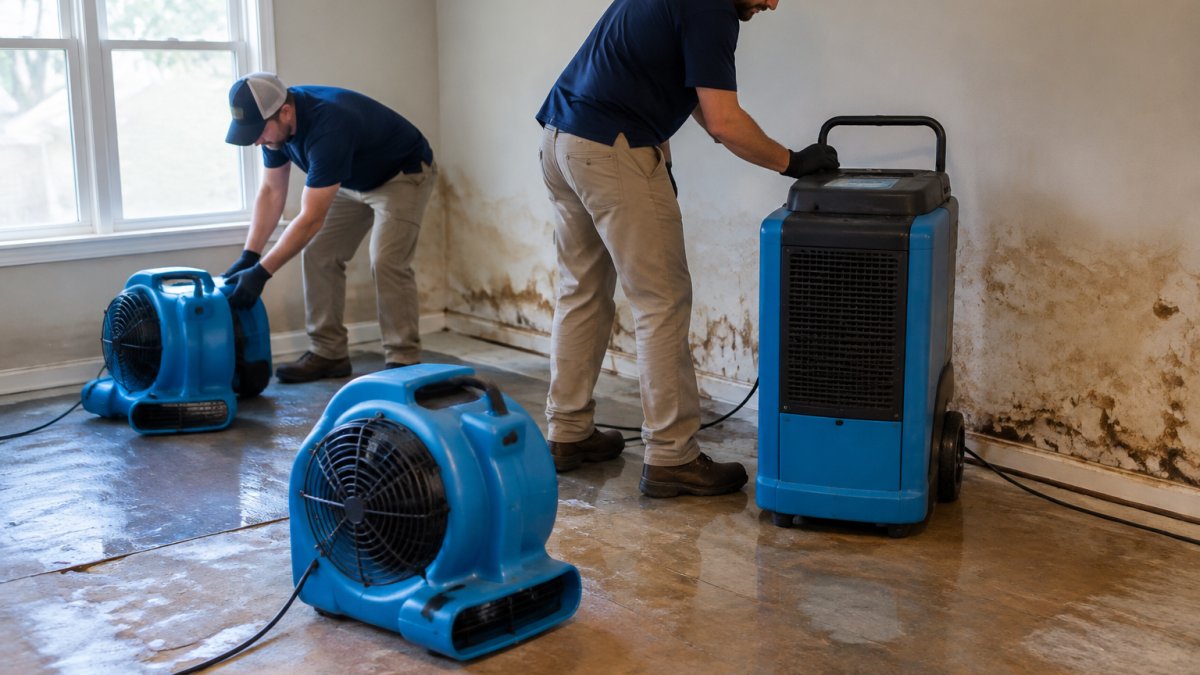
The IICRC publishes ANSI-accredited standards for structural drying and restoration, as described by IICRC’s standards overview. That matters because professional drying is a measured task, not simply a matter of running fans.
A fan alone cannot show whether materials are dry.
Step 2: Track Moisture Monitoring After Water Damage
A dry-looking surface is not enough to establish that materials are dry; water may remain beneath flooring, inside drywall, or in a wall cavity. A single reading is a snapshot; readings over time can show whether conditions are changing.
Equipment running for a set number of days does not, by itself, prove that drying is complete.
Keep your own record as well. Photograph visible damage before cleanup when it is safe, note when you discovered the water and when the leak was stopped, and save relevant receipts. Contact your insurer about its documentation and claim process, but do not delay necessary steps to stop ongoing water damage while waiting for a response. Share the restoration team’s findings with the insurer and confirm who is responsible for each part of the work.
Watch out: Do not enter a room with standing water if electrical equipment, outlets, or wiring may be affected; leave the area and contact a qualified professional if you cannot confirm it is safe.
If moisture remains behind walls or beneath flooring, ask what additional steps may be needed before repairs begin.
Step 3: Confirm Drying and Plan Repairs
Drying is complete when affected materials have reached suitable dry conditions, not when equipment has run for a set number of days. The next step is to decide what repairs the water damage requires.
Ask what areas were checked and whether any wet materials need repair or replacement. Then confirm the proposed work and timing before repairs begin.
For the broader recovery sequence, read our emergency water damage restoration process. The full job may take longer than drying because repairs follow moisture removal.
Arrange Professional Water Drying With AFC Cleaning & Restoration
AFC Cleaning & Restoration provides 24/7 emergency restoration and cleaning services for residential and commercial properties throughout the greater Kansas City area. Our IICRC-certified technicians specialize in flood water damage repair, mold removal, and comprehensive building restoration.
The hard part is knowing whether hidden moisture remains after the visible water is gone. Contact us to discuss the damage and explore our home and business restoration services.
Frequently Asked Questions
How long does professional water drying usually take?
Drying time and total project time can differ when repairs are needed after drying.
What happens during the professional water damage drying process?
The drying process and its duration depend on the affected property and conditions.
How do restoration professionals know when a home is dry?
A room that feels dry at the surface can still hold moisture in walls, flooring, or other materials.
Can water-damaged walls and floors dry in a few days?
The actual timeline depends on how much water reached the materials and how far moisture spread.
A leak can disrupt a home or business, and guesswork can leave damp materials behind. AFC Cleaning & Restoration offers emergency response, IICRC-certified technicians, and restoration support for residential and commercial properties. Get started with AFC Cleaning & Restoration and discuss the next steps for your water damage.