 how-to
Hiring Fire Damage Restoration Cleaners: A Hiring Guide
Last Updated: November 6, 2026
Quick Summary
Hiring professional cleaners for fire damage restoration is a safety decision, not a luxury, because soot, smoke residue, and hidden structural damage are hazards most homeowners cannot manage alone. A professional fire damage restoration process follows a defined sequence: emergency board-up and damage assessment, soot and smoke removal, odor control, structural repairs, and a final walkthrough.
- Ask five questions before signing: 24/7 availability, certified technicians, written scope, insurance handling, and recent work.
- Verify certification, insurance, licensing, and a written scope before work begins, and confirm the policy is current with the agent.
- Photograph every damaged room and item before anything is moved, and do not discard charred items until documented.
- Cost depends on square footage affected, soot type, structural repairs, contents pack-out, and odor treatment.
- Call a 24/7 restoration line the moment the fire is out to limit further damage from water, smoke, and ash.
Table of Contents
- Why Fire Damage Restoration Is Not a DIY Job
- The Fire Restoration Process Step by Step
- Your Fire Restoration Checklist Before Cleaners Arrive
- Questions to Ask a Fire Damage Restoration Company
- Fire Damage Restoration Cost: What Drives the Price
- Credentials, Insurance, and Contractor Verification
- Insurance Claims and Documentation: Who Handles What
- When You Can Return and How to Schedule Emergency Service
- Frequently Asked Questions
Why Fire Damage Restoration Is Not a DIY Job
Hiring professional cleaners for fire damage restoration is not a luxury, it is a safety decision. Fire damage restoration is the process of cleaning, repairing, and returning a fire-damaged property to safe, livable condition, and it involves hazards most homeowners cannot manage alone.
Soot is the visible problem. The invisible problems are worse: smoke residue settles into HVAC systems, ash etches metal and glass within days, and structural framing can lose strength without showing a crack. Angi notes that professional fire damage restoration costs can range from a few thousand dollars to tens of thousands depending on scope, which tells you how much damage a small fire can actually cause (Angi's fire damage restoration cost guide).
At AFC Cleaning & Restoration, we have served the greater Kansas City area since 2003, and the jobs that go wrong are often the ones where cleanup started before anyone assessed the damage.
The Fire Restoration Process Step by Step
A professional fire restoration process follows a defined sequence: emergency board-up and damage assessment, soot and smoke removal, odor control, structural repairs, and a final walkthrough. Skipping or reordering those steps is where problems hide.
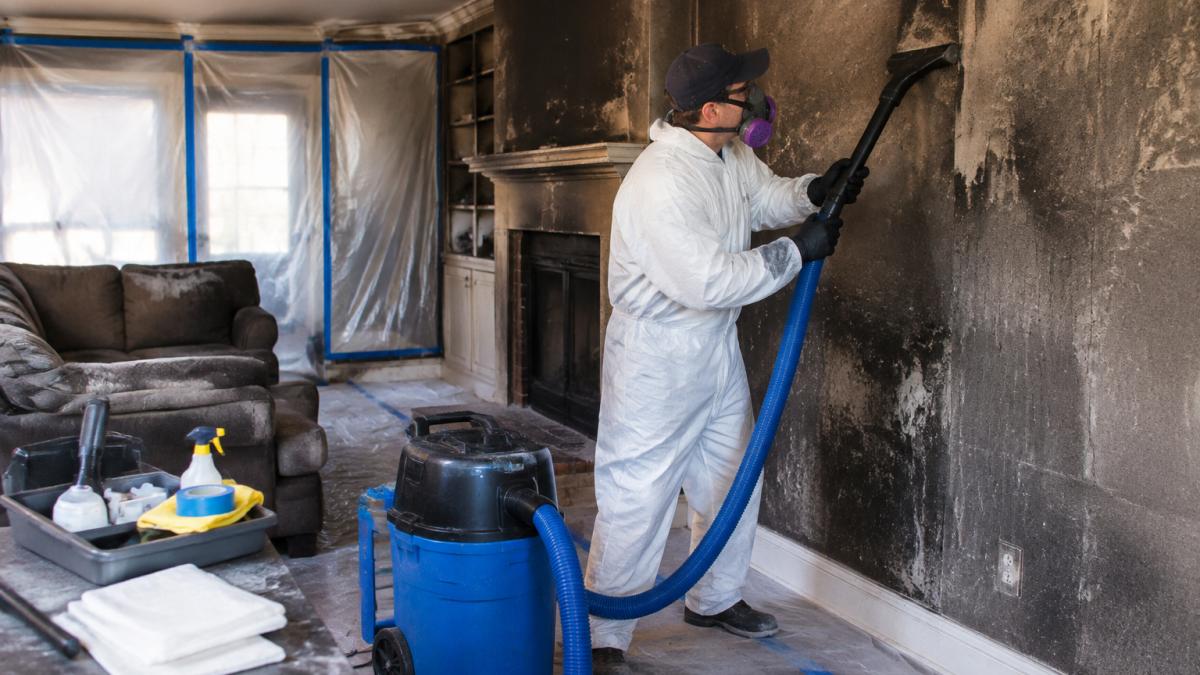
Here is how the work actually runs:
- Emergency response and securing the property. Windows and roofs get boarded, and utilities get shut off where needed.
- Damage assessment. Technicians map fire, smoke, and water damage room by room. Yes, water damage: sprinklers and hoses leave moisture behind.
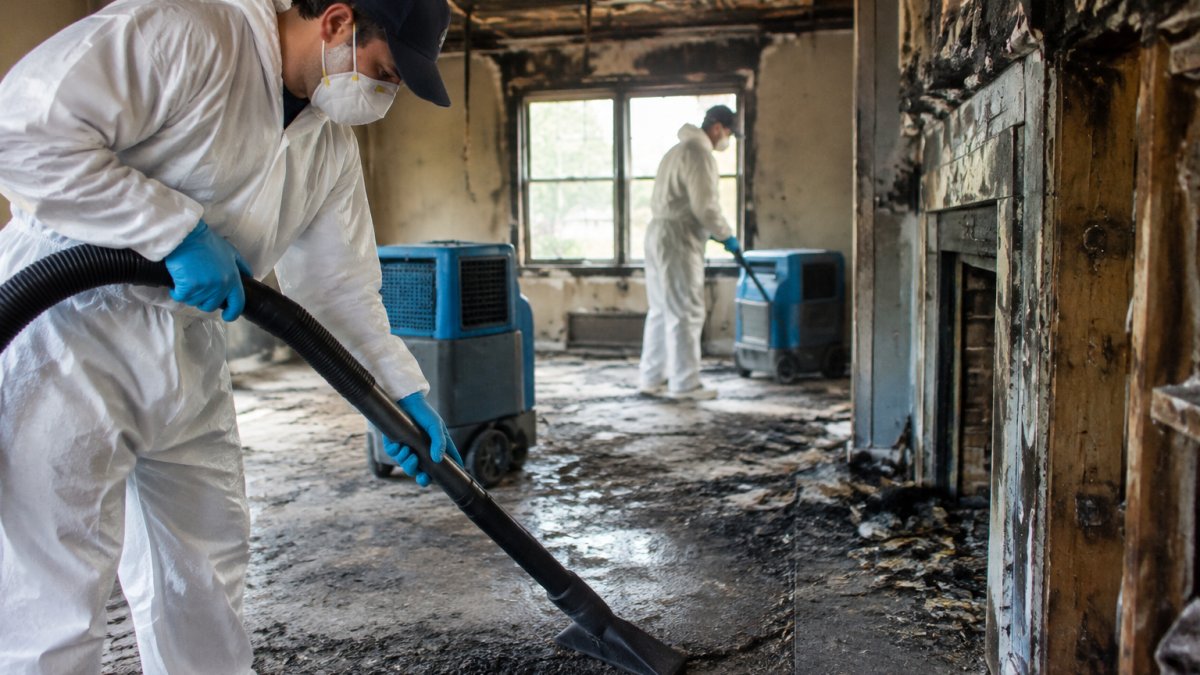
- Soot removal. Dry soot comes off with HEPA vacuums; wet or oily soot needs chemical sponges and specialized cleaning.
- Smoke odor removal and odor control. This means treating the source, not masking it. Fogging, ozone treatment, and duct cleaning are common.
- Structural repairs and rebuild. Framing, drywall, and finishes go back in after the building is clean and dry.
- Final inspection. You walk the property with the project manager before anything is signed off.
Here is the sequence a professional fire restoration job follows, from the first call to the final walkthrough.
| Step | What happens |
|---|---|
| Emergency response and securing | Windows and roofs boarded, utilities shut off where needed |
| Damage assessment | Technicians map fire, smoke, and water damage room by room |
| Soot removal | HEPA vacuums for dry soot; chemical sponges for wet or oily soot |
| Smoke odor removal and odor control | Treating the source with fogging, ozone treatment, and duct cleaning |
| Structural repairs and rebuild | Framing, drywall, and finishes reinstalled after building is clean and dry |
| Final inspection | Owner walks the property with the project manager before sign-off |
Your Fire Restoration Checklist Before Cleaners Arrive
Your fire restoration checklist should cover four things before crews arrive: safety, documentation, access, and expectations. Getting these handled early makes everything after it faster.
- Stay out of the structure until the fire department clears it
- Photograph every damaged room, wall, and item before anything is moved
- Save receipts for emergency lodging and meals
- List damaged contents for your insurance claim
- Confirm the company's arrival window in writing
- Ask who handles the insurance paperwork
- Keep pets and children away from the work zone
One mistake we see often: homeowners start throwing out charred items before the adjuster sees them. Those items are evidence for your claim. Photograph first, discard later.
Questions to Ask a Fire Damage Restoration Company
Ask any fire damage restoration company five questions before you sign: Are you available 24/7? Are your technicians certified? Will you put the scope in writing? Who handles my insurance claim? Can I see your recent work?
Those questions help separate a qualified restoration professional from a basic cleanup crew. For a deeper framework, our guide on how to choose a restoration company walks through the vetting process step by step, and our recent projects show what completed fire and water damage work actually looks like.
Watch out: a company that cannot produce a written scope and estimate before starting work is a company that will bill you for surprises.
Fire Damage Restoration Cost: What Drives the Price
Fire damage restoration cost depends on square footage, damage severity, materials affected, and how much reconstruction is needed. Homewyse puts basic interior fire damage cleaning in a per-square-foot range, and notes that site conditions can push costs well above the baseline (Homewyse fire damage cleaning cost data).
The main cost drivers include:
- Square footage affected, not the size of the whole house
- Soot type: protein and wet soot cost more to remove
- Structural repairs versus cleaning alone
- Contents pack-out and storage
- Odor treatment in HVAC systems and cavities
If surprise bills worry you, read our guide on avoiding surprise bills for restoration before you approve any estimate.
Credentials, Insurance, and Contractor Verification
Verifying a fire restoration contractor is a document exercise, not a conversation.
1. Certification. The Institute of Inspection, Cleaning and Restoration Certification (IICRC) is the standard-setting body that many restoration firms reference. Water Restoration Technician (WRT) and Applied Structural Drying (ASD) are among the IICRC credentials relevant to water damage work (ASD).
2. Insurance. Ask for a certificate of insurance (COI) naming the property owner or the property address as certificate holder. Read three lines: general liability, workers' compensation, and commercial auto.
3. Licensing and registration. Restoration contracting is regulated at the state and local level, and the rules vary. Ask the company which licenses or registrations apply to your address. Ask the company which license or registration applies to your address and get the number.
4. Subcontractors. Most restoration firms use subcontractors for HVAC duct cleaning, electrical, plumbing, or reconstruction. Ask in writing which portions of your job will be subcontracted and whether each subcontractor carries its own liability and workers' compensation coverage. A certificate from the prime contractor does not automatically cover a sub's employees.
5. Written scope and estimate. The scope should list rooms, square footage, materials to be removed versus cleaned, contents to be packed out, odor treatment methods, and the reconstruction line items. The estimate should separate cleaning from repairs so you can see what is restoration and what is construction.
Watch out: a certificate of insurance that shows a policy expiration date in the past is a red flag worth resolving before anyone touches your property. Our article on how to verify IICRC certified technicians walks through the lookup step by step, and our team is IICRC certified.
Insurance Claims and Documentation: Who Handles What
Insurance claims and documentation work best when you know which side owns which task. The short version: you own the policy, the claim number, and the approvals; the restoration company owns the evidence and the scope of loss. Most disputes happen when those lines blur.
What you handle. Report the loss to your insurer promptly and get a claim number. Read your policy's declarations page for the dwelling coverage limit, the personal property limit, and the loss-of-use limit that pays for temporary lodging and meals.
What the restoration company handles. A professional firm produces the documentation your adjuster needs: room-by-room photographs before and after, moisture readings from water used in firefighting, a contents inventory with condition notes, an itemized scope of loss, and daily or weekly progress notes. That package is what supports the claim.
How to document the damage yourself. Photograph every affected room from the doorway and from each corner, plus close-ups of soot patterns, melted fixtures, and cracked glass. Photograph contents before moving them, and keep a written inventory of high-value items with make, model, and serial number where possible.
How the scope of loss is built and reviewed. The restoration company writes the scope, the adjuster reviews it, and the two negotiate line items. You are the third party in that conversation and you are allowed to ask for a copy of the final agreed scope before work starts. Compare it against the written estimate you were given at hiring; the two should match.
Direct billing versus reimbursement. Ask upfront: "Will you bill my insurer directly, or do I pay and get reimbursed?" Direct billing is common but not universal, and it usually requires an assignment of benefits or a signed authorization.
Coverage caveats. Coverage details vary by policy, so confirm yours with your insurer rather than assuming. A common pattern is that the insurer pays actual cash value first and releases recoverable depreciation after the work is complete and invoiced, which affects your cash flow even when the claim is fully covered.
Watch out: letting work start before a written scope exists can weaken your position in a fire claim. If you want to avoid surprise bills, read our guide on avoiding surprise bills for restoration before you approve any estimate.
When You Can Return and How to Schedule Emergency Service
You can usually return once the structure is cleared as safe, soot and smoke residue are removed, and air quality is verified. That timeline varies from days to weeks depending on damage severity. No one should reoccupy a fire-damaged property until a professional confirms it is safe.
For emergency response, call a 24/7 restoration line the moment the fire is out. Prompt service limits further damage from water, smoke, and ash. If you are ready to book, our guide on hiring 24-hour restoration services covers what to confirm before crews arrive.
AFC Cleaning & Restoration is available 24/7, 365 days a year, with IICRC-certified technicians serving residential and commercial properties throughout the greater Kansas City area.
Frequently Asked Questions
What should I look for when hiring a fire damage restoration company?
Look for IICRC certification, proof of liability insurance and workers' compensation, and a written scope of work before anyone starts. Ask whether the crew is in-house or subcontracted, request references from similar losses, and confirm 24/7 emergency availability in writing. A legitimate fire damage restoration company will also walk you through the insurance documentation process and give you a written estimate rather than a verbal ballpark.
Should I contact my insurance company before hiring fire cleanup professionals?
Call your insurer first or at the same time you call a restoration company. Most policies require prompt notice of a loss, and your adjuster may want to inspect before major demolition begins. That said, emergency mitigation to prevent further damage is usually covered and should not wait. Ask the restoration company to photograph everything and keep a detailed inventory so your claim stays clean.
How much does fire damage restoration cost?
Costs vary widely with the scope of the loss, and pricing depends on square footage, damage severity and reconstruction needs. Your number depends on square footage affected, how far smoke traveled through HVAC systems, whether structural repairs are needed, and how much debris must be removed. Get a written scope and estimate before work begins.
How long does professional fire and smoke damage cleanup take?
Minor smoke and soot cleanup in a contained area can finish in a few days. Timelines depend on the extent of the damage and any structural repairs needed. Odor control and final air quality checks add time because smoke residue must be fully removed, not just painted over. Ask for a written timeline with milestones.
A fire is over in minutes. What happens in the hours after decides how much of your home or business you get back. AFC Cleaning & Restoration brings 24/7 emergency response, IICRC-certified technicians, and full-service fire, smoke, and water damage restoration to homes and commercial properties across the greater Kansas City area. Get started with AFC Cleaning & Restoration and put your property back in capable hands.