 how-to
What to Do When a Pipe Bursts in Your Basement
Table of Contents
- Stay Safe First: Assess the Basement Before You Step In
- How to Shut Off the Main Water Valve Fast
- How to Tell If a Pipe Burst in the Wall
- What to Do While You Wait for a Plumber
- Basement Flooding Cleanup: Removing Water and Drying Out
- Does Homeowners Insurance Cover Burst Pipe Damage?
- Book Emergency Restoration With AFC Cleaning & Restoration
- Frequently Asked Questions
Stay Safe First: Assess the Basement Before You Step In
Knowing what to do when a pipe bursts in your basement matters most in the first minute, because water in a basement is more dangerous than it looks. Before you step off the stairs, stop and assess from a dry location. Standing water can hide electrical hazards, sharp debris, slick concrete, and a sagging ceiling that is holding water.
Your first job is personal safety, not stopping the leak. A burst supply line can push several gallons per minute into a basement, and water can rise faster than you expect. If the water is already above your ankles, or if you cannot see the floor, do not wade in. Call a plumber and, if there is any chance the water has reached outlets, cords, or appliances, call your utility company or an electrician before you enter.
Use this quick decision sequence from the top of the stairs:
- Can you see the floor and the path to the electrical panel? If no, stay out and call for help.
- Is any outlet, power strip, cord, appliance, or furnace sitting in or near the water? If yes, treat the area as energized and do not enter.
- Is the water clear and only a thin sheet on the floor? You may be able to reach a dry shutoff, but keep your hands off anything electrical.
- Is there a burning smell, buzzing, sparking, or a warm wall? Leave the basement, keep others out, and call 911 or your utility's emergency line.
Keep children and pets out of the basement, and post someone at the door if family members are arriving home. Wear closed shoes with rubber soles, not bare feet or socks, and carry a flashlight rather than a candle or open flame. Water and gas appliances do not mix, so if you smell gas, leave the house and call your gas utility from outside.
Turn Off Electricity Near Standing Water
Electricity and water together can cause serious shock, and a basement is full of paths for current: outlets at knee height, extension cords on the floor, a washer and dryer, a sump pump, a furnace, and a water heater.
The safe way to do this is from a dry location. Find your electrical panel, which is often on the first floor, in a garage, or on an exterior wall, and switch off the breaker that feeds the basement.
A common pattern is that homeowners cannot tell which breaker controls the basement. If the panel is labeled, look for "basement," "receptacles," or "washer." If it is not labeled, shut off the main breaker only if you can do so while standing on a dry surface. Otherwise, wait for an electrician.
Watch out: never reach into standing water to unplug a cord, flip a switch, or reset a GFCI outlet. Even a small amount of water can carry current from a damaged cord or appliance, and the shock risk is highest when your hands and feet are wet.
If the water has reached a furnace, water heater, or electrical panel, do not operate any switch in the basement. Leave the power off and let a licensed electrician inspect the equipment before it is re-energized.
How to Shut Off the Main Water Valve Fast
Stopping the water flow is the fastest way to limit damage, and when a pipe bursts in your basement the main shutoff is usually close at hand. The main valve is typically on the pipe where the water line enters the home, often on the front or street-facing basement wall, near the water meter, or beside the water heater.
Turn the valve clockwise until it stops. A lever valve needs a quarter turn; an older gate valve with a round wheel may need several full turns. Do not force a valve that will not move. If the handle is stuck, corroded, or turns without stopping the flow, stop and move to the fallback steps below.
Use this decision sequence:
- Valve turns and water stops: open the highest and lowest faucets in the house to drain pressure, then call a plumber.
- Valve will not turn: do not force it. Locate the water meter and look for a shutoff on the meter or on the street side of it.
- No shutoff at the meter: call your water utility. Many utilities will shut off service at the curb stop, and some charge a fee or require an appointment.
- Water is spraying or rising fast and you cannot stop it: call 911 if there is a risk to people or electrical equipment, and call a plumber with emergency service.
Keep a wrench sized to your valve near the shutoff, and tag the valve with a zip tie or label so the next person can find it in the dark. If your home has a curb stop at the street, know where it is before you need it; the utility may require a special key to operate it.
Watch out: do not close a valve so hard that you bend the handle or strip the stem. A broken stem can turn a controllable leak into an open pipe, and that is a job for a plumber, not a homeowner with a wrench.
Drain Faucets to Relieve Pressure
After the main valve is off, open the highest and lowest faucets in the home. This releases water still sitting in the pipes and lowers pressure that can make a burst worse. Start with a sink on the top floor and a utility sink or hose bib in the basement, and let them run until the flow slows to a trickle. Keep them open until repairs are done.
If the burst is on a supply line to a fixture, close the fixture's own stop valve as well. Toilets and sinks usually have a small valve underneath or behind the fixture, and closing it isolates that branch so the rest of the house can keep water service while the repair is made. If the burst is in a wall or ceiling, leave the faucets open and let the plumber decide where to cut in.
While you wait, place buckets under active drips and use towels to slow water from spreading, but do not patch, tape, or clamp a pressurized supply line. A temporary patch on a live pipe can fail without warning and spray water into electrical equipment. Keep the basement door closed to limit moisture in the rest of the home, and take dated photos of the damage before cleanup begins.
How to Tell If a Pipe Burst in the Wall
Sometimes the break is hidden behind drywall or under a floor. Signs that a pipe has burst inside a wall include:
- A sudden drop in water pressure throughout the house
- The sound of running water when no fixtures are on
- Damp, bulging, or discolored drywall or paint
- A musty smell or visible mold growth
- Warm or soft spots on the floor above the basement
If you see these signs and the main valve is already off, the leak is likely still draining into the wall cavity. Call a plumber rather than opening walls yourself.
What to Do While You Wait for a Plumber
A professional plumber should handle the pipe repair, but you can take useful steps while you wait.
Move valuables, furniture, and electronics to a dry area. Lift items off the floor if possible. Take photos and video of the damage before you clean anything up. Those records matter for your insurance claim.
Place buckets under active drips, and use towels to slow water from spreading. Keep the basement door closed to limit damage to the rest of the home.
Basement Flooding Cleanup: Removing Water and Drying Out
Once the water is shut off and the area is safe, begin removing standing water. Use a wet-dry vacuum rated for water, or a submersible pump for deeper pools. Learn how to safely remove standing water from a basement step by step. Never use a standard household vacuum.
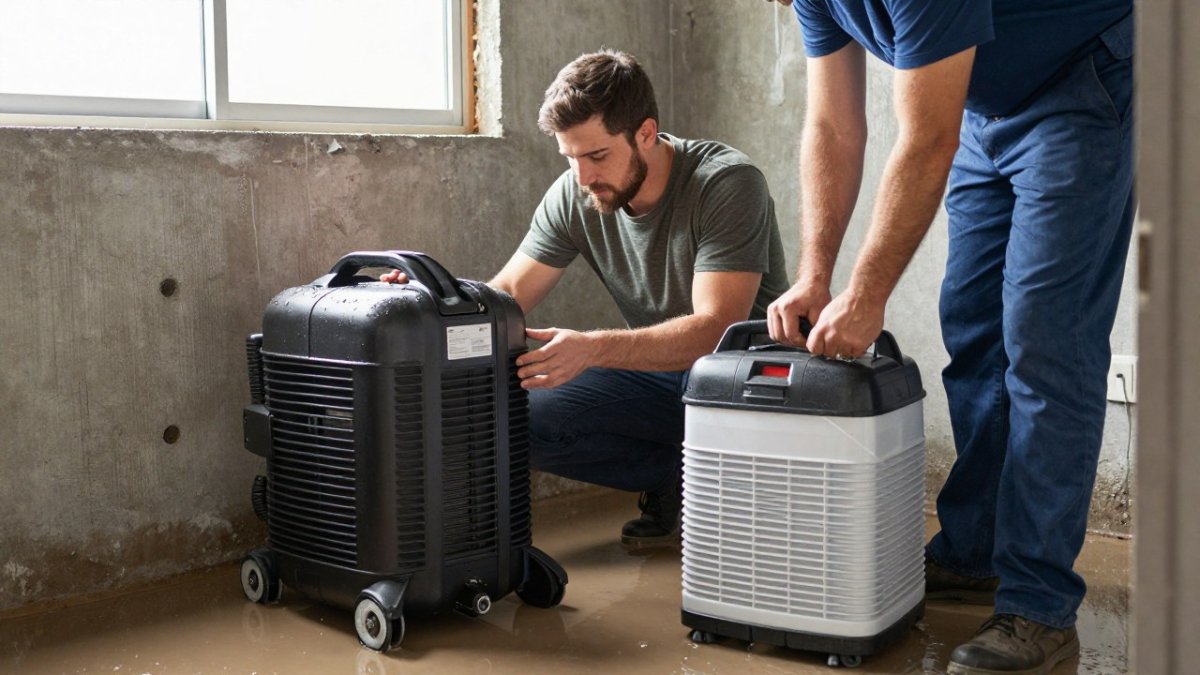
Standing water is only part of the problem. Water soaks into carpet, drywall, and insulation, and it can keep causing damage for days if left alone.
Start drying as soon as possible. Estimate how long professional water drying takes and what that process involves. Run fans and a dehumidifier to move air across wet surfaces. Remove wet carpet and padding when possible, because they trap moisture and encourage mold.
Many homeowners find that the hardest part is judging how far moisture has spread. Materials can look dry on the surface while staying wet underneath.
- Remove water with a wet-dry vacuum or pump
- Run fans and a dehumidifier for several days
- Pull up soaked carpet and padding
- Check wall bases and baseboards for hidden moisture
- Watch for musty odors, which often signal trapped moisture
The article lays out the core cleanup actions in order, so a quick checklist makes them easy to scan.
| Action | Tool or method | Note |
|---|---|---|
| Remove standing water | Wet-dry vacuum or submersible pump | Never use a standard household vacuum |
| Dry the space | Fans and a dehumidifier | Run for several days |
| Remove soaked materials | Pull up carpet and padding | They trap moisture and encourage mold |
| Check hidden areas | Wall bases and baseboards | Moisture can persist under the surface |
| Watch for trouble | Musty odors | Often signal trapped moisture |
Does Homeowners Insurance Cover Burst Pipe Damage?
Many standard homeowners policies cover sudden pipe bursts, but coverage depends on your policy and the cause of the damage. Read your policy or call your agent to confirm what applies to you.
Document everything before cleanup. Take dated photos, keep damaged items until the adjuster sees them, and save every receipt for emergency repairs.
Report the claim quickly. Follow practical steps for filing a basement flood insurance claim from start to finish. Insurers often expect prompt notice, and delays can complicate your claim.
Book Emergency Restoration With AFC Cleaning & Restoration
If you are dealing with a burst pipe, the cleanup and drying work can be more than a homeowner should handle alone. AFC Cleaning & Restoration provides 24/7 emergency restoration and cleaning services for residential and commercial properties throughout the greater Kansas City area. For help with specific items after water damage, visit our carpet & rug cleaning page to see what that service involves. Our emergency water removal guide explains what a professional visit looks like before you book.
Contact AFC Cleaning & Restoration for a quote on your situation.
Frequently Asked Questions
Will homeowners insurance cover a burst pipe in the basement?
Many homeowners policies cover sudden, accidental water damage from a burst pipe, including damage to finished walls, flooring and belongings. Coverage often depends on the cause, whether the leak was sudden or long-term, and whether you acted promptly to stop further damage. Gradual leaks, neglected maintenance and flood damage from outside water are frequently excluded or require separate coverage. Photograph the damage, keep receipts for emergency repairs, and review your policy or call your agent to confirm what applies to your situation.
What should I do first when a pipe bursts in my basement?
Shut off the main water valve as soon as it is safe to reach it, which limits how much water enters the home. Before you walk into standing water, turn off power to the basement at the breaker panel if you can do so without wading into the water. If the water is near outlets, appliances or the electrical panel, do not enter. Call a licensed plumber for the pipe repair and a restoration company for water removal and drying.
How quickly should I clean up water after a pipe bursts?
Start water removal as soon as the area is safe, ideally within the first 24 hours. Standing water, wet drywall, carpet and insulation can begin to support mold growth within a day or two, and moisture trapped in concrete and framing can cause hidden damage. Use a wet vacuum for standing water, remove soaked materials that cannot be dried, and run fans and dehumidifiers to dry the space. Professional drying equipment often reaches moisture that household fans miss.
Is it safe to use a basement after a pipe bursts?
Not until it has been inspected and dried. Standing water can conceal electrical hazards, and water from a burst supply line may be contaminated depending on its source, so avoid contact with it when possible and wear protective gloves and boots if you must handle it. Keep children and pets out of the area, and do not use the space for storage or living until moisture readings return to normal and any mold concerns have been addressed.